
Table Saw Blades & Accessories
Table Saw Stands and Mobile Bases: The Complete Guide
Learn the difference between table saw stands and mobile bases, compare major brands, check weight capacity and compatibility, and explore DIY options.

“Table saw stand” and “mobile base” usually mean two different things, and mixing them up is the most common shopping mistake in this category. A stand is typically sold with, or matched to, a specific portable jobsite saw, like DeWalt’s DW7440RS or Milwaukee’s 48-08-0561, and it’s what lets that saw fold flat and roll around a job site. A mobile base is a separate, usually universal, wheeled platform you bolt underneath a stationary saw, like a hybrid or cabinet saw, that otherwise has no wheels at all. Jobsite saw brands generally don’t sell interchangeable stands between models, so match the exact stand to your exact saw. For stationary saws, a universal mobile base rated well above your saw’s weight is the safer bet than a bargain-bin option rated close to the limit.
In this article
Two Different Products, Often Confused

Integrated Saw Stands
These are built for portable jobsite table saws, the kind with a built-in handle and a 15A motor. Some saws come with the stand already included in the box, like the Ridgid R4514. Others sell the stand as a companion accessory that bolts onto specific mounting brackets on the saw, like DeWalt’s DW7440RS. These stands typically fold flat for transport and either roll on integrated wheels or fold down small enough to lift by hand.
Universal Mobile Bases
These are built for stationary saws, hybrid and cabinet saws that weigh 150 pounds or more and have no stand of their own, only leveling feet. A mobile base is a low steel or aluminum frame with locking casters that you bolt to the bottom of the saw’s cabinet or stand, turning a saw that’s normally fixed in place into one you can roll out of the way when you need floor space back. Brands like Bora, HTC, and POWERTEC sell these as standalone, saw-agnostic products.
What to Look For, Either Way

- Weight capacity with real margin. Don’t buy a base rated right at your saw’s weight; leave room for the material you’ll be cutting on it too
- Wheels versus folding legs. Wheeled stands are faster to reposition; folding, non-wheeled stands are usually lighter to carry up stairs or into a truck bed
- Locking casters, on any mobile base, so the saw doesn’t creep while you’re cutting
- Confirmed compatibility with your specific saw model, not just your saw’s brand
- A stable, wide footprint. A narrow stand can tip more easily when you push a long board across an extended fence
What Each Major Brand Actually Offers
This is where most buying guides get vague. Here’s what’s actually sold, and what it fits.
| Brand | Stand | Weight | Price | Fits |
|---|---|---|---|---|
| DeWalt | DW7440RS rolling stand | 33 lbs, 200 lb capacity | About $247–$285 | Sold separately; fits most DeWalt portable saws (confirm cordless compatibility first) |
| Milwaukee | 48-08-0561 folding stand | 15 lbs, no wheels | About $149 | Only the M18 FUEL 8-1/4″ saw (2736), not other Milwaukee saws |
| Ridgid | Integrated rolling/folding stand | Saw + stand about 52 lbs | Bundled into the saw, e.g. R4514 at ~$549 | Not sold as a standalone accessory |
| Ryobi | Integrated stand, varies by model | Varies by model | Bundled: RTS12 $229 (folding), RTS22 $249 (rolling), RTS23 $329 (rolling, wider) | Not sold as a standalone accessory |
Prices are current typical listings from major retailers and change often. Always confirm your exact saw model number against the stand’s listed compatibility before buying.
DeWalt
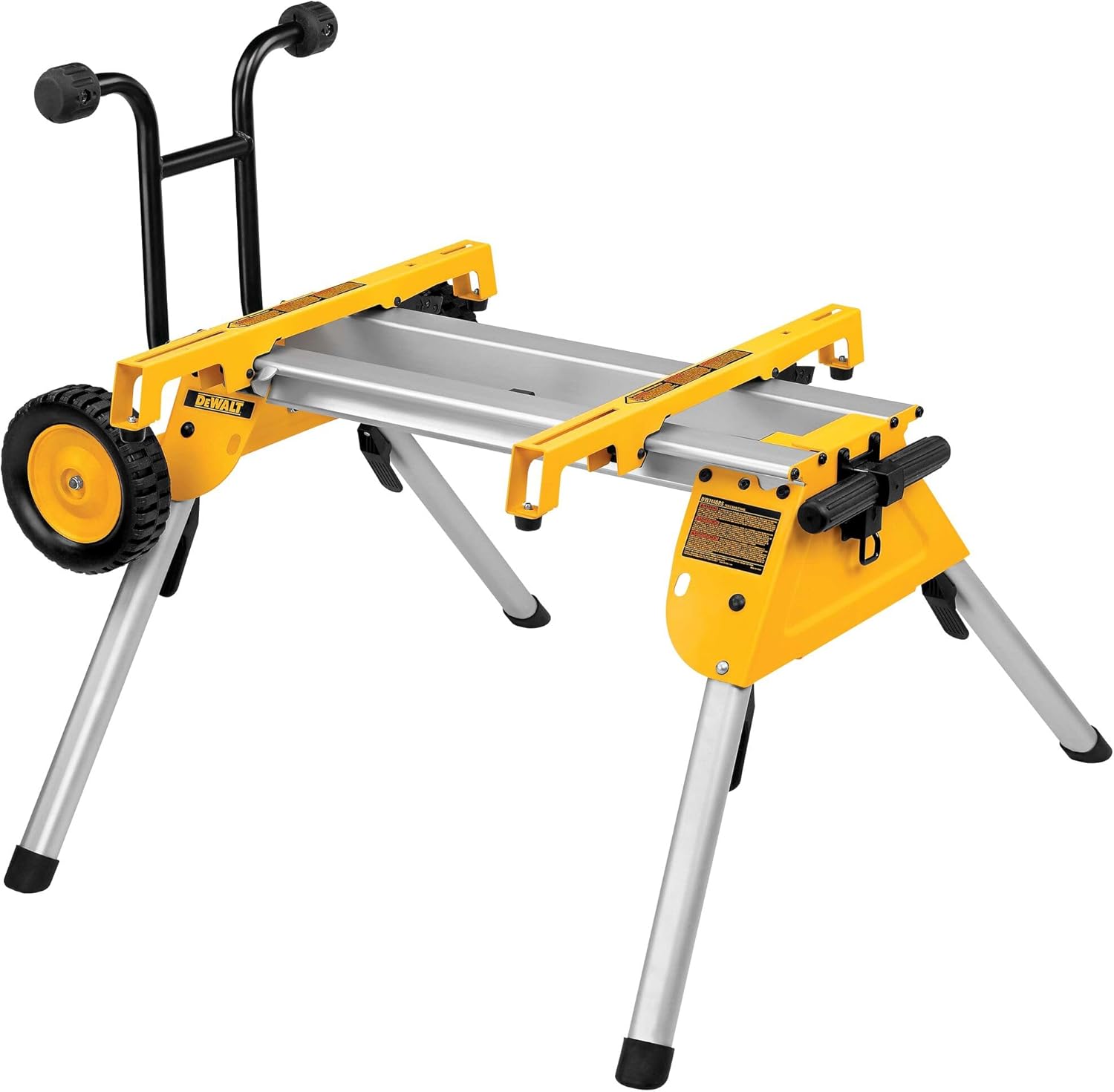
DEWALT DW7440RS Rolling Table Saw Stand
A lightweight rolling stand designed to make portable table saws easier to move around the jobsite. The DW7440RS weighs 33 pounds, features quick-connect brackets, folding legs, a retractable soft-grip handle, large wheels, and heavy-duty aluminum construction rated to support up to 200 pounds.
DeWalt’s DW7440RS is sold as a standalone rolling stand, separate from any specific saw, with quick-connect brackets DeWalt says fit its portable table saws generally. In practice, a small number of owners of DeWalt’s cordless DCS7485 have reported needing to modify the mounting or use an adapter to get a clean fit, so if you own a cordless model, check current compatibility before ordering. DeWalt also sells the DWE74911, a similar rolling stand, and some saws like the
DeWalt DWE7491RS Table Saw Review already include a folding rolling stand in the box, so you don’t need to buy one separately for that model.
Milwaukee

Milwaukee 48-08-0561 Folding Table Saw Stand
A compact steel folding stand designed for the Milwaukee M18 FUEL 8-1/4-inch Table Saw. It features a quick-attach latching system, adjustable foot for uneven surfaces, and a lightweight 15-pound design that makes transport and storage easier on the jobsite.
Milwaukee’s stand situation is narrower than DeWalt’s. The 48-08-0561 folding stand is built specifically for the M18 FUEL 8-1/4-inch table saw (model 2736) and isn’t marketed as compatible with other Milwaukee saws. It has no wheels, folds flat, and at 15 pounds is meant to be carried rather than rolled. If you’re deciding between the saw and its accessories, our
Milwaukee M18 Table Saw Review covers the saw itself in full.
Ridgid
Ridgid doesn’t sell its table saw stands as separate accessories the way DeWalt does. Instead, the stand comes bundled with the saw itself, an updated folding, single-step-release rolling stand ships with the R4514, currently around $549 for the saw and stand together. There’s no official standalone Ridgid stand to buy later if your original one breaks, so budget accordingly. Our
Ridgid Table Saw Review covers the R4514 in detail, including some fence issues worth knowing about before you buy.
Ryobi
Like Ridgid, Ryobi bundles its stands directly with specific saw models rather than selling them separately. The lineup currently includes the RTS12 (a folding, non-wheeled stand, about $229 for saw and stand), the RTS22 (a rolling stand, about $249), and the RTS23 (a wider rolling stand with expanded capacity, about $329). If your existing Ryobi stand is damaged, replacing just the stand generally isn’t an option through official channels, so check secondhand listings or consider a universal aftermarket base instead.
Universal Mobile Bases for Stationary Saws
If your saw is a hybrid or cabinet saw with no wheels at all, a universal mobile base is what turns it into something you can reposition without a hand truck and two friends. These are sold by weight capacity, not by saw brand, so any base rated for your saw’s weight, with margin, will generally work.
| Base type | Typical capacity | Typical price | Best for |
|---|---|---|---|
| Light-duty universal base (POWERTEC, VEVOR) | About 300 to 350 lbs | About $60 to $130 | Benchtop and compact jobsite saws |
| Mid-duty universal base (Bora, generic steel) | About 500 to 650 lbs | About $100 to $200 | Hybrid saws and mid-weight stationary tools |
| Heavy-duty universal base (Bora Super Duty, HTC) | About 1,000 to 1,500 lbs | About $150 to $350 | Cabinet saws and other heavy stationary machines |
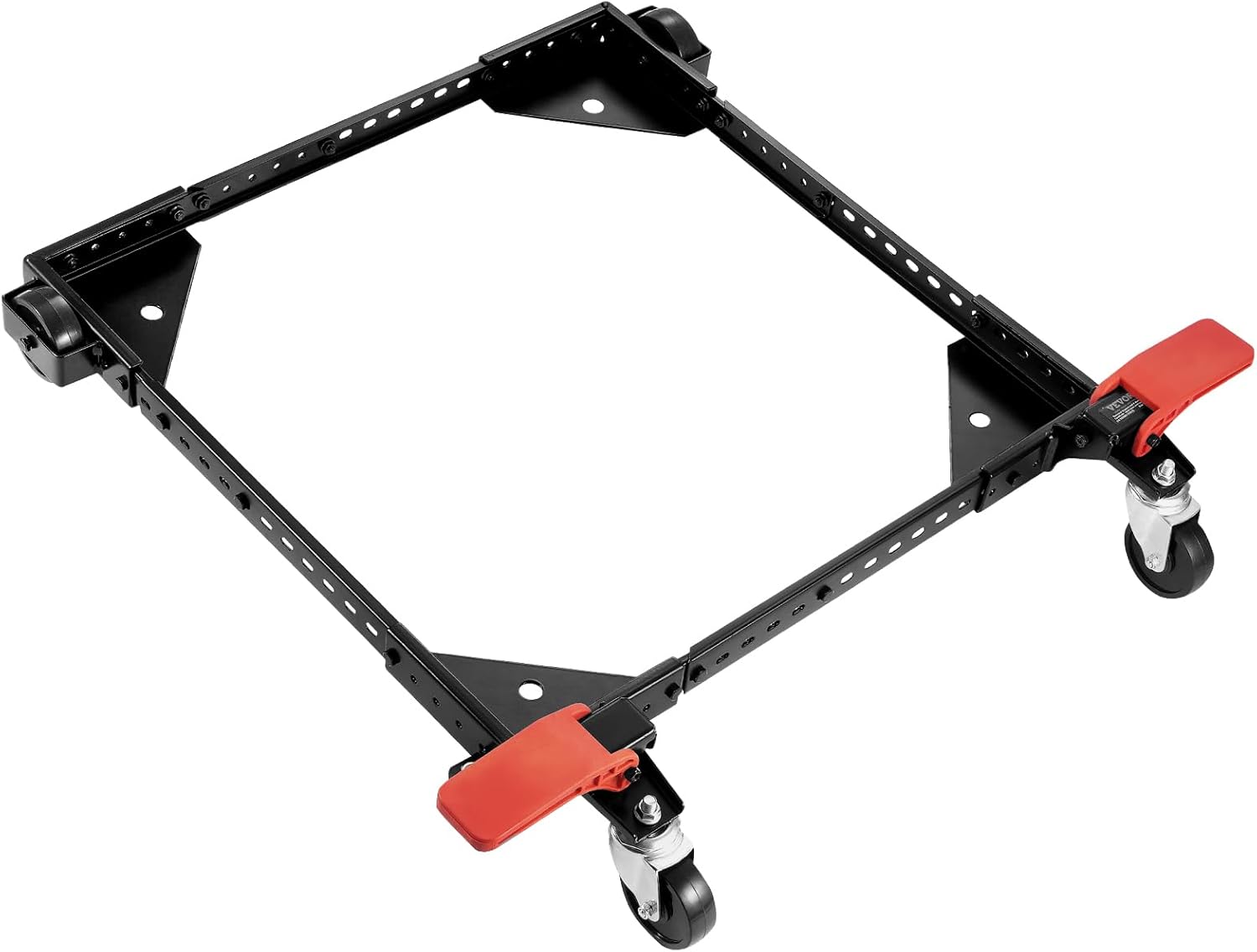
VEVOR Mobile Base, 1,500 lbs Capacity
A heavy-duty universal mobile base for woodworking equipment such as table saws, bandsaws, planers, and other machines. It uses a Q235 carbon-steel frame, four 3-inch swivel wheels, and an adjustable footprint from 20.7″ x 23.7″ up to 28″ x 33.5″, with a rated load capacity of 1,500 lbs.
Prices are current typical listings and vary by retailer and by sale. Always check your saw’s actual weight, including any extension wings or accessories, against the base’s rated capacity.
Worth knowing: A mobile base doesn’t just need to hold the saw’s static weight, it needs to hold it steady while you’re pushing material across the table, which puts more lateral force on the wheels and locks than sitting still does. Buying a base rated meaningfully above your saw’s actual weight, not right at the limit, gives you that margin.
Building Your Own Stand or Base

A shop-made option is realistic for both categories, and plenty of woodworkers go this route. For a stationary saw, a simple plywood platform on four locking casters, sized to your saw’s footprint and built from 3/4-inch plywood with a solid perimeter frame, is a common, well-documented DIY project that costs a fraction of a commercial base. For a portable saw you mainly use in one place, a basic sawhorse-style stand with a plywood top can work, though you’ll lose the fold-flat convenience a purpose-built stand offers. The trade-off with any DIY build is your own time and the fact that it won’t fold down as compactly as an engineered product, so weigh that against the cost savings for your situation.
Common Mistakes People Make
- Buying a universal mobile base rated too close to the saw’s actual weight, leaving no margin for material on the table
- Assuming a stand from one jobsite saw brand will fit a saw from a different brand
- Not checking a specific model number against a stand’s listed compatibility, especially with cordless saw variants
- Choosing a folding, non-wheeled stand for a saw you’ll be moving often across a large site, when a rolling stand would save real effort
- Skipping locking casters on a shop-made base, which lets the saw creep during a cut
- Forgetting that Ridgid and Ryobi don’t sell their stands separately, then being stuck without a replacement option if the original breaks
Frequently Asked Questions
What’s the difference between a table saw stand and a mobile base?
A stand is typically matched to a specific portable jobsite saw and lets it fold flat and roll around a site. A mobile base is a universal, wheeled platform bolted underneath a stationary saw, like a hybrid or cabinet saw, that has no stand of its own.
Will a DeWalt table saw stand fit a Milwaukee or Ridgid saw?
No. Stands are generally brand-specific and often model-specific, matched to particular mounting brackets. Check the exact saw model listed in the stand’s compatibility information before buying.
Can I buy a replacement stand for my Ridgid or Ryobi table saw?
Not easily through official channels. Both brands generally bundle the stand with the saw rather than selling it as a standalone accessory, so a broken stand often means shopping the used market or switching to a universal aftermarket base.
How much weight capacity do I need on a mobile base?
Buy meaningfully above your saw’s actual weight, not right at the limit, since pushing material across the table adds lateral force beyond the saw’s static weight. For a typical hybrid saw, that often means a base rated in the 500 to 650 lb range or higher.
Can I build my own table saw mobile base?
Yes, a plywood platform on locking casters is a common, well-documented DIY project for stationary saws, and it’s usually much cheaper than a commercial base. The trade-off is your own build time and a bulkier result than an engineered product.
Bottom Line
Match the product to the saw type first: a portable jobsite saw needs a brand- and often model-specific stand, while a stationary hybrid or cabinet saw needs a universal mobile base rated well above its actual weight. DeWalt is the one major brand that sells its stand as a flexible standalone accessory; Milwaukee, Ridgid, and Ryobi all tie their stands more tightly to specific saw models, so check compatibility carefully, or budget for a replacement, before you buy. Whichever you choose, locking casters and real weight margin matter more than the price tag on the box.
Related Reading
For the saws these stands attach to, see our Jobsite Table Saws and Portable Table Saw vs Jobsite Table Saw guides, and our Table Saw Accessories roundup for other add-ons worth considering.

Finlay Connolly is a woodworking enthusiast and power tool specialist with over a decade of hands-on experience in the workshop. As the founder and lead writer at ProTableSawReviews.com, Finlay combines expert knowledge with real-world testing to help woodworkers, DIYers, and professionals choose the best tools for the job. With a sharp eye for detail and a passion for precision, Finlay is committed to providing trustworthy, practical advice backed by years of experience and research in the field. Whether you’re cutting dados or comparing fence systems, you can count on Finlay for honest, reliable reviews that make your next cut your best one.


