
Best Table Saw for DIY Woodworking: 5 Picks for Every Skill Level
Looking for the best table saw for DIY woodworking? Compare 5 picks for beginners, furniture, cabinets, tight spaces, safety, and serious hobby work.
In this article
- This Isn’t Really About Price
- Find Your Stage
- Just Starting Out: SKIL TS6307-00
- Building Real Furniture and Cabinets: DeWalt DWE7491RS
- Working in a Tight Space: DeWalt DWE7485
- Working Alone and Prioritizing Safety: SawStop CTS
- Ready to Commit to the Hobby: Grizzly G0715P
- Matching Real Projects to Real Capability
- Common Mistakes DIY Woodworkers Make Choosing a Saw
- Frequently Asked Questions
- Bottom Line
This Isn’t Really About Price
Most “best table saw” guides sort everything by budget, and that makes sense for a contractor buying equipment. It makes less sense for someone building furniture, shelving, and the occasional planter box on weekends, where the real question isn’t just how much you want to spend. It’s where you actually are as a woodworker, and what your projects genuinely demand from the saw.

Robert Johnson, founder of Sawinery Woodworking, put it simply in a recent interview: table saws are versatile mainly because of their large work surface and adjustable fences, and that’s exactly what makes them the centerpiece of a DIY shop rather than a one-trick tool. This guide is organized around that idea, matching saws to where you actually are in your woodworking, not just what you can afford.
Find Your Stage
| Where You Are | Best Saw | What Changes |
| Never owned a table saw before | SKIL TS6307-00 | Real 10-inch capability without a big financial commitment while you learn |
| Building furniture, cabinets, and varied projects | DeWalt DWE7491RS | Balanced rip capacity and fence accuracy that doesn’t box you into one project type |
| Tight garage, apartment, or shared space | DeWalt DWE7485 | Smallest footprint here without giving up real fence accuracy |
| Working alone often, safety is a real priority | SawStop CTS | Flesh-detection technology matters more without someone nearby if something goes wrong |
| Ready to commit to woodworking as a serious hobby | Grizzly G0715P | Cabinet-mounted trunnions and independently verified precision you won’t outgrow |
Just Starting Out: SKIL TS6307-00

If you’ve never owned a table saw and aren’t sure yet how much you’ll actually use one, this is the low-risk way to find out. It’s become one of the most consistently recommended first table saws across woodworking communities, and independent hands-on testing backs up why: one tester ran 30 rip cuts through plywood with no misalignment, and found bevel cuts up to 45 degrees stayed consistent throughout.
What makes it DIY-friendly: A real rack-and-pinion fence, a full 10-inch blade, and integrated safety features like a blade guard and anti-kickback pawls that work without constantly getting in your way while you’re still learning proper technique.
Where it falls short: The miter gauge is basic, and one experienced reviewer noted the stock fence can flex slightly under real pressure, though they called this a minor nitpick for the price. It’s not the saw you’ll want to still be using once your projects get demanding.
Project fit: Shelving, small furniture, picture frames, and general home projects where you’re building skill and confidence more than pushing the tool’s limits.

SKIL TS6307-00 10-Inch Portable Jobsite Table Saw with Folding Stand
A portable 10-inch table saw built for DIYers, woodworkers, and jobsite use. Its 15-amp motor delivers strong cutting performance, while the rack-and-pinion fence system makes quick, precise adjustments. The included folding stand also makes setup, transport, and storage easier.
Check Price on Amazon (opens Amazon in a new tab)Building Real Furniture and Cabinets: DeWalt DWE7491RS

This is the saw most people actually settle on once they’ve moved past their first year of DIY projects and started tackling furniture, built-ins, and cabinet work that demands both rip capacity and repeatable accuracy. Bob Vila’s hands-on testing found it made smooth, square, and accurate cuts straight out of the box, with no fence adjustments needed before the first cut, a real point of friction most saws in this category don’t avoid so cleanly.
What makes it DIY-friendly: A 32.5-inch rip capacity that handles full plywood sheets for cabinet carcasses, well-placed controls testers specifically praised for easy access, and a 3-year warranty that reflects real confidence in the build.
Where it falls short: Assembly took Bob Vila’s testers about 45 minutes since the stand doesn’t come preassembled, and it needs a separate throat plate purchase for dado work. Neither is a dealbreaker, but plan for both.
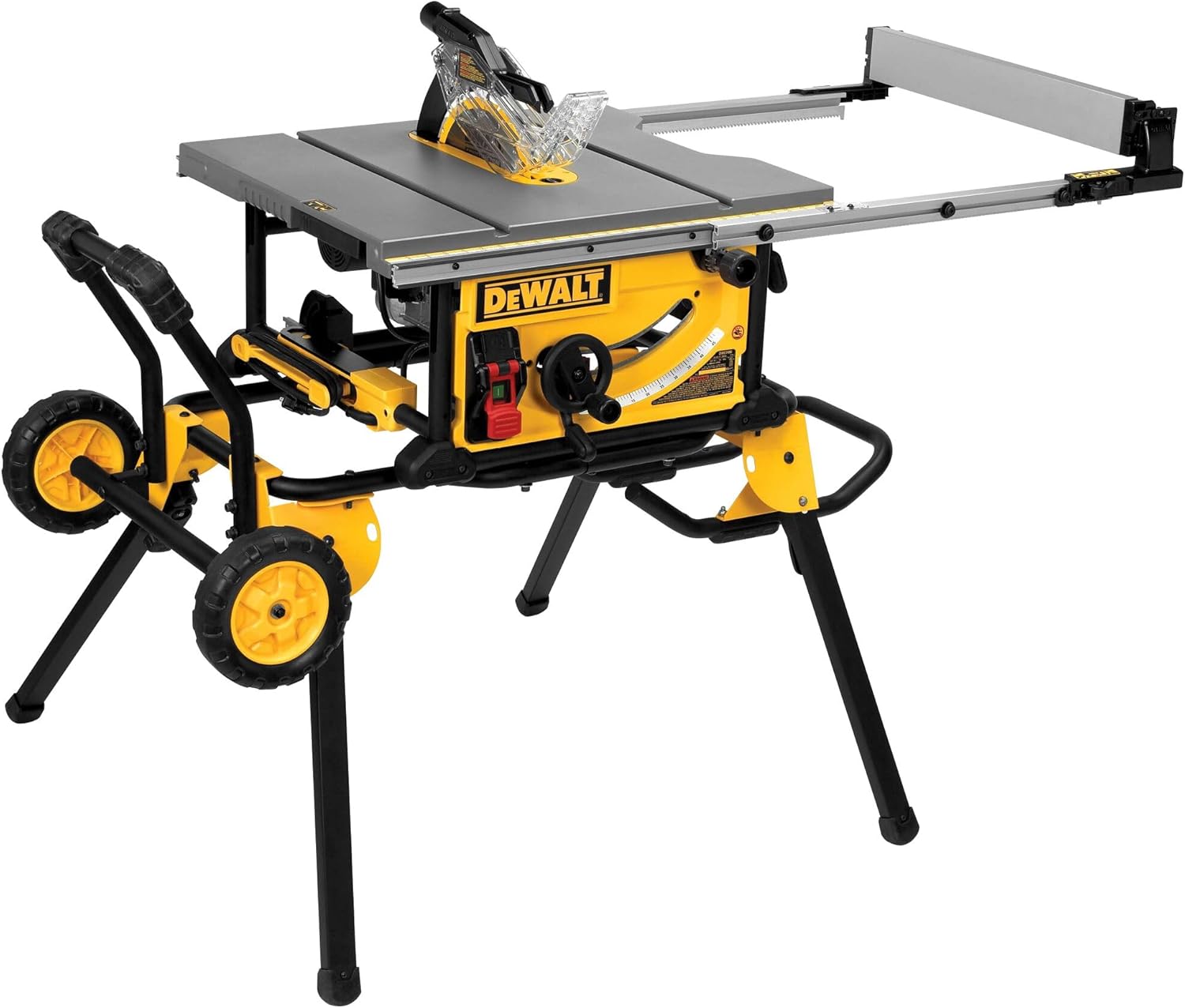
DEWALT DWE7491RS 10-Inch Jobsite Table Saw with Rolling Stand
A powerful 10-inch jobsite table saw with a 15-amp motor, 32-1/2-inch rip capacity, and rolling stand. Its rack-and-pinion telescoping fence makes fast, accurate adjustments, while the large rip capacity and 3-1/8-inch depth of cut make it well suited to larger sheet goods, hardwoods, shelving, and trim work.
Check Price on Amazon (opens Amazon in a new tab)Project fit: Cabinets, built-in shelving, dining tables, and any project where you’re breaking down full sheets and need the cuts to actually match your plans. Our full DeWalt DWE7491RS Table Saw Review goes deeper on this saw specifically.
Working in a Tight Space: DeWalt DWE7485

Not every DIY woodworker has a dedicated shop. If your saw needs to live in a corner of a one-car garage, a shed, or an apartment storage space, the compact DWE7485 solves a real, practical problem the larger saws in this guide don’t: it takes up meaningfully less floor space without sacrificing the fence accuracy that makes a table saw worth owning in the first place.
What makes it DIY-friendly: A cast aluminum table, a genuine upgrade over the stamped steel most compact saws use, and a rack-and-pinion fence that one long-term owner specifically checked with a straightedge and confirmed stayed flat after a year of regular use.
Where it falls short: It cannot accept a dado stack at all, and the smaller 8-1/4 inch blade means less maximum cutting depth than a full 10-inch saw.
Project fit: Smaller furniture pieces, shelving, and craft projects where the saw needs to fold away between weekend sessions rather than dominate permanent floor space.

DEWALT DWE7485 8-1/4-Inch Compact Jobsite Table Saw
A compact 8-1/4-inch jobsite table saw with a powerful 15-amp, 5,800 RPM motor and 24.5-inch rip capacity. Its rack-and-pinion telescoping fence allows fast, accurate adjustments, while the metal roll cage base adds durability for demanding jobsite use.
Check Price on Amazon (opens Amazon in a new tab)Working Alone and Prioritizing Safety: SawStop CTS

A lot of DIY woodworking happens solo, in a garage, without anyone else around if something goes wrong. That’s exactly the situation where SawStop’s flesh-detection technology carries the most real value. One Pro Tool Reviews editor, after years of testing table saws professionally, put it plainly in their own buying guide: for their money, they’d go with SawStop.
What makes it DIY-friendly: The AIM safety system detects blade-to-skin contact and stops the blade in under 5 milliseconds, turning what could be a serious injury into a minor nick in the vast majority of documented cases. That matters more, not less, when you’re working without anyone nearby.
Where it falls short: The direct-drive motor design means it cannot accept a dado stack under any circumstances, the smallest rip capacity in this guide at 24.5 inches, and the stand is sold separately for an additional cost.
Project fit: Any DIY woodworker who weighs peace of mind heavily, especially those working solo on weekends without someone else in the shop.
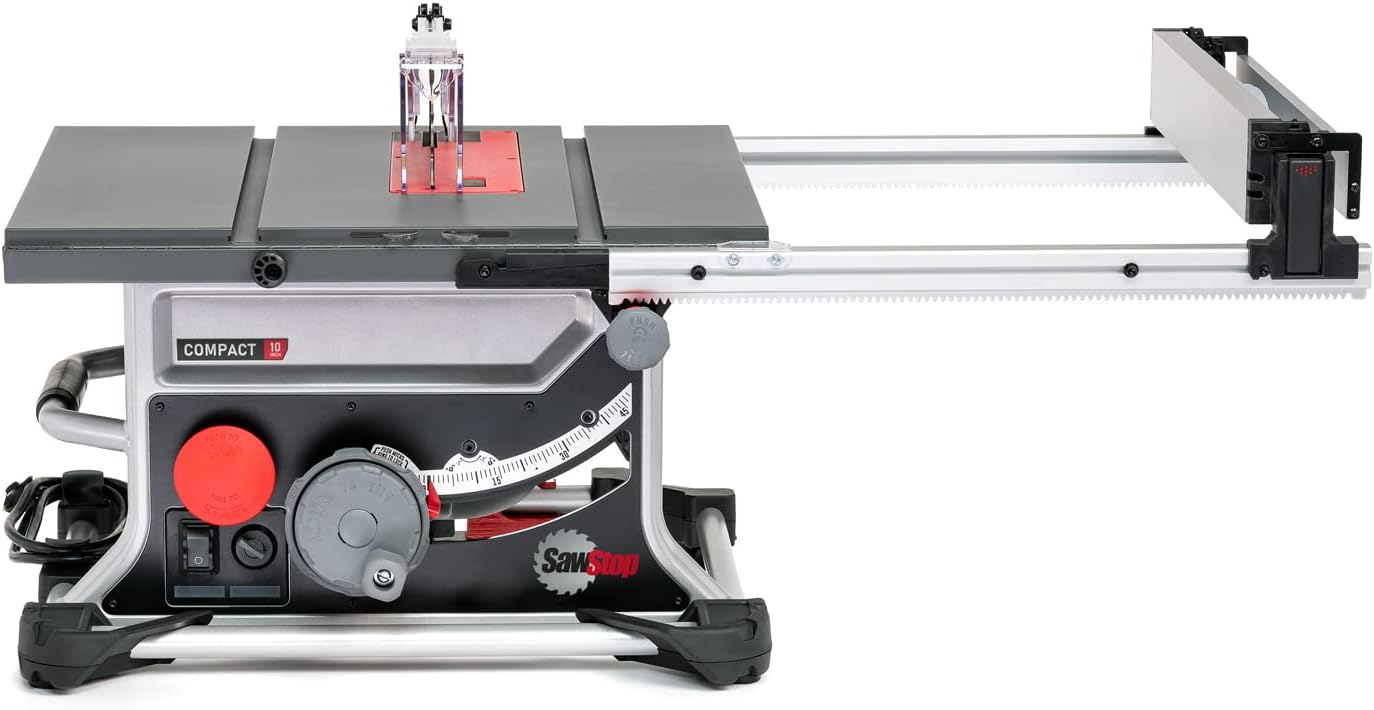
SawStop CTS-120A60 10-Inch Compact Table Saw
A compact 10-inch table saw that combines portability with SawStop’s patented safety system. The 15-amp direct-drive motor runs at 4,000 RPM, while the rack-and-pinion fence provides up to 24-1/2 inches of rip capacity. At 68 pounds, it’s designed to be carried easily to and from the jobsite.
Check Price on Amazon (opens Amazon in a new tab)Ready to Commit to the Hobby: Grizzly G0715P

At some point, a serious DIY woodworker outgrows portable saws entirely, not because the projects get bigger, but because the accuracy demands do. This is a genuine hybrid saw, with trunnions, the brackets holding the blade, mounted to the cabinet rather than the tabletop, the same design cabinet saws use for long-term precision. Fine Woodworking’s own hands-on testing measured arbor runout under 0.001 inches, a tolerance that portable jobsite saws in this guide simply don’t match.
What makes it DIY-friendly: Independently verified precision that holds up over years, not just out of the box, plus a cast-iron top that resists the flex lighter saws deal with under real pressure.
Where it falls short: It ships prewired for 220V, meaning you’ll need that circuit available or budget for an electrician. The same testing flagged the miter gauge as having too much play, and more than one owner has upgraded the stock fence not long after purchase.
Project fit: Fine furniture, joinery-heavy projects, and any DIY woodworker treating this as a long-term craft rather than an occasional weekend activity.
Matching Real Projects to Real Capability

Shelving and Small Furniture
Almost any saw in this guide handles these projects comfortably. This is where a first table saw like the SKIL genuinely shines, since the accuracy demands are forgiving enough to build confidence without frustration.
Cabinets and Built-Ins
This is where rip capacity starts to matter more than any other single spec. Breaking down full sheets of plywood into cabinet sides and shelves needs the kind of capacity the DeWalt DWE7491RS or a hybrid saw provides, not a compact benchtop model.
Fine Furniture and Joinery
Dado joints, precise miters, and repeated identical cuts are where a hybrid saw’s cabinet-mounted trunnions genuinely pay off. This is the point where independently verified accuracy stops being a nice-to-have and starts being the difference between a joint that fits and one that doesn’t.
Outdoor Projects and Rough Carpentry
Planters, garden beds, and similar projects rarely demand precision furniture-grade accuracy. Any saw in this guide handles this work, and it’s a reasonable place to build comfort with a new saw before moving to more demanding projects.
Common Mistakes DIY Woodworkers Make Choosing a Saw

- Buying a hybrid saw’s precision and price before actually needing that level of accuracy for current projects
- Choosing based on price alone and ending up with a saw too small for cabinet or furniture work
- Not planning for a 220V circuit before buying a saw that requires one
- Skipping dado capability entirely, then being frustrated later when joinery becomes part of the plan
- Assuming every saw folds down small enough for tight storage, when some genuinely don’t
- Underestimating how much solo, unsupervised shop time actually happens, and dismissing safety technology as unnecessary too quickly
Frequently Asked Questions
What’s the best table saw for someone completely new to woodworking?
The SKIL TS6307-00 is a strong starting point. It delivers real 10-inch cutting capability and a genuine rack-and-pinion fence at a price that doesn’t punish you if you decide woodworking isn’t for you after all. It’s specifically well suited to building skill and confidence before stepping up to a more demanding saw.
Do I need a hybrid saw for DIY woodworking, or is a portable saw enough?
A portable jobsite saw like the DeWalt DWE7491RS handles the vast majority of DIY furniture, cabinet, and home projects without issue. A hybrid saw like the Grizzly G0715P becomes worth the extra cost and 220V requirement once your projects consistently demand precision that portable saws struggle to hold over time, like detailed joinery or fine furniture work.
Is SawStop worth the extra cost for a hobbyist?
It depends on how much you value the flesh-detection safety system specifically, since in most other respects the SawStop CTS has less rip capacity and no dado capability compared to cheaper alternatives. For solo DIY woodworkers without someone else in the shop, many find the safety technology worth the trade-off.
Can I do fine furniture work on a portable jobsite saw?
Yes, plenty of DIY woodworkers build genuinely fine furniture on portable saws like the DWE7491RS. The main limitation shows up in long-term accuracy under sustained, precise work, where a hybrid saw’s cabinet-mounted trunnions hold their settings more reliably. If you’re deciding whether to upgrade, our Best Table Saws for Beginners guide can help you figure out whether you’ve genuinely outgrown your current saw.
How much space do I actually need for a DIY table saw?
Beyond the saw’s footprint itself, plan for enough clear space in front of and behind the blade to support a full sheet of plywood during a rip cut, generally at least 8 feet of clearance in the direction of the cut. Compact saws like the DWE7485 reduce the saw’s own footprint but don’t change how much clearance a long rip cut actually needs.
Bottom Line
The best table saw for DIY woodworking isn’t a single model, it’s whichever one actually matches where you are right now. Start with the SKIL if you’re still finding out how much you’ll use a table saw. Move to the DeWalt DWE7491RS once furniture and cabinet projects become regular. Choose the compact DWE7485 if space is your real constraint, the SawStop if safety technology matters enough to accept its trade-offs, and the Grizzly hybrid once your projects demand precision a portable saw can’t consistently hold.

Finlay Connolly is a woodworking enthusiast and power tool specialist with over a decade of hands-on experience in the workshop. As the founder and lead writer at ProTableSawReviews.com, Finlay combines expert knowledge with real-world testing to help woodworkers, DIYers, and professionals choose the best tools for the job. With a sharp eye for detail and a passion for precision, Finlay is committed to providing trustworthy, practical advice backed by years of experience and research in the field. Whether you’re cutting dados or comparing fence systems, you can count on Finlay for honest, reliable reviews that make your next cut your best one.


