
Best Table Saw for Home Use: 5 Top Picks for Every Budget and Space
Best table saw for home use: budget SKIL and Ryobi saws through the DeWalt DWE7491RS and Ridgid R4512, for DIY, garages and home workshops.

Short answer: for most home shops, the SKIL TS6307-00 hits the best balance of price, fence accuracy, and dado capability, typically running $279–$329. If your garage or basement can handle a bigger footprint and a 220V circuit, a hybrid saw like the Ridgid R4512 gets you real cabinet-saw-adjacent performance without the full cabinet saw price. And if space and portability matter more than raw capacity, the Ryobi RTS12 or Craftsman CMXETAX69434502 cover general home projects reliably for well under $300.
“Home use” is its own category with its own priorities — different from a jobsite saw built for daily abuse, and different from a cabinet saw built for a dedicated production shop. Here’s what actually matters when the saw lives in your garage, basement, or shared workspace.
In this article
- What “home use” actually means as a category
- Best table saws for home use
- SKIL TS6307-00 — the one most home shops should buy
- Ryobi RTS12 and Craftsman CMXETAX69434502 — the budget-first picks
- DeWalt DWE7491RS — if you want the best fence money can buy at this size
- Ridgid R4512 — for a dedicated home shop space
- Space planning for a home shop
- Power and electrical considerations
- Noise and dust in a shared living space
- Storage and mobility between projects
- Safety considerations specific to a home environment
- What to prioritize based on your actual projects
- Common mistakes people make buying a home table saw
- Home use vs jobsite use: a real distinction, not just marketing
- Should you consider a used table saw for home use?
- Maintenance realities for occasional home use
- Building out a home shop around your first saw
- FAQ
What “home use” actually means as a category

A home shop has constraints a commercial shop doesn’t. Power is usually a standard 110V outlet unless you’ve had a 220V circuit installed. Space often has to double as a car space, storage, or a laundry area. Noise matters more when there are neighbors on the other side of a garage wall or family members in the house while you’re cutting. And the saw frequently needs to be moved, folded, or tucked away between projects rather than staying permanently set up.
None of this makes a home shop saw a lesser tool — it just means the priorities shift. Rip capacity and motor horsepower matter less than fence reliability, table size that fits your actual space, and a saw that’s easy to store and set up without a production crew helping you move it.
Best table saws for home use
| Saw | Category | Typical Price | Power | Best For |
|---|---|---|---|---|
| SKIL TS6307-00 | Jobsite / benchtop | $279–$329 | 15A, 110V | Best overall balance for most home shops |
| Ryobi RTS12 | Benchtop | ~$229 | 15A, 110V | Budget-friendly, reliable for general DIY |
| Craftsman CMXETAX69434502 | Benchtop | $199–$250 | 15A, 110V | Cheapest reliable entry point |
| DeWalt DWE7491RS | Jobsite / portable | $550–$700+ | 15A, 110V | Best fence accuracy if budget allows |
| Ridgid R4512 | Hybrid | ~$600–$700 | 2 HP, 110V/220V | Best step up for a dedicated home shop space |
Prices shift with sales — treat this as a snapshot and confirm current listings before buying.
SKIL TS6307-00 — the one most home shops should buy

This saw earns its spot because it doesn’t force a trade-off most other saws in its price range do. It has a genuine rack-and-pinion fence, which holds its setting far more reliably than the basic clamp-style fences common at this price point, and it takes a dado stack, which a lot of budget saws simply can’t handle. It comes with a folding stand, so it stores away when you’re not using it rather than permanently occupying floor space.
For general home projects — shelving, furniture, trim, the occasional deck or renovation task — this covers nearly everything without asking you to spend cabinet-saw money.

SKIL TS6307-00 10-Inch Portable Jobsite Table Saw
A portable 10-inch jobsite table saw with a powerful 15-amp motor, 4,600 RPM no-load speed, 25-inch rip capacity, and 4 × 4 cutting capability at 90°. Its folding stand makes setup, transport, and storage easier for jobsite and DIY projects.
Check Price on Amazon (opens Amazon in a new tab)Ryobi RTS12 and Craftsman CMXETAX69434502 — the budget-first picks

Both of these stay reliably under $300 without needing a sale to get there, which matters if you want a dependable answer today rather than waiting to catch a discount. Neither has a premium fence system, so expect to check and adjust it more often than you would on the SKIL, but for straightforward home DIY work — cutting plywood for shelves, ripping trim, general repair projects — both handle the job.
These make the most sense if you’re not sure yet how much you’ll actually use a table saw, or if the budget genuinely needs to stay as low as possible while still getting a saw that’s safe and functional.
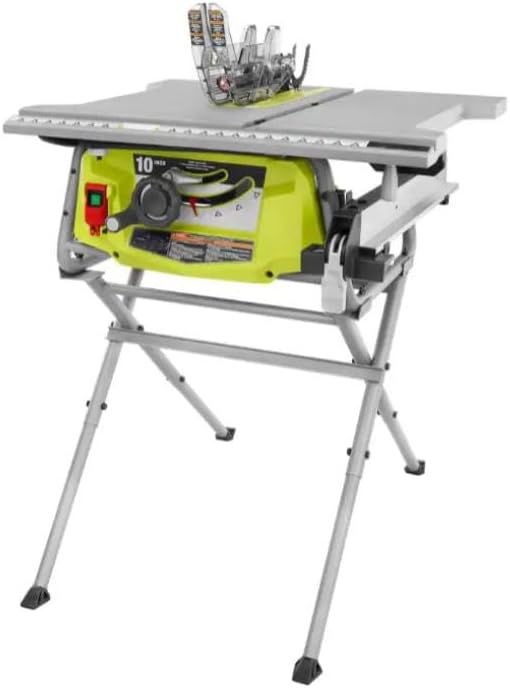
RYOBI RTS12 10-Inch Compact Portable Jobsite Table Saw
A compact 10-inch portable table saw powered by a 15-amp motor with a 5,000 RPM no-load speed. It includes a folding stand, cast-aluminum tabletop, steel roll cage, integrated dust chute, tool-free guarding, and onboard accessory storage for convenient jobsite use.
Check Price on Amazon (opens Amazon in a new tab)DeWalt DWE7491RS — if you want the best fence money can buy at this size

This saw regularly tops “best portable saw” lists for a reason: the rack-and-pinion fence and telescoping rails give it real accuracy and a 32-1/2 inch rip capacity that’s unusual for a saw this size. It’s a bigger investment than the other benchtop options here, typically $550 and up, but if fence precision matters to your projects — furniture, cabinetry, anything with tight tolerances — it’s a meaningful step up.
It still runs on a standard 110V outlet and folds onto a rolling stand, so it fits the home-use category even at this higher price point. It’s simply a saw for someone who’s decided the extra accuracy is worth paying for.
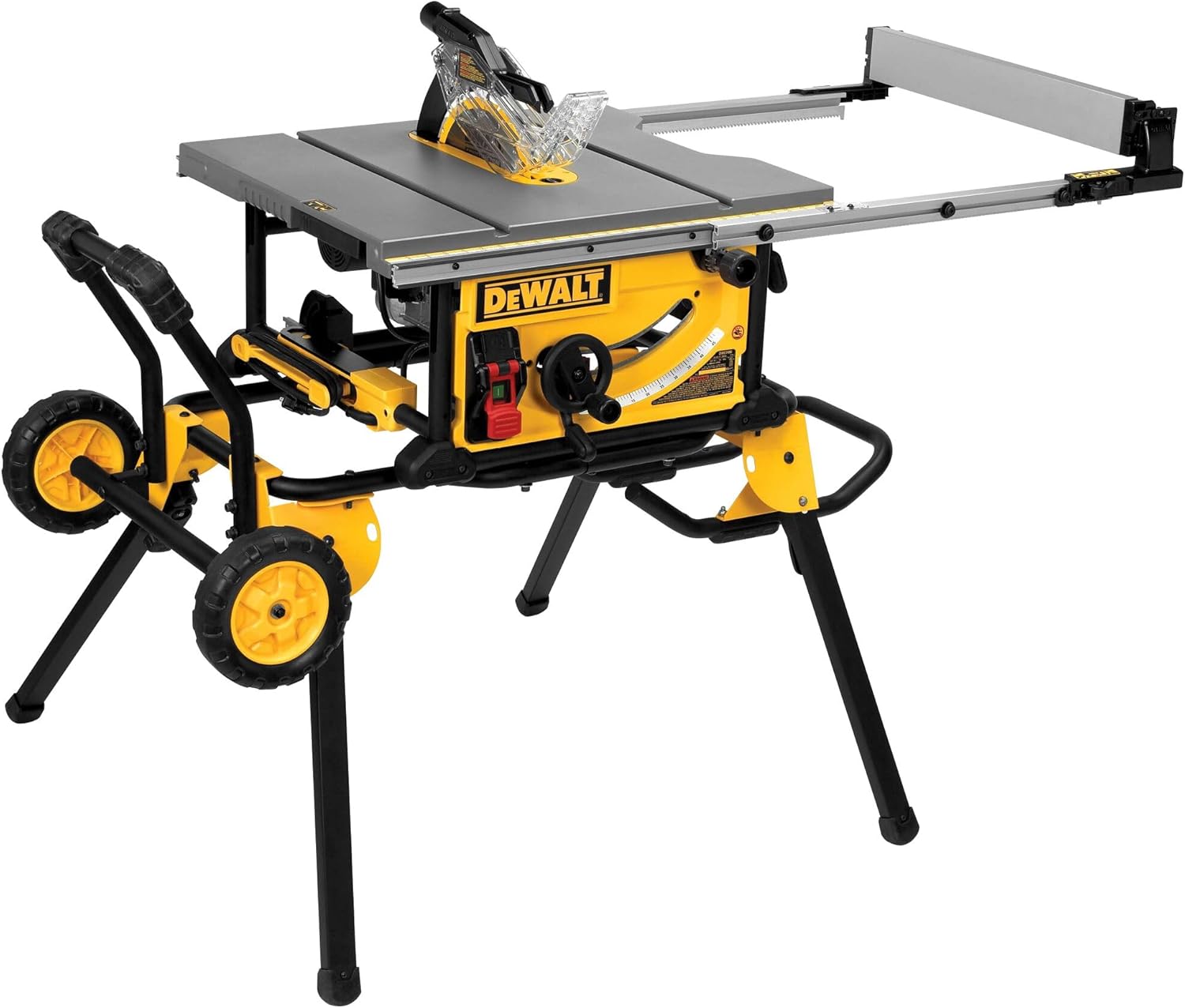
DEWALT DWE7491RS 10-Inch Jobsite Table Saw
A powerful 15-amp jobsite table saw with a 10-inch blade, 32-1/2-inch right-side rip capacity, and 4,800 RPM no-load speed. The rack-and-pinion telescoping fence allows quick, accurate adjustments, while the rolling stand makes setup and transport easier. It provides up to 3-1/8 inches of cutting depth at 90°.
Check Price on Amazon (opens Amazon in a new tab)Ridgid R4512 — for a dedicated home shop space

If your home has a garage, basement, or shed that functions as a real, semi-permanent shop space, a hybrid saw like the Ridgid R4512 is worth considering. It uses a partially enclosed cabinet base, a 2 HP motor, and cast iron table wings, which together deliver noticeably better dust collection, less vibration, and cleaner cuts than any benchtop saw can manage.
This isn’t a saw you fold up and put away — it stays in place. That’s the trade-off for the performance jump. If you have the space and you’re doing serious, repeated woodworking rather than occasional projects, this tier is where the investment starts paying off in cut quality and long-term durability.
Space planning for a home shop

This is the constraint that trips people up more than budget does. A benchtop or jobsite saw needs its own footprint plus enough clearance in front and behind for infeed and outfeed — plan for roughly 6 feet of total clearance even for a compact saw, more if you’re regularly cutting long stock or full sheets. A hybrid or cabinet saw needs meaningfully more, since the table itself is larger and the saw isn’t going anywhere once it’s set up.
If your space genuinely can’t accommodate a permanent saw, prioritize a model with a folding stand, like the SKIL, Ryobi, or Craftsman options above, over a hybrid saw that has to stay in one spot indefinitely.
Power and electrical considerations

Most homes have standard 110V outlets throughout the garage and house, which every saw in this list except the Ridgid can run on without any electrical work. If you’re considering a hybrid or cabinet saw down the line, check whether it needs a dedicated 220V circuit before falling in love with a specific model — some hybrid saws, including certain R4512 configurations, offer both 110V and 220V options, but not every hybrid or cabinet saw does, and adding a 220V circuit means an electrician.
Noise and dust in a shared living space

This matters more for home shops than almost any other setting. A table saw running in an attached garage is audible throughout most homes, and sawdust travels further than people expect, especially through shared HVAC systems or an open garage door leading into the house.
A few things help meaningfully: keeping the garage door open while cutting improves both noise dispersal and air quality, connecting even a basic shop vac to the saw’s dust port catches far more than running without one, and doing your loudest, dustiest cutting during hours that don’t disturb family or neighbors is worth planning around rather than an afterthought. Our guide to table saws with strong dust collection covers which models handle this best if dust control is a priority for your space.
Storage and mobility between projects

If the saw needs to share space with a car, lawn equipment, or general storage, a folding stand isn’t a nice-to-have, it’s close to essential. All three budget picks in this guide — the SKIL, Ryobi, and Craftsman — fold down for storage, which the Ridgid hybrid saw doesn’t do by design.
A mobile base is worth adding to any saw that doesn’t already include one, even a benchtop model, since wheeling a saw out of the way is far easier than lifting it, especially solo.
Safety considerations specific to a home environment
A home shop often means cutting with family members, kids, or pets somewhere in the house or yard, which changes a few practical habits worth building in from the start. Keep the shop area closed off or gated while the saw is running, store push sticks and blade guards where they’re actually used rather than in a drawer across the garage, and unplug the saw (not just switch it off) any time you step away mid-project, especially if kids have access to the space.
A proper push stick or push block matters just as much in a home shop as anywhere else — arguably more, since a home shop saw often sees more occasional, less-practiced use than a saw run daily by an experienced tradesperson.
What to prioritize based on your actual projects
| If you mostly do… | Prioritize |
|---|---|
| Shelving, trim, general repairs | A reliable budget saw — SKIL, Ryobi, or Craftsman |
| Furniture with tight joinery | Fence accuracy — DeWalt DWE7491RS |
| Regular woodworking in a dedicated space | A hybrid saw — Ridgid R4512 |
| Occasional projects, unsure how much you’ll use it | The cheapest reliable option, upgrade later if needed |
| Cutting sheet goods regularly | Rip capacity and a stand that supports full sheets |
Common mistakes people make buying a home table saw

Buying based on price alone and ending up with a fence that won’t hold its setting is one of the most common ones — a saw that requires constant readjustment gets used less and trusted less over time. Underestimating floor space is another, especially with hybrid or cabinet saws that don’t fold away when the project’s done. Skipping dust collection planning until after the saw is already creating a mess throughout the garage or house is a mistake worth avoiding from day one rather than fixing after the fact. And buying far more saw than the actual projects call for — a full hybrid saw for someone building the occasional birdhouse — usually means money that would have been better spent on good accessories for a simpler saw.
Home use vs jobsite use: a real distinction, not just marketing

A lot of saws marketed as “jobsite saws” get bought for home shops, and that’s mostly fine, but it’s worth understanding what that label actually means. Jobsite saws are built to survive being loaded into a truck, bounced around, set up and broken down daily, and used in inconsistent weather and lighting conditions. That durability is genuinely useful, but it’s not free — it usually means a simpler fence, a lighter overall build, and fewer refinements aimed at long-term stationary accuracy.
A home shop saw doesn’t need to survive a truck bed every day. If your saw is going to live in one general area and get folded away occasionally rather than hauled to a new site weekly, you can prioritize fence accuracy and table stability over ruggedness, which is part of why the SKIL and DeWalt options in this guide punch above their jobsite-saw framing for home use specifically.
Should you consider a used table saw for home use?

Buying used is a legitimate way to get more saw for the money, especially for hybrid or cabinet saws that hold their value well and often turn up on local listings from woodworkers upgrading or downsizing their shops. A well-maintained used hybrid saw can outperform a brand-new benchtop model at a similar price.
The trade-offs are real, though. You lose the manufacturer warranty, you’re relying on the seller’s honesty about condition and history, and you need to actually inspect the saw in person — check the table for flatness, the fence for smooth travel and proper locking, and the blade arbor for wobble — before handing over money. If you can’t inspect a saw in person and power it up before buying, a new saw with a warranty is the safer choice, even if it costs somewhat more upfront.
Maintenance realities for occasional home use

A saw that gets used every day develops a maintenance rhythm almost automatically — you notice drift or binding quickly because you’re cutting constantly. A home shop saw that sees a few hours of use every week or two is different: problems can sit unnoticed for months, then show up all at once on a project where accuracy actually matters.
A few habits are worth building in specifically because of this occasional-use pattern. Check the fence for square against the blade before starting any project that needs real precision, not just when something feels off, since a home shop saw can drift for weeks without anyone noticing. Wipe down the table and wax it periodically even if it’s not getting daily use, since rust and resin buildup happen just as easily sitting idle in a humid garage as they do from active cutting. And store blades properly rather than leaving one mounted indefinitely, since a blade left on a saw in a damp garage corrodes faster than most people expect.
Building out a home shop around your first saw
The saw is usually the first major purchase, but a few accessories make a bigger difference to safety and results than people expect when they’re focused entirely on the saw itself. A crosscut sled sized to your saw’s table gives far more accuracy on repeat cuts than the stock miter gauge included with any benchtop saw. A zero clearance insert reduces splintering on plywood and finish-grade cuts, which matters a lot for furniture and cabinetry projects done at home. And if your projects involve any dado work, checking dado set compatibility before buying a saw — not after — avoids finding out later that your chosen saw can’t actually run the stack you need.
FAQ
What’s the best table saw for a beginner setting up a home shop? The SKIL TS6307-00 is a strong starting point for most beginners — it has a real rack-and-pinion fence, handles dado cuts, and stores away on a folding stand, without asking for cabinet-saw money before you know how much you’ll actually use it.
Do I need a 220V circuit for a home table saw? No, unless you step up to certain hybrid or cabinet saws. Every benchtop and jobsite saw in this guide runs on a standard 110V household outlet.
How much space do I actually need for a home table saw? Plan for at least 6 feet of clearance in front and behind a benchtop saw for infeed and outfeed. Hybrid and cabinet saws need meaningfully more, both for the saw itself and for safely working around it.
Is a folding stand worth it for home use? Generally yes, unless you have a genuinely dedicated, permanent shop space. A folding stand lets the saw share space with a car, storage, or general garage use between projects.
How do I keep sawdust from spreading through the house? Connect a shop vac or dust collector to the saw’s dust port at minimum, keep the garage door open while cutting when possible, and consider closing off the shop area from the rest of the house during dusty cuts.

Finlay Connolly is a woodworking enthusiast and power tool specialist with over a decade of hands-on experience in the workshop. As the founder and lead writer at ProTableSawReviews.com, Finlay combines expert knowledge with real-world testing to help woodworkers, DIYers, and professionals choose the best tools for the job. With a sharp eye for detail and a passion for precision, Finlay is committed to providing trustworthy, practical advice backed by years of experience and research in the field. Whether you’re cutting dados or comparing fence systems, you can count on Finlay for honest, reliable reviews that make your next cut your best one.


