
Table Saw Blades & Accessories
Best Zero Clearance Table Saw Inserts (+ How to Make Your Own)
Best zero clearance table saw inserts for cleaner cuts and less tear-out. Compare top picks and follow free DIY plans to make your own.

Short answer: a universal zero clearance insert kit (like the Micro Jig ZCT or a saw-specific brand insert) is the easiest upgrade for most saws, but building your own from a scrap of MDF or hardboard costs almost nothing and works just as well once you’ve done it twice. Either way, this is one of the cheapest upgrades that makes a real difference in cut quality.
Here’s the full picture — what these inserts actually fix, which ones to buy, and a free plan for making your own.
In this article
- What a zero clearance insert actually does
- Zero clearance vs stock insert
- Best premade zero clearance inserts
- What material works best
- How to make your own zero clearance insert (free plan)
- Sizing for different bevel angles
- Common mistakes people make with zero clearance inserts
- Where a zero clearance insert fits with the rest of your setup
- Which saws benefit most
- FAQ
What a zero clearance insert actually does

Your saw came with a throat plate that has a wide slot for the blade to pass through. That gap has to be wide enough to fit blades at different angles and heights, so it’s bigger than any single cut needs.
That extra gap is the problem. Thin strips can dip into it and get chewed up. Plywood and veneer can splinter on the underside because there’s nothing supporting the wood fibers right at the cut line. A zero clearance insert closes that gap down to just the width of the blade itself, so the wood is supported almost right up to the teeth.
If you’ve ever pulled a finished cut off the saw and found splintering on the bottom face, or had a thin offcut drop straight down into the throat plate slot, a zero clearance insert is usually the fix.
Zero clearance vs stock insert
| Stock Insert | Zero Clearance Insert | |
|---|---|---|
| Slot width | Wide, fits multiple blade angles | Cut to match your exact blade |
| Splintering on cuts | More common, especially on plywood | Reduced significantly |
| Thin strip support | Poor, strips can dip into the gap | Strong, no gap for strips to fall into |
| Works at every bevel angle | Yes | No, one insert per angle unless you make several |
| Cost | Included with the saw | $15–$40 for premade, near-free if shop-made |
The one real trade-off is angle flexibility. A zero clearance insert is cut for a specific blade height and bevel angle, so if you cut a lot of bevels, you’ll want a couple of inserts on hand rather than just one.
Best premade zero clearance inserts
| Product | Best For | Material | Price Range | Notes |
|---|---|---|---|---|
| Micro Jig ZCT Zero Clearance Throat Plate | Most 10″ table saws | Phenolic/plastic composite | $$ | Comes pre-cut close to size, quick to fit |
| Saw-brand OEM zero clearance insert | Exact-fit accuracy | Varies by brand | $$ | Best fit, but usually only works for that one saw’s stock blade height range |
| Rockler Phenolic Blank Insert | DIYers who want a better material than wood | Phenolic | $ | You cut the blade slot yourself, but the blank resists wear better than MDF |
| Shop-made MDF or hardboard insert | Any budget | MDF or tempered hardboard | Free–$5 | Cheapest option, takes about 20 minutes to make |
Micro Jig ZCT — best if you want something close to ready-to-use without cutting a full blank from scratch.

MICROJIG MJ Splitter SteelPro
Precision splitter system for zero-clearance inserts that helps reduce kickback and improve control during table saw rip cuts.
Check Price on Amazon (opens Amazon in a new tab)OEM inserts — best if your saw brand sells one specifically for your model. Fit is usually excellent, though selection and stock levels vary.
Phenolic blanks — best middle ground if you want to make your own but want a material that holds up to years of use better than MDF.
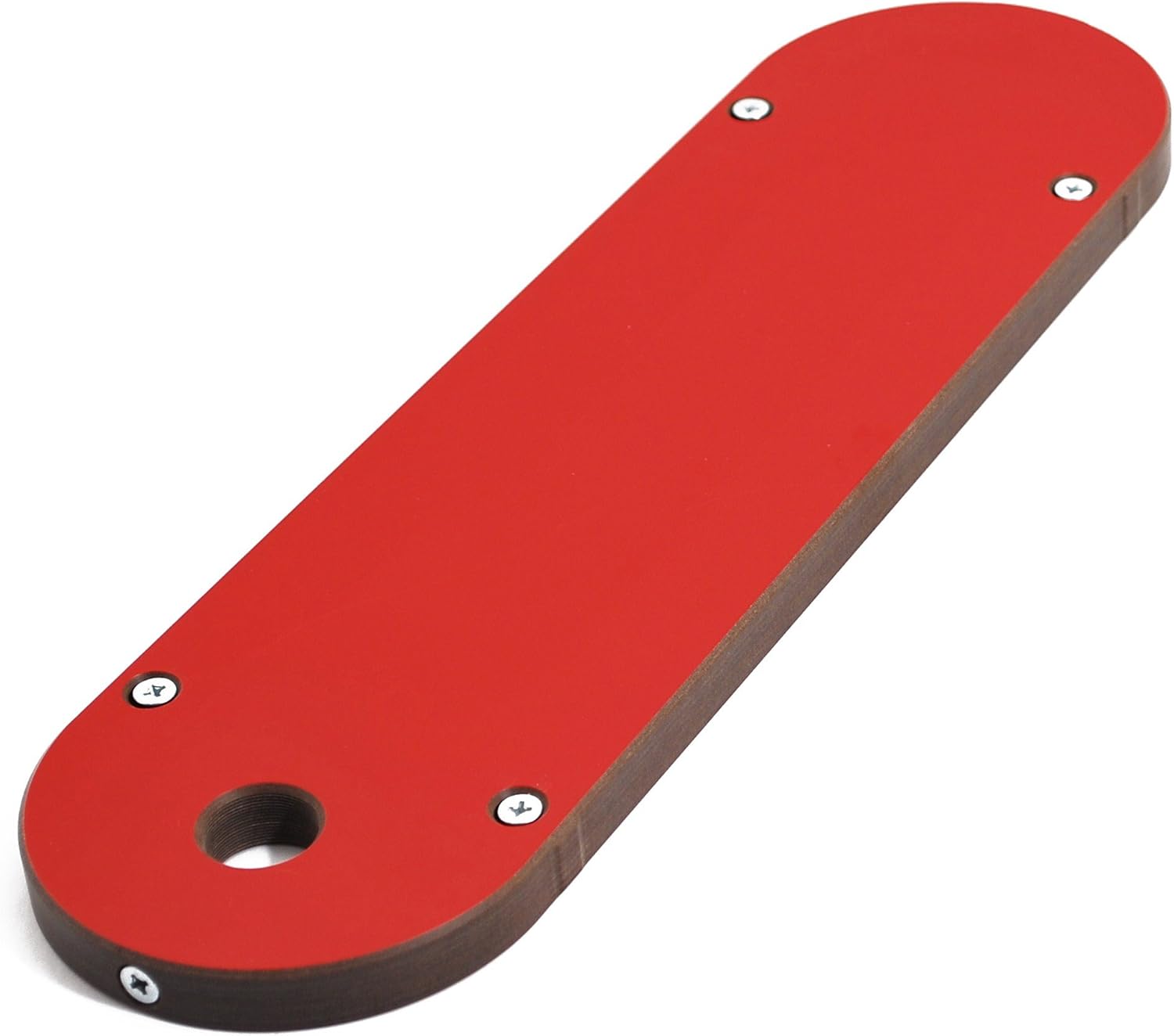
Leecraft DL-1U Zero Clearance Table Saw Insert
Premium high-density phenolic zero-clearance insert designed to reduce tear-out, minimize chip-out, and provide cleaner, safer cuts on compatible Delta-style table saws.
Check Price on Amazon (opens Amazon in a new tab)Shop-made — best if you want it working today, or if you run a nonstandard blade height and need a custom fit anyway.
What material works best

| Material | Pros | Cons |
|---|---|---|
| MDF | Cheap, flat, easy to cut cleanly | Wears out faster, especially at the blade slot edges |
| Baltic birch plywood | More durable than MDF, resists chipping | Slightly more expensive, layers can show at the cut edge |
| Phenolic (plastic composite) | Very durable, doesn’t swell with humidity | Costs more, harder to cut without the right blade |
| Tempered hardboard | Cheap, smooth surface | Thinner, may need packing shims to sit flush |
MDF is the most common choice for a reason. It’s cheap enough to treat as disposable, and most woodworkers keep two or three blanks cut and ready so a worn one gets swapped out in seconds instead of turning into a whole project.
How to make your own zero clearance insert (free plan)
Materials:
| Item | Purpose |
|---|---|
| Your saw’s stock insert | Template for tracing the outline |
| 1/2″ or 5/8″ MDF, sized slightly larger than the stock insert | Insert blank |
| Double-sided tape or small screws | Temporary mounting during the trace-and-cut step |
| Jigsaw or bandsaw | Rough-cutting the blank to shape |
| Sandpaper or a small block plane | Fine-fitting the edges |

Steps:
- Trace your stock insert onto the MDF blank, or use it as a direct pattern if your saw brand sells oversized blanks for this purpose.
- Cut the blank slightly oversized, then sand or plane it down until it drops into the throat plate opening with almost no gap around the edges. A little resistance is fine, since it should sit snug, not loose.
- Lower the blade fully below the table, drop the new blank into place, and secure it using whatever method your saw uses to hold the stock insert (usually a screw or a spring clip).
- With the saw unplugged and the blade set to your normal cutting height, slowly raise the spinning blade up through the blank from below. This is the step that actually creates the zero clearance slot, since the blade cuts its own exact-width path through the new insert.
- Check that the insert sits flush with the table surface, not proud or sunken. A high spot catches material mid-cut. A low spot lets material dip right where you don’t want it to.
If your saw doesn’t allow raising a spinning blade up through a blank safely, some woodworkers instead plunge-cut the slot on a separate surface using the blade removed from the saw as a width guide, then fit the insert afterward. Check your saw’s manual for the safest method for your specific model before trying this.
Sizing for different bevel angles

A zero clearance insert is only zero clearance at the exact blade height and angle it was cut for. Tilt the blade to a new bevel angle and the slot won’t line up anymore.
Most woodworkers who cut bevels regularly keep two or three inserts on hand — one for square cuts, one for a common bevel angle like 45 degrees, and sometimes a third for whatever specialty angle their projects call for. Label each one so you’re not guessing which blank matches which setup.
Common mistakes people make with zero clearance inserts

- Cutting the blank too loose in the throat plate opening. A loose insert can shift slightly during a cut, which defeats the purpose and can even be a safety issue if it lifts.
- Raising the blade too fast through a new blank. Go slow. A fast plunge can chip the edges of the slot instead of leaving a clean cut.
- Using a insert that sits proud of the table. Even a small high spot catches the leading edge of a board and throws off the cut.
- Forgetting to reset it after a bevel change. A zero clearance insert cut for 0 degrees won’t protect you at 45 degrees — the blade will just cut a new, wider path through it, or worse, hit the edge of the insert itself.
- Not replacing a worn insert. Once the slot edges start to chip or widen from repeated use, the insert isn’t doing its job anymore. Cut a new one rather than pushing a worn one past its useful life.
Where a zero clearance insert fits with the rest of your setup

A zero clearance insert solves what happens right at the blade. It doesn’t fix problems elsewhere in the cut, so it works best alongside the rest of a properly set up saw.
If you’re getting splintering on the top face of a cut rather than the bottom, that’s usually a blade problem rather than an insert problem — a high tooth-count blade designed for plywood handles top-face tearout that a zero clearance insert alone won’t fix.
If thin strips are still catching or shifting even with a zero clearance insert installed, check that your rip fence is actually parallel to the blade. An insert supports the cut from below, but a fence that’s out of alignment still causes binding regardless of what’s happening at the throat plate.
For crosscuts specifically, a zero clearance insert paired with a crosscut sled — which has its own zero clearance kerf built into the sled base — covers both rip cuts and crosscuts with clean, supported edges.
And if your hands are doing the work of holding thin strips steady near the blade, pair this upgrade with a proper push stick or push block rather than relying on the insert alone to keep things controlled.
Which saws benefit most
| Saw Type | Why It Matters |
|---|---|
| Portable / jobsite saw | Stock inserts are often thin plastic with a wide gap, so the upgrade is especially noticeable |
| Contractor saw | Standard-size inserts, easy to source premade or shop-made replacements |
| Cabinet saw | Often ships with a better stock insert already, but a zero clearance version still helps with fine plywood work |
If you’re running a smaller saw, check our portable table saw reviews — stock inserts on compact saws tend to have wider gaps than full-size saws, which makes this one of the higher-impact upgrades for that category specifically.
FAQ
Does a zero clearance insert really make a noticeable difference? Yes, especially on plywood and veneer. The extra support right at the cut line reduces splintering on the underside of the board, which a standard wide-gap insert can’t prevent.
Can I use the same zero clearance insert for every cut? Only if you’re cutting at the same blade height and bevel angle it was made for. Change the angle and you’ll need a different insert, or the slot won’t line up with the blade anymore.
What’s the easiest material to use for a shop-made insert? MDF is the most common choice — cheap, flat, and easy to cut and sand to a snug fit. It wears out faster than phenolic, but it’s inexpensive enough to replace without much thought.
Is it safe to raise a spinning blade up through a new insert blank? This is the standard method for cutting a zero clearance slot, but always check your saw’s manual first, since not every saw is designed to have the blade raised from below the table this way. Go slowly and keep hands and hoses clear of the blade path.
How do I know when to replace a zero clearance insert? Once the edges of the slot start to chip, widen, or the insert no longer sits flush with the table, it’s time to cut a new one. A worn insert stops doing the job it was built for.

Finlay Connolly is a woodworking enthusiast and power tool specialist with over a decade of hands-on experience in the workshop. As the founder and lead writer at ProTableSawReviews.com, Finlay combines expert knowledge with real-world testing to help woodworkers, DIYers, and professionals choose the best tools for the job. With a sharp eye for detail and a passion for precision, Finlay is committed to providing trustworthy, practical advice backed by years of experience and research in the field. Whether you’re cutting dados or comparing fence systems, you can count on Finlay for honest, reliable reviews that make your next cut your best one.


