
Oliver Table Saw Review
From the portable 10010 to industrial cabinet saws — an honest look at Oliver's table saw lineup, real owner feedback, and which model actually fits your shop.
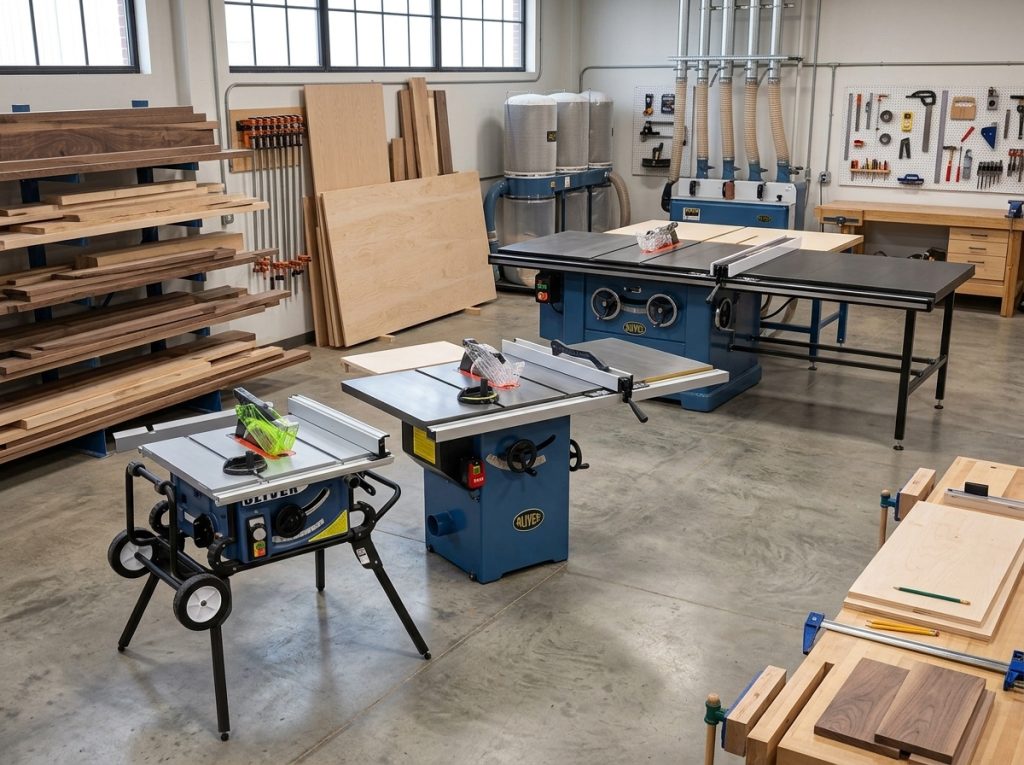
Yes, Oliver makes serious table saws, but the right model depends heavily on what you’re building and where you’re using it. The Oliver 10010 is the portable option for contractors and smaller shops, the 10040 is the step-up hybrid for serious hobbyists and small professional shops, and the 4016 and larger machines are designed for production-level woodworking.
Oliver’s lineup is unusual because it spans everything from a roughly 90-pound jobsite saw to heavy industrial cabinet machines. That means an “Oliver table saw review” can mean very different things depending on the model. Here’s how the current lineup compares, where each saw makes sense, and what real owners have reported.
In this article
- The Oliver table saw lineup at a glance
- Oliver 10010 — the portable jobsite saw
- Oliver 10040 — the hybrid step-up
- Oliver 4016 and up — the cabinet and industrial tier
- Real owner feedback worth knowing about
- Where Oliver fits against the competition
- Who should buy which Oliver model
- A note on vintage Oliver saws
- FAQ
The Oliver table saw lineup at a glance
| Model | Category | Motor | Weight | Typical Price | Best For |
|---|---|---|---|---|---|
| 10010 | 10″ Jobsite / Portable | 2 HP, 15A, 115V | ~90 lbs | ~$499–$650 | Contractors, installers, small shops |
| 10040 | 10″ Professional Hybrid | 1.75 HP, 115V/230V | ~303 lbs | ~$1,499–$1,649 | Serious hobbyists, small pro shops |
| 4016 | 10″ Heavy-Duty Cabinet | Up to 5 HP, single-phase | Industrial | Premium tier | Daily hardwood production, cabinet shops |
| 4045 / 4065 | 12″–16″ Industrial | Industrial-grade | Heaviest in lineup | Premium tier | Shops cutting hardwood every day |
Pricing on Oliver’s higher-tier saws varies enough by configuration and dealer that it’s worth getting a direct quote rather than relying on a listed number — this table reflects commonly seen pricing, not a fixed catalog price.
Oliver 10010 — the portable jobsite saw

This is Oliver’s entry point, and it’s built to compete directly with the DeWalt and Ridgid jobsite saws most people already know. It runs a 2 HP, 15-amp motor with a variable no-load speed of 2,000 to 4,200 RPM, weighs around 90 pounds, and comes with a roller stand, a 40-tooth carbide blade, miter gauge, and push stick included.
The standout feature here is a sanding disc conversion — swap the blade for the included sanding disc and the saw doubles as a finish-sanding tool, which is a genuinely unusual addition at this price point and useful for touching up trim or small parts without a separate tool.
Independent testing from Tool Box Buzz rated this saw highly, specifically noting the build quality held up against other top jobsite saws on the market and calling it an easy top choice for professionals in construction. That’s a meaningful endorsement, since that reviewer had direct experience testing it against the category’s usual leaders rather than reviewing it in isolation.
Oliver 10040 — the hybrid step-up

The 10040 bridges the gap between a portable saw and a full cabinet saw. It uses a cast iron table, runs on either 115V or 230V depending on setup, and is available with either a 36-inch or 52-inch rail system depending on how much rip capacity your projects need. At around 303 pounds, this is a saw that stays in one place rather than folding away between projects.
This tier makes sense for someone who’s outgrown a portable saw’s accuracy and capacity but isn’t ready for full cabinet-saw pricing or a dedicated 220V industrial setup. It’s a genuine middle ground, not just a portable saw with a bigger price tag.

Oliver Machinery 10-Inch Professional Hybrid Table Saw
A professional-grade 10-inch hybrid table saw with a 1.75 HP motor, precision-ground cast-iron table, cabinet-mounted trunnion, 4,500 RPM arbor speed, and built-in mobility wheels. It offers up to 36 inches of rip capacity with the 36-inch rail configuration and includes a riving knife, blade guard, miter gauge, and 40-tooth blade.
Check Price on Amazon (opens Amazon in a new tab)Oliver 4016 and up — the cabinet and industrial tier

The 4016 moves into genuine cabinet saw territory, with configurations up to 5 horsepower on single-phase power, a fully enclosed base, and the kind of trunnion and table mass that delivers real precision under sustained hardwood cutting. The 4045 and 4065 models step up further into 12 to 16-inch industrial saws built for shops running hardwood daily.
This tier competes directly with SawStop’s industrial cabinet saws, Laguna, and Grizzly’s higher-end lineup. A woodworking forum thread comparing the Laguna and Oliver saws at a similar price point specifically noted Oliver’s fence system stood out as a strength worth considering, which lines up with Oliver’s broader reputation for machine rigidity and long-term alignment stability.

Oliver Machinery 12-Inch 7.5 HP 3-Phase Table Saw
A heavy-duty 12-inch professional table saw designed for demanding woodworking applications. This 7.5 HP three-phase model is built for high-capacity cutting and includes an extended rail system for handling larger workpieces in professional shop environments.
Check Price on Amazon (opens Amazon in a new tab)Real owner feedback worth knowing about

A verified buyer review of the 4016 gives a useful, balanced picture beyond the marketing copy. The reviewer described strong cutting power through hardwood and a fence needing very little adjustment out of the box, which matches Oliver’s reputation for accuracy. But they also flagged two specific, concrete issues: the plastic throat plate insert caught when raising the blade and its locking mechanism eventually broke, and the side extension table sat slightly proud of the main wing — about an eighth of an inch — which caused the fence to catch when sliding across it, a problem they weren’t able to fully resolve through adjustment.
Neither issue was described as a dealbreaker, and the reviewer said they’d still recommend the saw to other woodworkers, but both are worth knowing about specifically if you’re comparing the 4016 against saws in the same price bracket that might not share these particular quirks.
Where Oliver fits against the competition

Oliver’s positioning has shifted meaningfully in recent years — historically an industrial-only brand, it’s now competing directly with DeWalt and Ridgid at the portable end, and with SawStop, Laguna, and Grizzly at the cabinet and industrial end. That’s a wide span for one brand to cover well, and the 10010’s strong independent review suggests the jobsite tier is holding up under real scrutiny, not just riding on the Oliver name.
At the higher end, Oliver’s reputation for fence quality and long-term alignment stability is a genuine differentiator worth weighing against SawStop specifically if flesh-sensing blade brake technology isn’t a must-have for your shop — Oliver doesn’t offer that feature, which is worth knowing upfront if it’s a priority.
Who should buy which Oliver model

The 10010 makes sense for contractors, trim installers, and anyone needing a genuinely full-featured portable saw rather than a stripped-down budget option — it’s priced closer to premium portable saws like the DeWalt DWE7491RS than to entry-level benchtop models, and the included sanding disc feature is a real bonus for finish work. The 10040 fits serious hobbyists and small shops that need more accuracy and rip capacity than a portable saw offers but aren’t ready for a full cabinet saw’s cost and footprint. The 4016 and above are built for cabinet shops and serious woodworkers doing daily hardwood work where table mass, motor power, and long-term alignment stability directly affect output and cut quality.
A note on vintage Oliver saws
If you’re researching Oliver and come across old three-phase, tilt-top Oliver table saws from decades past, know that these are a completely different product line from Oliver’s current lineup — genuine vintage industrial equipment, often heavy and three-phase powered, which limits their practical resale value and usability in a typical home or small shop. They’re a different conversation from the current 10010 through 4065 lineup covered in this review, and shouldn’t be confused with it when comparing prices or specs.
FAQ
Is Oliver a reliable table saw brand? Yes. Oliver has a long history in industrial woodworking equipment, and their current lineup, from the portable 10010 to the industrial 4065, has generally strong independent reviews, particularly around fence accuracy and build quality.
Does Oliver make a saw with SawStop-style blade brake safety technology? No, Oliver’s table saws don’t include flesh-sensing blade brake technology. If that feature is a priority for your shop, that’s a meaningful difference worth weighing against SawStop’s lineup specifically.
What’s the difference between the Oliver 10010 and 10040? The 10010 is a portable jobsite saw built for mobility, with a roller stand and a lighter build. The 10040 is a stationary hybrid saw with a cast iron table and significantly more rip capacity, aimed at a small shop or serious hobbyist who needs more accuracy and capacity than a portable saw offers.
Are Oliver table saws good for a home shop, or are they overkill? The 10010 fits a home shop well, especially for anyone who values its included features and sanding disc conversion. The higher cabinet and industrial tiers are generally more saw than most home shops need, and are better suited to daily production work in a professional or cabinet shop setting.
What issues have real owners reported with Oliver saws? A verified owner of the 4016 reported a plastic throat plate insert that caught during blade height adjustment and eventually broke its locking mechanism, along with a side extension table sitting slightly proud of the main wing, causing the fence to catch. Both were described as manageable rather than serious flaws.

Finlay Connolly is a woodworking enthusiast and power tool specialist with over a decade of hands-on experience in the workshop. As the founder and lead writer at ProTableSawReviews.com, Finlay combines expert knowledge with real-world testing to help woodworkers, DIYers, and professionals choose the best tools for the job. With a sharp eye for detail and a passion for precision, Finlay is committed to providing trustworthy, practical advice backed by years of experience and research in the field. Whether you’re cutting dados or comparing fence systems, you can count on Finlay for honest, reliable reviews that make your next cut your best one.


