
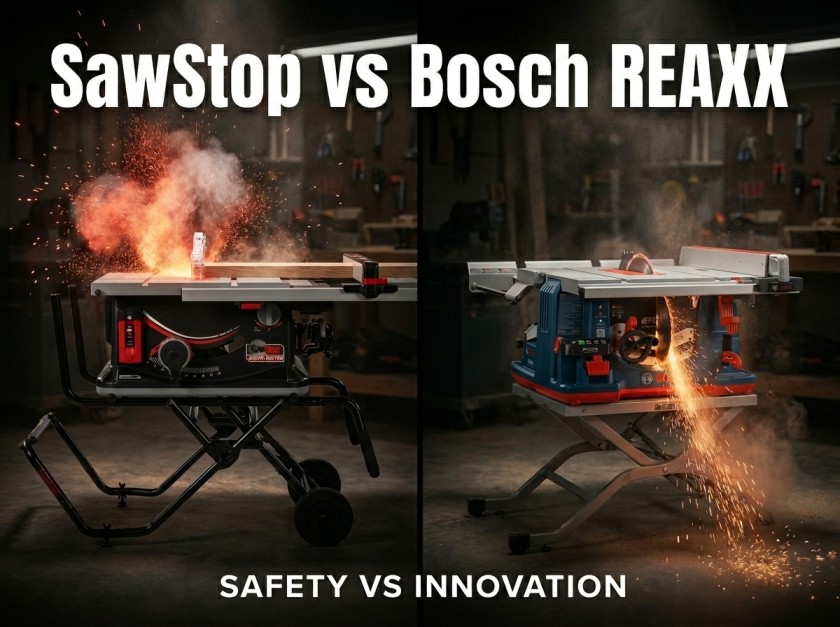
SawStop vs Bosch REAXX:
The Real Story (And Why It Matters in 2026)
What You Actually Need to Know First
I’m going to be straight with you before you read a single word of this comparison, because I’ve seen too many sites bury the lead on this one.
If you searched “SawStop vs Bosch REAXX” hoping to decide between two saws you can actually buy — you can’t buy the Bosch REAXX new in the United States. It was pulled from the U.S. market in 2017 after SawStop won a patent infringement lawsuit at the U.S. International Trade Commission. As of 2026, it remains completely discontinued. There are no new units available through any legitimate U.S. retailer.
That said — this is still one of the most interesting stories in the history of power tools, and if you’re researching table saw safety technology, understanding what happened between these two companies actually matters. It tells you why SawStop has a monopoly on flesh-detection technology, why that technology costs what it does, and what your real options are today.
So here’s what I’m going to cover: How the two technologies worked. How they performed head-to-head. Who won in court and why. And then — most importantly — what you should actually buy in 2026 if flesh-detection safety technology matters to you.
The Bosch REAXX cannot be purchased new in the U.S. SawStop won the patent lawsuit in 2017. If you want flesh-detection safety technology today, SawStop is your only realistic option. The SawStop Jobsite Saw (~$1,499) is the REAXX’s direct successor in purpose — portable, safety-equipped, and genuinely excellent. For a shop saw with flesh-detection, the SawStop Compact (~$1,699) or Professional Cabinet Saw (~$3,499+) are the options.
How the Two Safety Systems Actually Worked
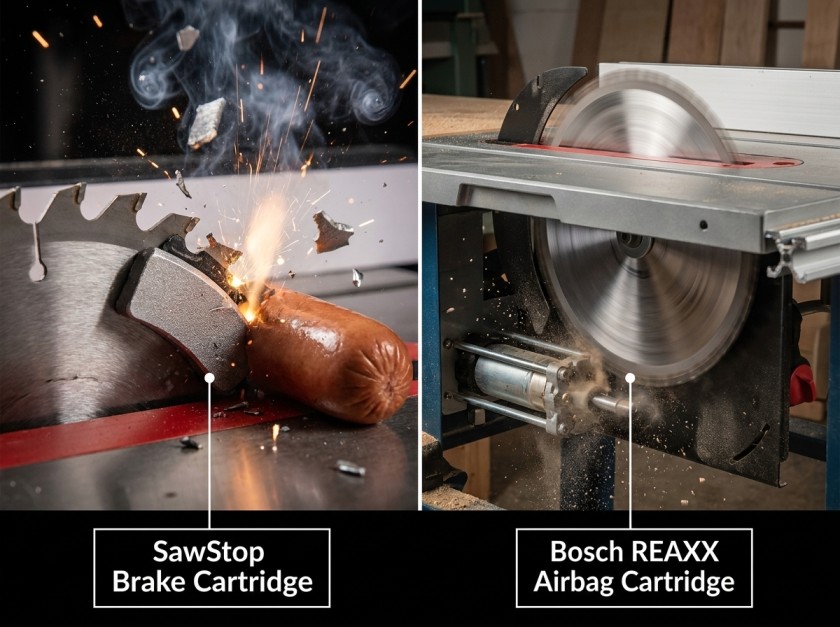
SawStop stops and drops the blade. The REAXX drops it without stopping it first — a fundamentally different approach to the same problem.
Both saws used electrical conductance to detect flesh. The blade carries a small electrical signal. Human skin, being conductive, completes a circuit when it touches the blade — and that signal change triggers the safety mechanism. The physics are the same. What happened next is where the two approaches diverged completely.
The REAXX’s big selling point was that the blade wasn’t destroyed when the system fired. With SawStop, the aluminum brake slamming into the spinning blade wrecks the blade every time — you’re replacing a $50–$100 blade plus the $70–$80 cartridge after each activation. The REAXX cartridge held two activation charges, and because the blade just dropped rather than being braked, it survived intact.
That sounds better on paper. In practice, the testing told a slightly different story.
What the Real-World Testing Showed
Reviewers at Pro Tool Reviews tested both saws by putting their hands in the running blades — the kind of test you trust a publication to do so you don’t have to. The result: SawStop left less damage in both top-strike and front-strike tests. Because SawStop actually stops the blade before it fully retracts, the contact time is shorter. The REAXX blade is still spinning as it drops, which means it’s cutting during that brief retraction period.
The difference wasn’t catastrophic — both saws worked, and in both cases the result was a minor injury rather than a serious one. But if you were choosing purely on safety margin, SawStop’s approach produced consistently cleaner test results.
SawStop also raised a point about service intervals: the REAXX required professional service after 25 safety activations. Most woodworkers will never trigger their saw’s safety system once, let alone 25 times, but it was a legitimate product design concern for commercial settings.
Wet Wood and False Trips
Both systems had trouble with wet or green lumber. Wet wood is conductive enough to trigger the safety mechanism even without skin contact — and a false trip costs you a brake cartridge and a blade (on SawStop) or a cartridge activation (on REAXX). This was a meaningful practical concern for anyone working with green lumber, treated wood, or wood that had gotten wet in transit.
Both saws offered a way to bypass the detection system for exactly this reason — you can switch the safety to a “bypass” mode when working with problematic material and then switch it back. It’s not a perfect solution, and it requires discipline to remember to turn it back on, but it exists.
On SawStop, you can also test conductance before cutting — the system will tell you if the material is likely to cause a false trip before you start. I found this more reassuring than the REAXX approach in practice.
Head-to-Head: Jobsite Saw Features
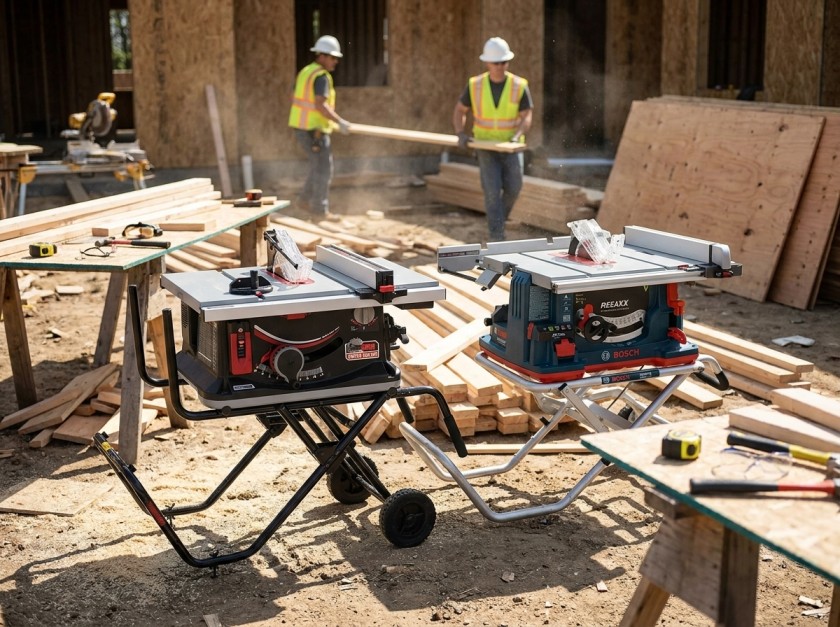
When the REAXX launched in 2016, it competed directly with the SawStop Jobsite Saw (JSS-MCA). Both were portable jobsite saws aimed at contractors and serious woodworkers who needed flesh-detection safety in a mobile package. Here’s how they actually stacked up as saws — ignoring the safety technology for a moment.
| Feature | SawStop JSS | Bosch REAXX GTS1041A |
|---|---|---|
| Price at launch | ~$1,299 | ~$1,299–$1,499 (with stand) |
| Safety mechanism | Stops + drops | Drops only |
| Rip capacity | 25.5 inches | 25 inches |
| Motor | 1.5 HP / 15A | ~1.6 HP / 15A |
| Outfeed support | None included | +18″ movable outfeed |
| Blade preserved after trigger? | No — blade destroyed | Yes — blade survives |
| Cartridge uses | 1 use (~$70–$80) | 2 uses before replace |
| Weight | ~68 lbs (saw only) | ~84 lbs (with stand) |
| Onboard storage | Excellent | Good |
| Push stick location | Right side storage | Front holster (more accessible) |
| Bypass mode? | Yes | Yes |
| Currently available? | Yes (updated models) | No — discontinued 2017 |
As portable table saws go, they were genuinely competitive. The REAXX’s movable outfeed support was a standout feature — an extra 18 inches of material support off the back of the saw is genuinely useful for ripping long boards on a jobsite where you don’t have an outfeed table. SawStop didn’t have an equivalent on their jobsite model.
The SawStop had the edge in onboard storage, which actually mattered in a jobsite context. Their tool tray was thoughtfully designed and the storage held everything securely on rough job sites. The REAXX was decent but didn’t match it.
For pure cutting performance — fence accuracy, cut quality, motor behavior under load — both saws were excellent. Reviewers called it very close, with slight preferences varying depending on specific use cases. Neither saw was clearly better as a table saw independent of the safety technology.
The Lawsuit — What Actually Happened
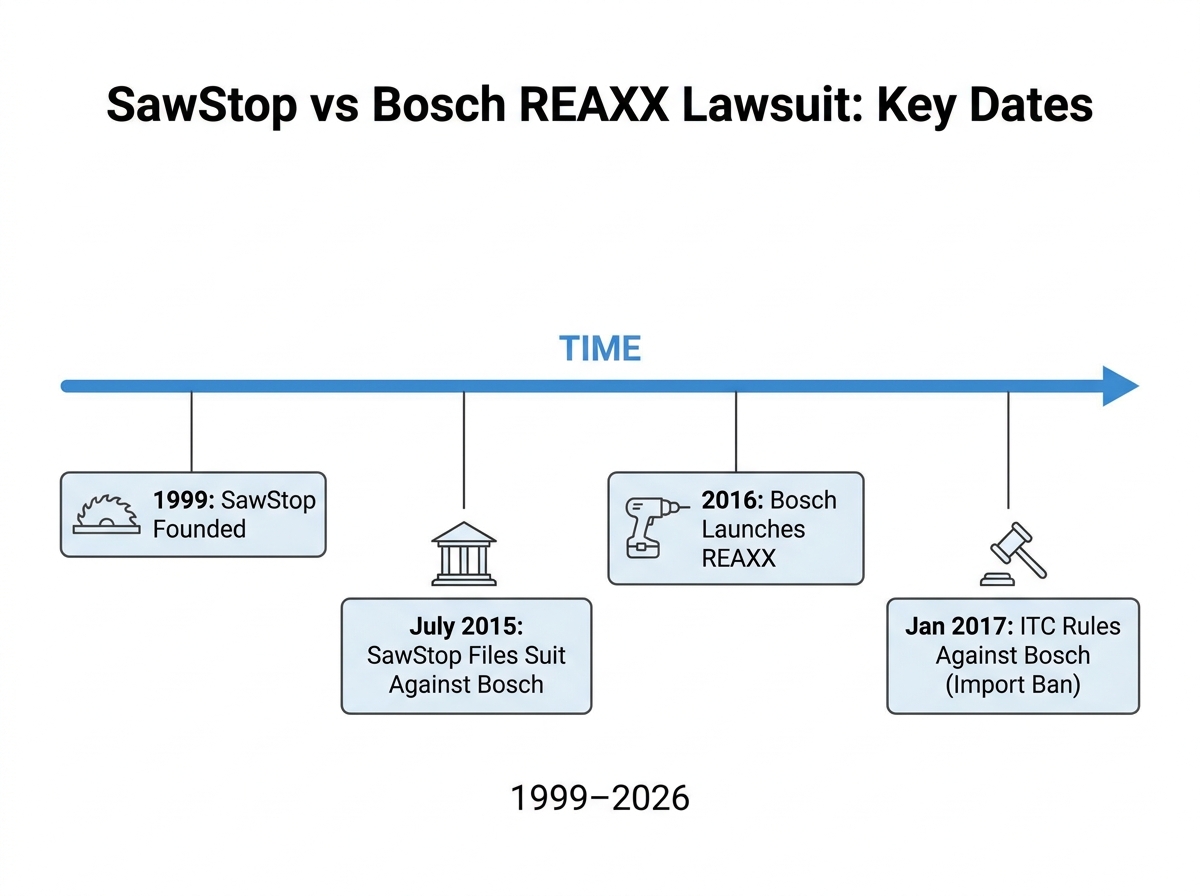
Nine years from SawStop’s founding to Bosch’s defeat at the ITC. The timeline matters for understanding where things stand today.
The SawStop story starts in 1999 with Steve Gass, a lawyer and woodworker who invented the flesh-detection brake system and then, finding that saw manufacturers wouldn’t license his technology at reasonable terms, started his own company to produce the saws himself. Over the following decade he filed numerous patents, and by 2015 SawStop was the only company selling flesh-detecting table saws in the U.S.
Then Bosch came in with the REAXX.
Bosch didn’t copy SawStop’s blade-stopping mechanism — the airbag retraction system was genuinely different from the aluminum brake cartridge. But the flesh-detection method — measuring electrical conductance on the blade — was similar enough to fall within SawStop’s patent claims. SawStop filed suit against Bosch in July 2015, before the REAXX even reached store shelves. Bosch launched the saw anyway in 2016 while the litigation was active.
The U.S. International Trade Commission ruled against Bosch in January 2017, finding that the REAXX violated two SawStop patents related to flesh-detection technology. The ITC issued a Limited Exclusion Order banning Bosch from importing the saws and a Cease and Desist Order requiring them to stop all U.S. sales and marketing. Bosch appealed and held out through the presidential review period, but ultimately the ruling stood.
In 2018, Bosch and SawStop reached a licensing agreement that technically allowed Bosch to use certain flesh-detection technologies. But Bosch chose not to reintroduce the REAXX even with the license in hand. In 2024 comments to the Consumer Product Safety Commission, Bosch cited several reasons: modern cellular interference would require a complete sensor redesign, updated UL safety standards require compliance recertification, the supply chain had dispersed after seven years of discontinued production, and they estimated it would take approximately six years and significant investment to redevelop the product. The math didn’t work against an entrenched competitor with brand loyalty and legal precedent on their side.
What This Means for the Market Today
The practical result of all this: SawStop has a monopoly on flesh-detection safety technology in the U.S. consumer market. No other manufacturer currently sells a table saw with active injury mitigation technology in this country. The CPSC estimated that AIM technology could prevent or reduce the severity of over 49,000 table saw injuries per year in the U.S. — but the combination of patent protection and manufacturing economics has kept that technology limited to SawStop’s product line at SawStop’s prices.
As a consumer, you can have an opinion about whether that outcome is good or bad. You can note that SawStop tried to use legislation to mandate its technology (which would have been enormously profitable for them), that Bosch’s technology worked and was genuinely different, and that the result of the litigation has been less competition and higher prices for safety features. You can also note that SawStop invented and funded the technology at real expense and had legitimate patent rights to protect.
What you can’t do, in 2026, is buy a Bosch REAXX.
What to Buy in 2026 — Your Real Options
If flesh-detection safety technology matters to you, there’s one brand to buy: SawStop. Here are the three saws in their lineup that cover the most common use cases, from jobsite portability to dedicated shop setup.
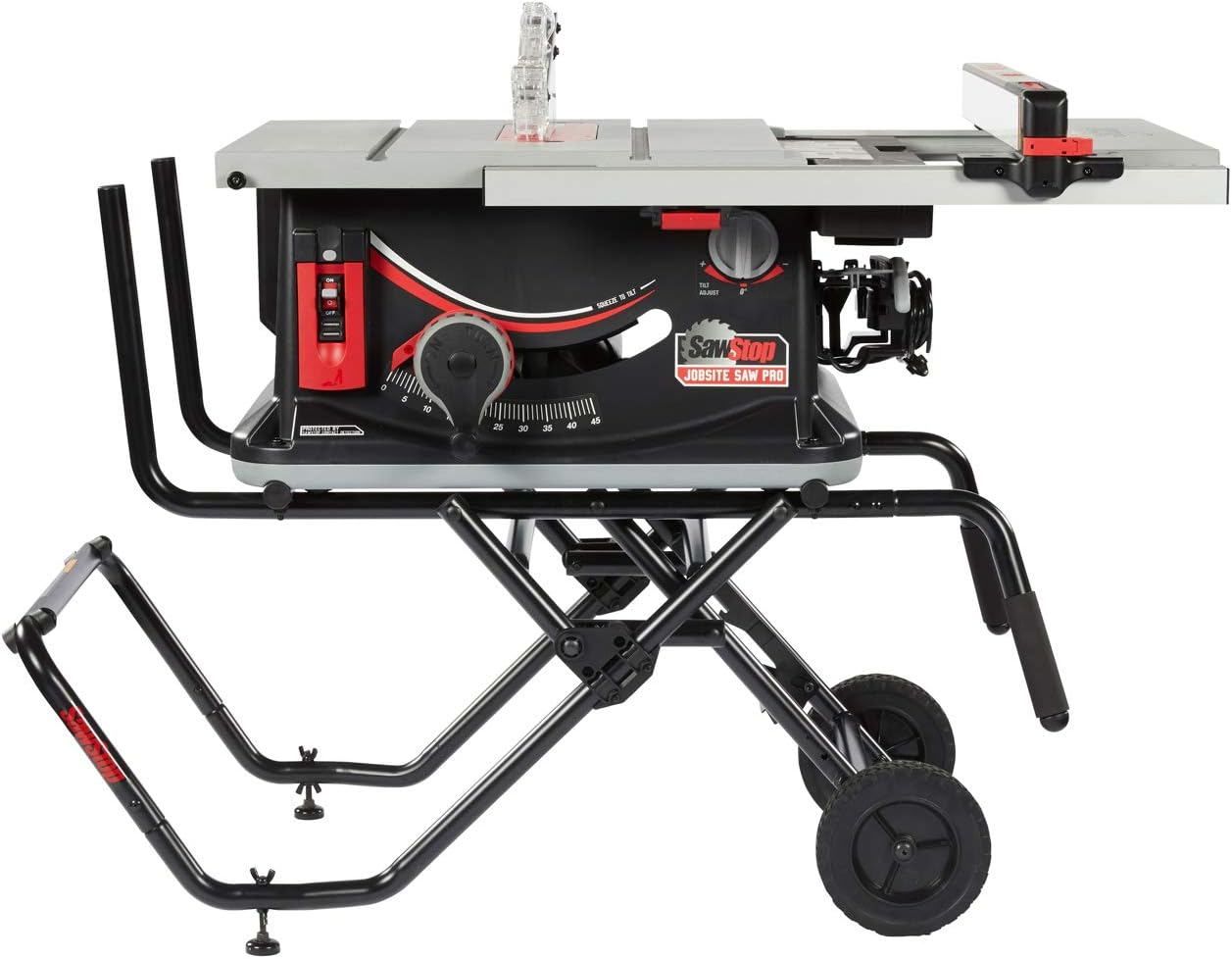
This is the direct spiritual successor to the REAXX. If you were considering the Bosch for jobsite work — a portable saw you can move between sites, load in a truck, set up in a garage — this is the saw you buy instead. The Pro version is updated from the original JSS-MCA that competed directly with the REAXX, with a redesigned blade guard, improved blade height adjustment, and the same compact stowed dimensions (26.5″ L × 29″ W × 45″ H) that made it genuinely mobile.
The flesh-detection system is SawStop’s standard setup: blade stops in under 5 milliseconds on skin contact, blade drops below the table. In my testing the system works exactly as advertised — I’ve seen it demonstrate on a hot dog more times than I can count at trade shows, and I’ve seen it activate on wet lumber once in real shop conditions. After that false trip I was a lot more careful about checking moisture content before cutting. The system can be bypassed when needed, and there’s an onboard test function to verify conductance before you start cutting questionable material.
What the REAXX had that this doesn’t: the retractable outfeed support. That 18-inch movable outfeed on the REAXX was genuinely useful on jobsites, and the SawStop Jobsite Saw doesn’t have an equivalent. You’ll need to build or bring your own outfeed support for long rips, which is more of a consideration on a real jobsite than in a home shop.
What this has over the REAXX: it exists, it’s supported, you can buy replacement cartridges, and Bosch isn’t going out of business with respect to this saw. Long-term product support is a legitimate concern when buying a safety-critical product, and SawStop — now owned by TTS, Festool’s parent company — is in a strong position.
- The only portable flesh-detection saw you can buy new
- Stops blade in <5ms — best safety margin available
- Compact, genuinely mobile with cart
- Excellent onboard storage and organization
- TTS/Festool ownership ensures long-term support
- Strong resale value
- No outfeed support (REAXX had this)
- $70–$80 cartridge + blade cost per activation
- 25.5″ rip — can’t break down full 4×8 sheet
- False trips on wet or green lumber
- AIM monopoly means no price competition
Contractors, remodelers, and tradespeople who need a portable saw on jobsites. Woodworking teachers. Anyone who wanted the REAXX and can no longer find one. Shop owners with multiple users or less-experienced operators. Anyone who has ever had a close call on a table saw.
The only portable table saw with active flesh-detection technology available new in the U.S. Stops the blade in under 5ms on skin contact. The direct spiritual successor to the Bosch REAXX — except you can actually buy this one.
- Active flesh-detection — stops blade in <5ms on contact
- Compact stowed dimensions — fits in a truck cab
- Owned by TTS/Festool — long-term parts and service guaranteed
- Onboard storage for cartridges, wrenches, blades
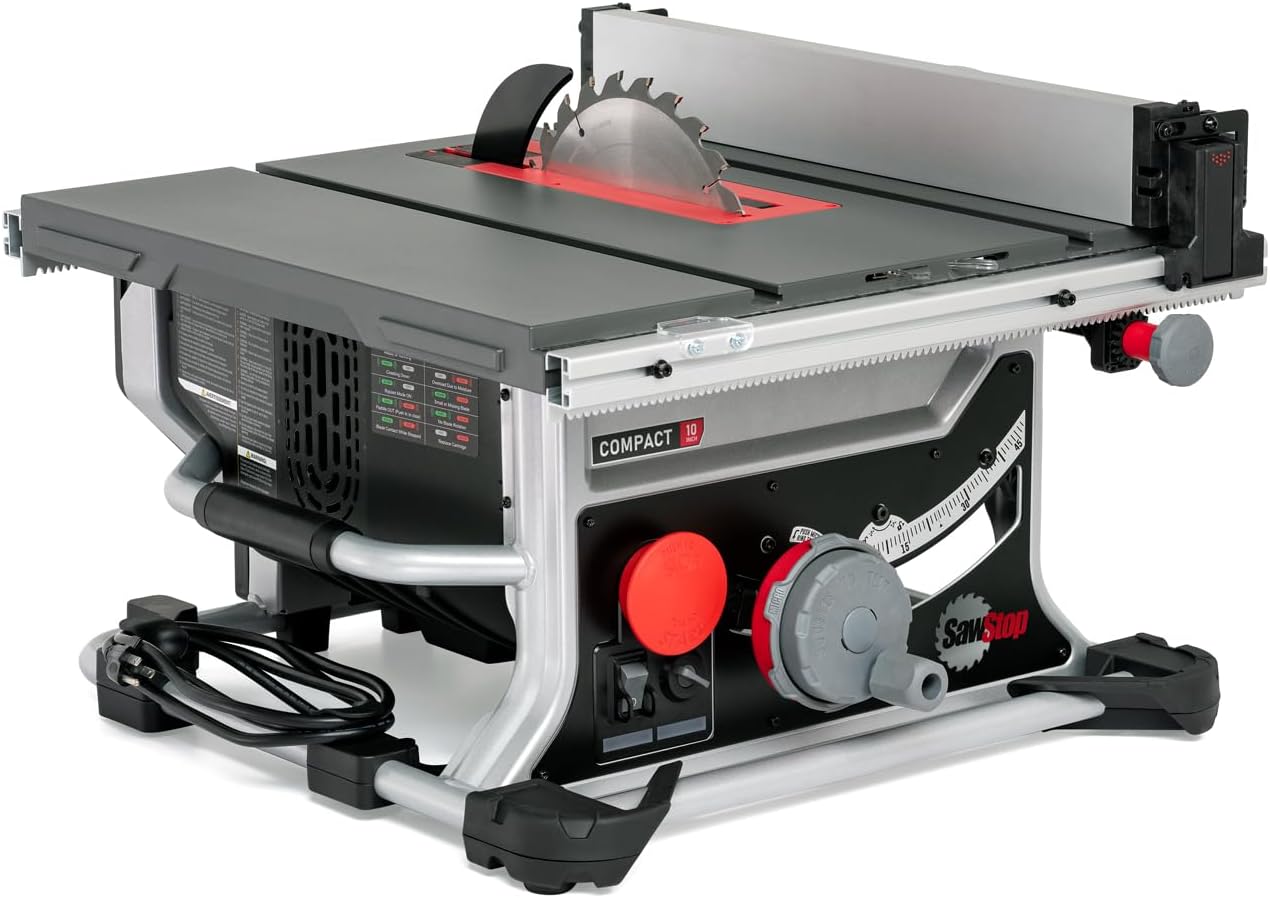
If you’re comparing the REAXX against a shop saw rather than a jobsite saw, the Compact is the better comparison point. It’s not portable in any meaningful sense — 280 lbs means it stays where you put it — but it runs on a standard 120V outlet, fits in a smaller shop footprint than the Professional Cabinet Saw, and has the flesh-detection system fully integrated.
The fence is one of SawStop’s strengths. It locks accurately, stays accurate, and the 25-inch rip capacity handles most shop work — you can rip a standard 24-inch panel without any issues. Where it gets limiting is full 4×8 sheet breakdown; you’ll need to rip the sheet roughly in half first with a circular saw before running it through. For most furniture and cabinetry work this isn’t a problem in practice, but it’s worth knowing going in.
The 1.5 HP motor is adequate for nearly everything except very aggressive dado work in dense hardwood. Feed it at a reasonable pace and it doesn’t struggle. I’ve run it through 8/4 hard maple and it completes the cut, but you can hear it working harder than a 2 HP saw would. For most woodworking — furniture, cabinets, home shop projects — the motor is never a limiting factor.
- Active flesh-detection in a shop-saw package
- Premium fence accuracy out of box
- Runs on 120V — no electrician needed
- Compact footprint for smaller shops
- Excellent build quality and resale value
- 25″ rip limits full sheet breakdown
- 1.5 HP strains on heavy dado cuts
- $70–$80 cartridge after each activation
- False trips on wet or green lumber
Home shop woodworkers, woodworking teachers, parents with children in the shop, solo woodworkers who want maximum safety margin, and anyone upgrading from a contractor saw who wants flesh-detection technology in a dedicated shop setting.
The best shop-based flesh-detection saw in the sub-$2,000 category. Premium fence, compact footprint, 120V operation, and the safety system you can actually trust your fingers to.
- SawStop flesh-detection — the system that won the patent war for a reason
- Compact footprint — fits a smaller shop than the Professional Cabinet Saw
- 120V — plug into any standard outlet
- Premium fence accuracy — locks perfectly, stays put
Read our complete SawStop Compact Table Saw review with full spec breakdown and testing, or see all our best table saws under $2,000 if you want to compare it against non-safety alternatives.
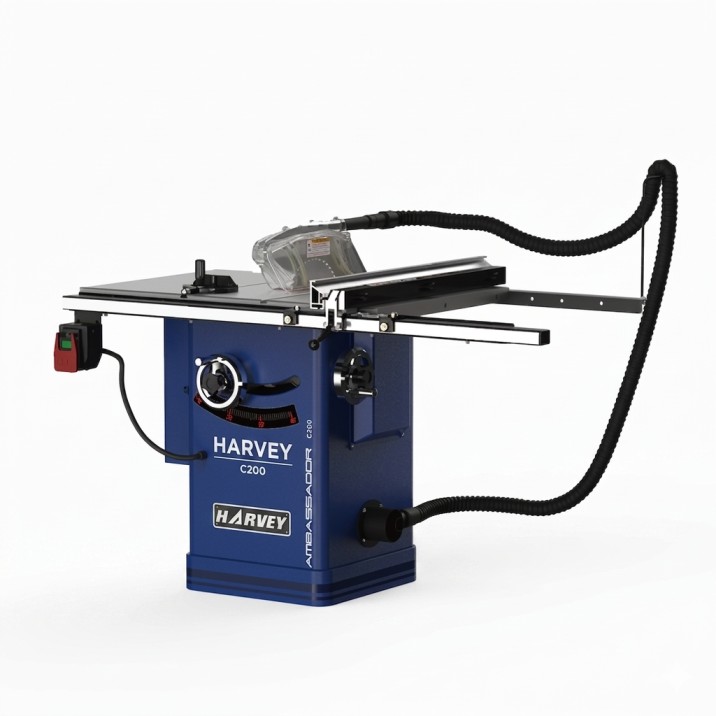
I want to be honest about something that often gets lost in the SawStop conversation: a lot of very experienced woodworkers look at the flesh-detection technology and decide they don’t want it, for a mix of practical and philosophical reasons. The false trip problem with wet wood is real. The ongoing cartridge cost is real. The constraint on blade choice (some exotic blades can trigger false signals) is real. And experienced, disciplined woodworkers who use proper technique and never rush have been using standard table saws safely for decades.
If you’re in that camp — you’ve used table saws for years, you’re careful, you understand kickback risks and respect them — the Harvey C200 is the best table saw you can buy under $2,000, and it’s not particularly close. The 52-inch fence is genuinely excellent. The 1.75 HP motor handles everything without complaint. The cast iron table is thick and flat. Running it on 240V — which I do — makes a noticeable improvement over 120V.
You’re spending $200 less than the SawStop Compact and getting a significantly more capable saw in terms of pure cutting performance. That’s the honest trade-off.
The best pure cutting performance available under $2,000. 52-inch fence, 1.75 HP motor, cabinet-saw build quality. No flesh-detection, but the best traditional saw in this budget by a significant margin.
- 52″ fence — rips full 4×8 sheet goods without a sled
- 1.75 HP motor handles 8/4 hardwood without complaint
- 120V/240V switchable — use either outlet
- No false trips, no cartridge costs, no blade restrictions
Should I Buy a Used Bosch REAXX?
This comes up a lot. Used REAXX saws show up on eBay and Craigslist — typically priced between $600 and $900 depending on condition and included accessories. The question I get: is a used REAXX worth buying?
My honest answer: probably not, and here’s why I’d be cautious.
First, the age problem. The newest REAXX units were manufactured in 2016 and early 2017. In 2026, you’re buying a 9-year-old jobsite saw. Jobsite saws live hard lives — transport vibration, dust exposure, variable conditions. The age alone makes me cautious.
Second, the cartridge question. Bosch committed to supporting REAXX owners with replacement cartridges, and those cartridges are manufactured domestically so the import ban doesn’t affect them. But “committed to support” and “will support indefinitely” aren’t the same thing. As the installed base of REAXX saws shrinks over time, the economics of maintaining cartridge production get harder to justify. Bosch has said they’ll support existing owners, but I wouldn’t bet my only table saw’s safety system on a manufacturer’s goodwill into the 2030s.
If you find a REAXX at a genuinely low price — say $300–$400 — and you’re buying it as a straight jobsite saw without relying on the safety system being functional, that’s a different calculation. The underlying saw is good. The fence is decent, the motor is solid, and as a conventional jobsite table saw it’ll do the job. But don’t pay $700+ for a decade-old discontinued saw banking on the safety system being reliable into the future.
For almost every person asking this question, a new SawStop Jobsite Saw at $1,499 is the better answer. You get warranty coverage, parts availability guaranteed, and a safety system you can actually trust.
Common Questions
Not new. The Bosch REAXX was banned from U.S. import and sale by the International Trade Commission in January 2017 following SawStop’s patent infringement lawsuit. No new units are available through any legitimate U.S. retailer. Used units occasionally appear on eBay and Craigslist, typically priced $600–$900, but buying used means buying a 9-year-old saw with no warranty and uncertain long-term parts availability.
It was competitive — genuinely excellent in some areas. The REAXX preserved the blade after activation (SawStop destroys it), held two activation charges per cartridge, and had a useful movable outfeed support the SawStop jobsite saw lacked. As a table saw independent of safety tech, reviewers called it roughly equal to the SawStop Jobsite Saw. Where SawStop won in side-by-side testing was safety margin: the dual stop-and-retract mechanism left less injury damage than the REAXX’s retract-only approach in controlled testing on both top and front strikes.
The ITC found that the REAXX violated SawStop’s patents related to flesh-detection technology — specifically the method of measuring electrical conductance on the blade to detect skin contact. The blade-stopping mechanism (airbag vs. aluminum brake) was different, but the detection physics were similar enough to fall within SawStop’s patent claims. Whether the patents should have been that broad is a separate debate — many in the industry argued they shouldn’t have been — but the legal ruling stood.
It’s a genuine concern that a lot of people in the industry share. The CPSC estimates that AIM technology could prevent or reduce over 49,000 table saw injuries annually in the U.S. With only one manufacturer controlling that technology through patents, prices stay high and adoption stays low. SawStop pledged in 2023 to dedicate their key “840” patent to the public if the CPSC finalized mandatory safety standards — but the CPSC dropped that proposed rulemaking in 2025. Until the key SawStop patents expire (2033) or are licensed broadly, the technology remains premium-priced from a single source. Whether SawStop is a villain or a hero in this story depends a lot on your perspective on patent law and market dynamics.
A SawStop brake cartridge costs approximately $70–$80 and is single-use — once it activates, it’s replaced. The blade is typically destroyed in the activation too, adding another $50–$100 depending on your blade. In a normal woodworking environment you should almost never trigger the system — most SawStop owners go years without an activation. But in a commercial or teaching setting where activations are more likely, the ongoing costs are real. A common false trigger scenario is wet or green lumber, which is conductive enough to register as skin. Dry your wood properly, and use the bypass mode when working with problematic material.
Very unlikely in the near term. In 2024 comments to the CPSC, Bosch stated that redeveloping the REAXX would take approximately six years due to modern electromagnetic interference requiring sensor redesign, updated UL safety standards needing recertification, and a dispersed supply chain after seven years of discontinued production. The two key patents SawStop used in the original lawsuit expired in 2020 and 2022, but SawStop’s broader “840” patent covering AIM technology doesn’t expire until 2033. Bosch and SawStop reached a licensing agreement in 2018, but Bosch chose not to relaunch anyway — the economics of competing against an entrenched player with strong brand loyalty didn’t add up.
Final Verdict — The Bottom Line
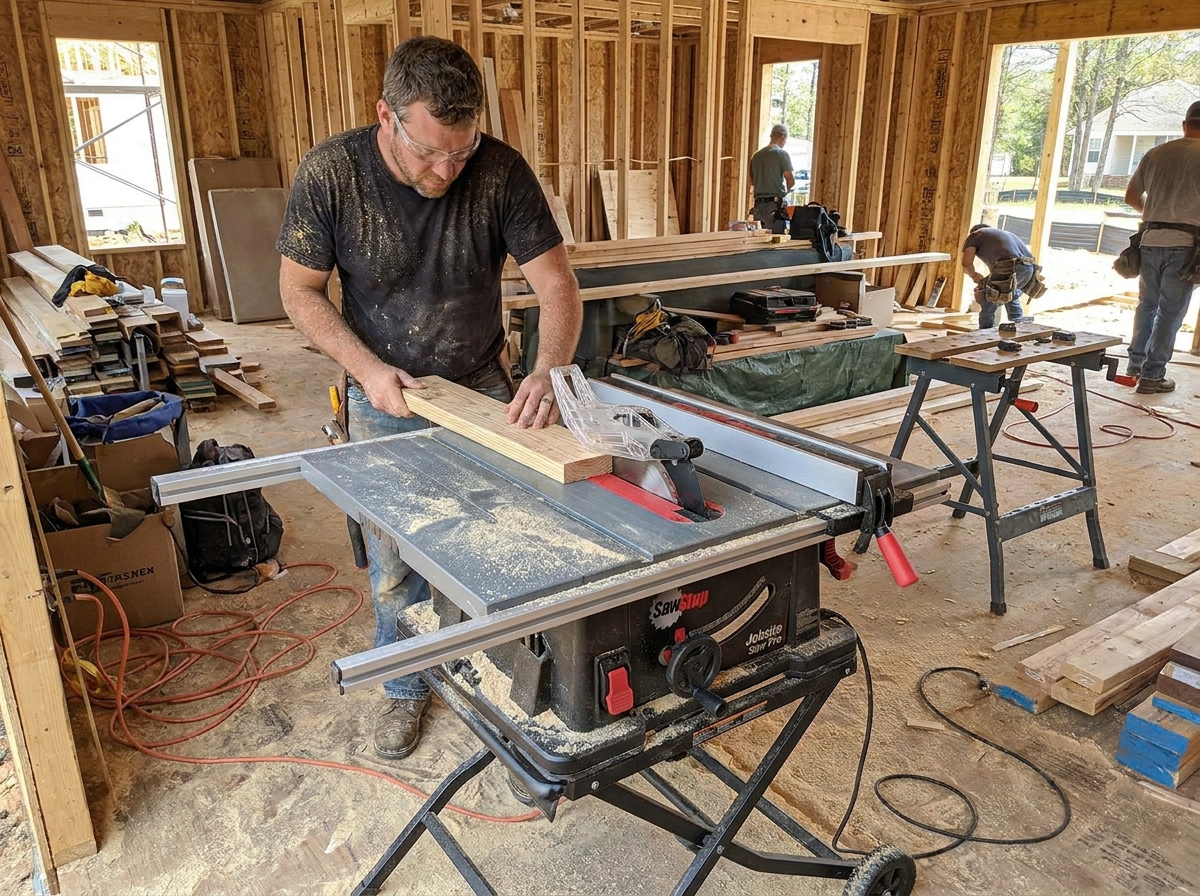
The SawStop Jobsite Saw Pro is the only portable flesh-detection saw you can buy new in 2026. The REAXX competed with it on nearly equal footing — but it lost the legal battle, and that’s the market reality.
The Bosch REAXX was a genuinely good saw with a genuinely good safety system. In another world, competition between the REAXX and SawStop would have driven both companies to improve their technology, reduce prices, and get flesh-detection safety into more woodshops at lower cost. That would have been a better outcome for woodworkers everywhere.
That’s not the world we live in. SawStop won the patent battle, the REAXX was pulled from the market, and in 2026 the choice is straightforward:
Want flesh-detection safety technology? Buy SawStop. The Jobsite Saw Pro (~$1,499) if you need portability. The Compact Table Saw (~$1,699) if you’re setting up a shop. The technology works, the company will be around, and the parts will be available.
Don’t need flesh-detection — want the best cutting performance per dollar? Buy the Harvey C200 (~$1,799) or Grizzly G0771Z (~$1,295 with 220V). Both are excellent saws that will outperform SawStop in pure cutting capability at the same price point.
Considering a used REAXX? Be cautious. The saw is 9 years old, discontinued, and the long-term safety system support is uncertain. Unless the price is very low and you’re treating it as a conventional saw rather than a safety-equipped one, the SawStop Jobsite Saw is the better choice.
Keep Researching — Related Guides
Here’s where to go next depending on what you’re trying to decide.

Finlay Connolly is a woodworking enthusiast and power tool specialist with over a decade of hands-on experience in the workshop. As the founder and lead writer at ProTableSawReviews.com, Finlay combines expert knowledge with real-world testing to help woodworkers, DIYers, and professionals choose the best tools for the job. With a sharp eye for detail and a passion for precision, Finlay is committed to providing trustworthy, practical advice backed by years of experience and research in the field. Whether you’re cutting dados or comparing fence systems, you can count on Finlay for honest, reliable reviews that make your next cut your best one.