
Best Table Saw Ripping Blade for Clean Cuts in 2026
Find the best table saw ripping blade for clean cuts. Compare Freud, Diablo and Forrest blades by tooth count, kerf, saw type and performance.
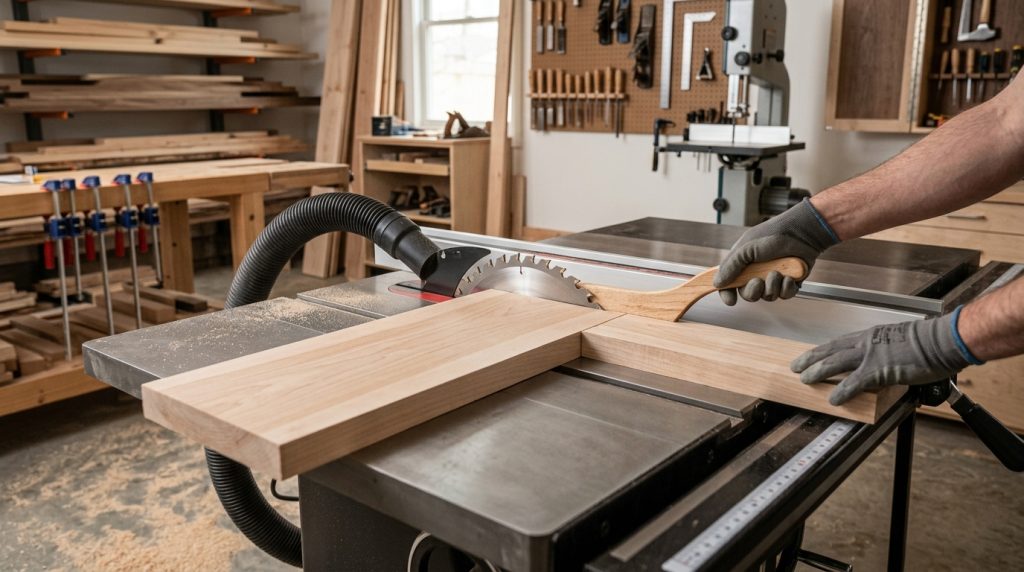
The Freud LM72R010, a 24-tooth flat-top-grind ripping blade, is the best all-around choice for clean rip cuts on most table saws, and if you do enough edge-gluing to justify the price, the Forrest Woodworker II in a 30-tooth “glue line” configuration produces cuts smooth enough to glue directly without a jointer pass at all. Before either of those picks makes sense, though, there’s a misconception worth clearing up first, because it’s the reason people end up with the wrong blade for this job.

In this article
- The myth that ruins people’s rip cuts
- Best ripping blades for clean cuts
- Freud LM72R010 — the standard recommendation
- Thin kerf vs. full kerf — this matters more than the tooth count
- Glue line rip blades: the actual answer to “how clean can a rip cut be”
- Don’t expect miracles on every species
- What else affects how clean your rip cuts actually look
- Common mistakes people make choosing a rip blade
- FAQ
The myth that ruins people’s rip cuts
Most woodworkers assume more teeth automatically means a cleaner cut, so they reach for a 40 or 60-tooth blade even when they’re ripping, not crosscutting. That instinct is backwards for this specific cut.

A rip cut follows the grain, and a flat-top-grind blade — the standard geometry for dedicated ripping blades, usually in the 18 to 30 tooth range — shears straight across the wood fibers cleanly with relatively few teeth, because each flat tooth removes a wide, even chip along the direction the grain is already running. A crosscut, by contrast, is cutting across the grain, which is what actually benefits from more teeth and an alternating top bevel grind, since that geometry scores both sides of the fibers before they separate.
Run a high-tooth-count crosscut blade on a rip cut and you’ll often get more heat, more binding, and a rougher result than a proper low-tooth-count FTG rip blade would give you. The “clean cut” you’re after on a rip comes from tooth geometry matched to the cut, not from stacking on more teeth.
Best ripping blades for clean cuts
| Blade | Teeth | Kerf | Best For |
|---|---|---|---|
| Freud LM72R010 | 24, FTG | Full | Best all-around clean rip blade |
| Freud LU87R010 | 24, FTG | Thin (.094″) | Jobsite and lower-power saws |
| Diablo D1024X | 24, FTG | Thin | Budget-friendly, widely available |
| Forrest Woodworker II (glue-line rip) | 30, FTG | Full | Edge-gluing without a jointer pass |
| Freud Glue Line Rip (chrome) | 30, FTG | Full | Premium glue-ready rip cuts — check SawStop compatibility first |
Freud LM72R010 — the standard recommendation

Freud LM72R010 10-Inch 24-Tooth Heavy-Duty Rip Blade
A 10-inch, 24-tooth flat-top-grind ripping blade with a 5/8-inch arbor and .126-inch kerf. Its TiCo carbide teeth, Perma-Shield coating, and laser-cut anti-vibration slots make it well suited to fast, clean ripping through hardwood and softwood.
This blade uses what Freud calls a “ripping blend” of high-density carbide, built specifically to hold an edge whether you’re cutting softwood or hardwood, and a Silver I.C.E. coating that resists the pitch buildup that dulls a lot of rip blades faster than the carbide itself wears out. The extra-large flat teeth leave a surface smooth enough that most projects don’t need sanding or jointing before the next step. It’s a genuinely well-reviewed, dependable pick that shows up as a top choice across independent testing rather than just brand marketing.
Thin kerf vs. full kerf — this matters more than the tooth count

Thin kerf blades, typically around .094 inches, remove less material per pass, which means less resistance and a faster feed rate on lower-powered saws. Full kerf blades are thicker and more stable, which pays off on cabinet or hybrid saws running 3 horsepower or more, where the motor has the power to spare and the extra stability improves precision on long rips.
There’s a real pattern worth knowing here: Diablo’s blade lineup leans thin kerf, aimed at jobsite saws, while Freud’s Industrial line leans full kerf, aimed at shop saws — despite both being made in the same Italian factory from the same carbide. Neither is better in general; they’re built for different machines. If you’re running a 15-amp jobsite saw and someone hands you a full kerf blade recommendation, it’ll still cut, but you’ll be fighting your motor more than a thin kerf blade would ask of it. Our broader table saw blade guide goes deeper into this distinction if you want the fuller picture beyond ripping specifically.
Glue line rip blades: the actual answer to “how clean can a rip cut be”
This is a specific, premium sub-category worth knowing about if clean cuts are genuinely your priority. A glue line rip blade is ground precisely enough that the cut surface comes off the saw ready to glue immediately, with no jointer pass needed at all. The Forrest Woodworker II in this configuration and Freud’s own 30-tooth Glue Line Rip blade both fall into this category, and woodworkers who do a lot of edge-gluing for panel glue-ups consistently point to this style of blade as the thing that changed their workflow, since it removes an entire step from the process.
One real compatibility note worth flagging directly: Freud’s chrome-finished Glue Line Rip blade has been specifically called out in SawStop owner discussions as not recommended for SawStop saws. If you’re running a SawStop, check blade compatibility with any coated or chrome-finished blade before buying, since the coating can interfere with the saw’s sensing system. This is exactly the kind of detail that’s easy to miss until you’ve already bought the wrong blade.

CMT Orange Tools 203.630.10 Heavy-Duty Glue Line Ripping Blade
A 10-inch, 30-tooth heavy-duty ripping blade designed for clean glue-line rip cuts in hardwoods, softwoods, and plywood. It features a 5/8-inch arbor, industrial chrome carbide teeth, and a laser-cut steel body with vibration- and noise-dampening features.
Don’t expect miracles on every species
Even a well-reviewed rip blade has limits worth being honest about. A real verified buyer review of a similar-tier rip blade specifically noted excellent results on pine and basswood, but real tearout when cutting oak. This isn’t unusual — denser, more figured hardwoods are simply harder on any blade, and a budget rip blade that handles softwood beautifully may still show its limits on tougher material. If oak, hard maple, or similarly dense hardwood is a regular part of your work, it’s worth budgeting for a premium blade like the Forrest WWII rather than assuming any 24-tooth FTG blade will deliver the same result across every species.
What else affects how clean your rip cuts actually look

The blade is doing most of the work, but it’s not doing all of it. A zero clearance insert supports the wood fibers right at the cut line and reduces the kind of bottom-edge chipping that a great blade alone won’t fully prevent, especially on plywood or veneered material. A fence that’s out of alignment forces the blade to work harder than it should, which shows up as burning or a rougher edge no matter how good the blade is — our aftermarket fence guide is worth a look if your rip cuts aren’t coming out clean despite a good blade. And feed rate matters more than people expect: pushing too fast through a rip cut, even with the right blade, tends to leave more visible marks than a slower, steady pass.
Common mistakes people make choosing a rip blade

Reaching for a high-tooth-count combination or crosscut blade specifically because it sounds like the “premium” or “finer” option, when a lower-tooth-count FTG blade is actually the better tool for the job, is the most common misstep. Buying a thin kerf blade for a powerful cabinet saw, or a full kerf blade for an underpowered jobsite saw, and not understanding why the results feel off is another. Assuming any 24-tooth rip blade will handle dense hardwood as cleanly as it handles pine is worth reconsidering before a project where the finish quality really matters. And overlooking blade coating compatibility with SawStop saws specifically, which can be an expensive mistake to discover after the fact.
FAQ
Do I need more teeth for a cleaner rip cut? No, and this is the most common misconception on this topic. Rip cuts follow the grain, and a flat-top-grind blade with fewer teeth, typically 18 to 30, shears cleanly along the grain more effectively than a high-tooth-count blade built for crosscutting.
What’s a glue line rip blade, and do I need one? It’s a rip blade ground precisely enough to leave a cut surface ready for gluing without a jointer pass. If you do regular edge-gluing for panel or tabletop glue-ups, it’s genuinely worth the investment, since it removes a full step from your workflow.
Should I buy a thin kerf or full kerf ripping blade? Thin kerf suits lower-powered jobsite saws, since it removes less material and asks less of the motor. Full kerf suits cabinet and hybrid saws with 3 horsepower or more, where the added stability improves precision on long rips.
Can a rip blade cut oak as cleanly as pine? Not always with a budget blade. Real owner feedback shows some 24-tooth rip blades that perform beautifully on softwood still produce visible tearout on denser hardwoods like oak. A premium blade like the Forrest WWII holds up more consistently across a wider range of species.
Is a chrome-coated rip blade safe to use on a SawStop saw? Not necessarily — some chrome-finished blades, including certain glue line rip blades, have been flagged in SawStop owner discussions as incompatible with the saw’s sensing system. Check compatibility with SawStop directly before buying a coated blade for that saw.

Finlay Connolly is a woodworking enthusiast and power tool specialist with over a decade of hands-on experience in the workshop. As the founder and lead writer at ProTableSawReviews.com, Finlay combines expert knowledge with real-world testing to help woodworkers, DIYers, and professionals choose the best tools for the job. With a sharp eye for detail and a passion for precision, Finlay is committed to providing trustworthy, practical advice backed by years of experience and research in the field. Whether you’re cutting dados or comparing fence systems, you can count on Finlay for honest, reliable reviews that make your next cut your best one.


