
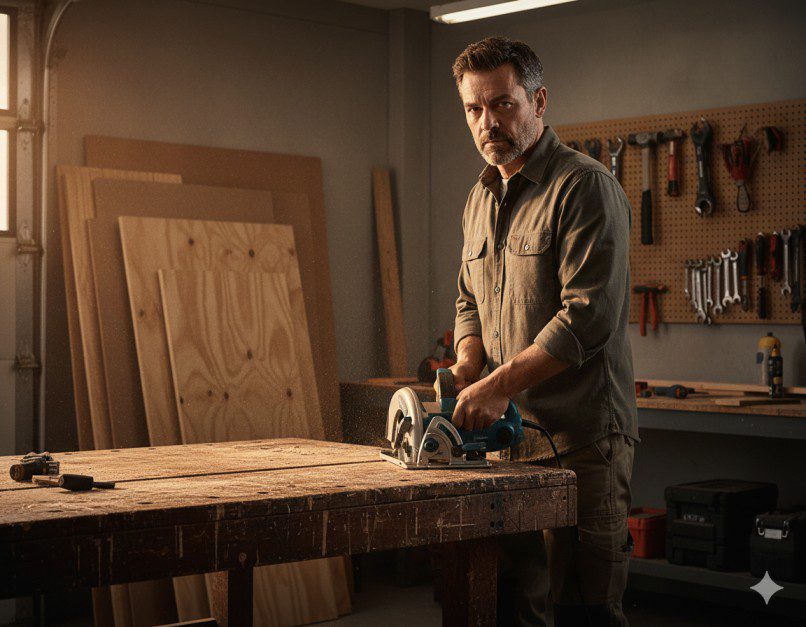
Six years ago, I bought the cheapest corded circular saw I could find at a big-box store—$49 on clearance, and I thought I’d scored a deal. That saw lasted exactly one deck project before the base plate warped, the motor started overheating, and cuts became so crooked I had to throw away $80 worth of decking boards. I replaced it with a quality saw for $140, bringing my total investment to $189. If I’d just spent $140 on the right saw from the start, I would’ve saved money, time, and a ton of frustration. That painful lesson taught me something crucial: the best corded circular saw for the money isn’t the cheapest saw—it’s the one delivering reliable performance and lasting years without breaking your budget.
If you’re watching your budget (and who isn’t in 2026?), you don’t need to spend $200+ on premium saws to get professional results. But you also can’t grab the bargain-basement $40 special and expect it to survive serious use.

I’ve been a carpenter for nine years and I’ve tested dozens of corded circular saws—from $35 disposable junk to $300 premium workhorses. I’ve watched DIYers waste money on saws that quit after 20 hours and others overpay for features they’ll never touch. This guide identifies the corded circular saws delivering the best performance-per-dollar in 2026.
What “Best Value” Really Means for Corded Saws
Value isn’t about finding the lowest price tag. It’s about getting maximum capability, durability, and performance for a fair investment.
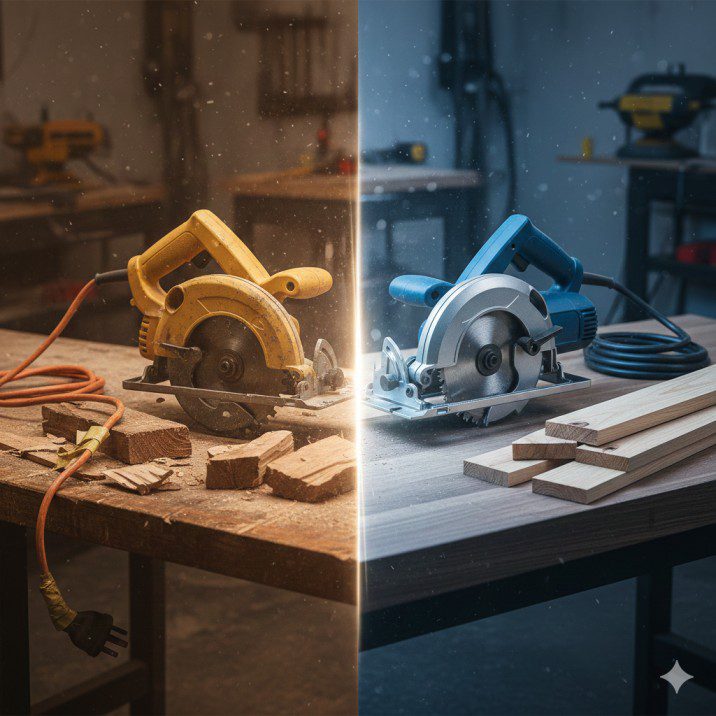
The Corded Saw Value Equation
A truly valuable corded circular saw delivers:
- Adequate power to handle tough materials without bogging down—15 amps is the standard
- Durability to survive years of regular use, not months
- Accurate cuts with a base plate that stays square and adjustments that lock solidly
- Reasonable price that doesn’t require financing
The sweet spot for value corded saws is $60-180. Below $60, you’re gambling with quality. Above $200, you’re paying for premium refinements most DIYers don’t need.
Why Corded Saws Offer Better Value Than Cordless
For pure bang-for-buck, corded saws dominate:
- Lower initial cost: A quality corded saw costs $140. An equivalent cordless setup costs $300-400 with batteries
- No battery replacement: Cordless batteries degrade and need replacement every 3-5 years ($60-100 each)
- Consistent power: Corded saws never slow down or run out of juice mid-cut
- Longer lifespan: Quality corded saws routinely last 10-15+ years versus 5-8 years for cordless
If you work primarily in a shop or jobsites with power access, corded saws deliver way more value than cordless alternatives.
Top Corded Circular Saws for the Money [2026 Models]
These saws deliver exceptional performance-per-dollar based on real-world testing and long-term ownership.
1. DeWalt DWE575SB – Best Overall Value Corded Saw
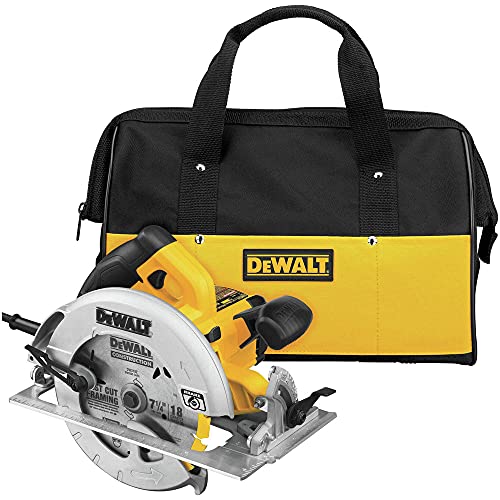
DEWALT Circular Saw, 7-1/4 inch, Pivoting with up to 57 Degree Bevel, Corded (DWE575SB)
- DEWALT 7 1/4 circular saw is among the lightest saws in its class (8.8 lbs.)
- Electric brake of the corded circular saw stops the blade after trigger is released
- 15 amp motor of the compact circular saw delivers power for even the toughest applications
New starting from: 179.00
Go to AmazonPrice: ~$130-150 | Blade Size: 7-1/4 inch | Weight: 8.8 lbs | Motor: 15 amp, 5,200 RPM
This is the saw I recommend most often, and it’s what I’d buy if I were starting over on a budget.
Why it’s incredible value:
- At 8.8 pounds, it’s one of the lightest full-size circular saws available—arm fatigue basically disappears
- 15-amp motor delivers 5,200 RPM with enough power for anything a DIYer or contractor encounters
- Electric brake stops the blade in 2-3 seconds (huge safety and time-saver feature normally found on pricier saws)
- ToughCord system prevents cord pullouts that kill cheaper saws—three times more resistant than standard cords
- 2-9/16 inch cutting depth handles all dimensional lumber in one pass
- 57-degree bevel capacity with positive stops at 22.5° and 45°
Real-world value experience: I’ve been using this saw as my daily driver for three years. It’s broken down probably 100 sheets of plywood, framed two garage additions, and cut thousands of studs and joists.
The lightweight design is genuinely transformative. After spending years with 10-11 pound saws, the DWE575SB feels effortless. I can work overhead, make awkward cuts, and run through extended cutting sessions without my shoulders aching.
The electric brake was a revelation. On repetitive cutting tasks—like cutting 50 studs to length—the blade stopping immediately after each cut saves measurable time. I can set the saw down, grab the next board, and keep moving without waiting 10 seconds for blade coast.
The ToughCord system actually works. I’ve snagged the cord on lumber, yanked it accidentally, and it’s never pulled out. My previous cheap saw had the cord pull out three times in six months.
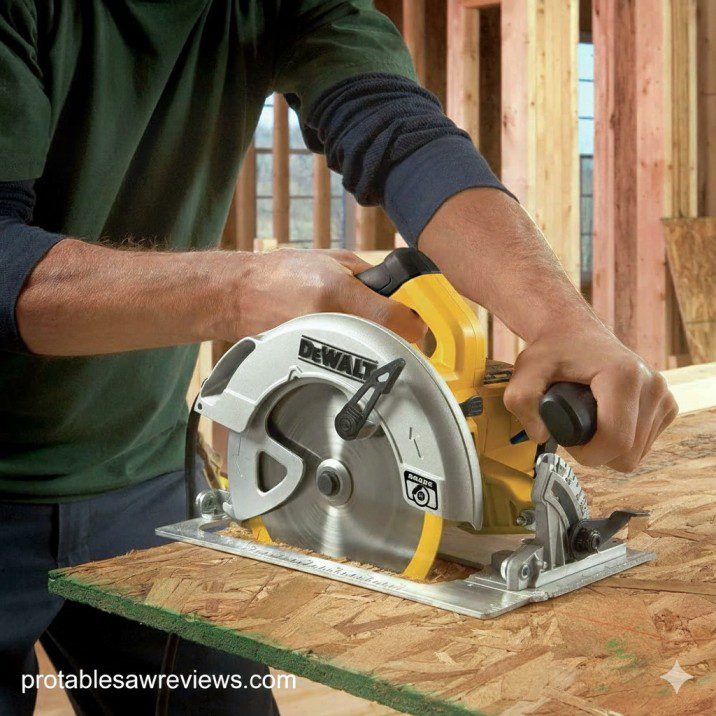
What you’re not getting: The base plate is aluminum, not magnesium (though it’s been plenty durable for me). No LED lights (not a big deal—work in decent lighting). The stock blade is mediocre—budget $20 for a quality blade upgrade.
At $130-150, this saw delivers 95% of the performance of saws costing $250+. The value proposition is unbeatable.
Best for: DIYers doing regular projects. Contractors on a budget. Anyone who values lightweight ergonomics. First saw buyers who want quality without overpaying.
2. Makita 5007MG – Best Premium Features at Fair Pricing
Price: ~$160-180 | Blade Size: 7-1/4 inch | Weight: 10.6 lbs | Motor: 15 amp, 5,800 RPM

Makita 5007Mg Magnesium 7-1/4-Inch Circular Saw
- Magnesium components create a lightweight saw (10.6 pounds) that is well balanced and jobsite tough
- Powerful 15.0 AMP motor delivers 5,800 RPM for proven performance and jobsite durability
- Two built in L.E.D lights illuminate the line of cut for increased accuracy
New starting from: 199.00 $
Go to AmazonIf you can stretch your budget $30-40 beyond the DeWalt, the Makita delivers premium refinements worth considering.
Why it’s worth the premium:
- Magnesium construction throughout—lighter than aluminum, tougher than plastic, lasts decades
- Industry-leading 5,800 RPM delivers the fastest cutting speed in this price range
- Dual LED lights actually illuminate the cut line effectively (many budget LEDs are useless)
- Built-in dust blower keeps sawdust off your cut line—legitimately improves accuracy
- Includes premium 24-tooth ultra-coated framing blade that cuts cleaner than most stock blades
- 56-degree bevel capacity—more than most saws offer
Real-world value experience: Multiple crew members on my teams run Makitas. These saws are legendary for reliability—I’ve seen them last 12-15 years of professional use without major issues.

The 5,800 RPM motor is noticeably faster than 5,200 RPM competitors. Cuts feel effortless. The saw powers through wet pressure-treated lumber without the speed drop I experience with other saws.
The LED lights actually work well. I’ve used them for early morning cuts and in dim basements—they create a shadow line showing exactly where the blade will cut. Most budget saw LEDs are gimmicks; these are functional.
The magnesium base stays flat and true even after years of jobsite drops. I’ve never seen a Makita base plate warp or bend.
Honest limitations: At 10.6 pounds, it’s heavier than the DeWalt (though still lighter than most saws). No electric brake—the blade coasts for 10-12 seconds after release. Costs $30-40 more than the DeWalt.
Best for: Serious DIYers who want to buy once. Contractors who value long-term durability. Anyone doing frequent cutting who’ll appreciate the faster motor and better materials.
3. SKIL 5280-01 – Best Budget Option Under $70
Price: ~$50-70 | Blade Size: 7-1/4 inch | Weight: 8.1 lbs | Motor: 15 amp, 5,300 RPM
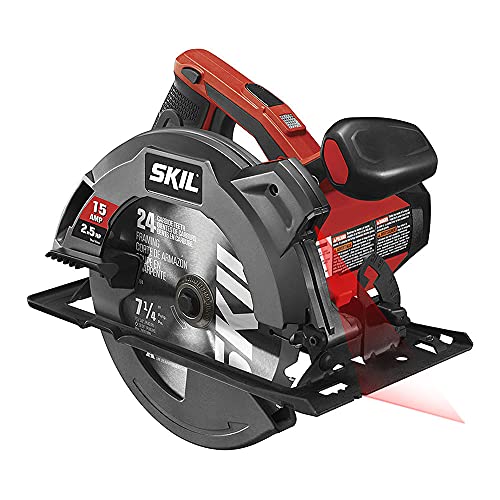
SKIL 15 Amp 7-1/4 Inch Circular Saw with Single Beam Laser Guide – 5280-01
- Powerful 15-amp motor delivers 5 300-RPM for greater speed and faster cuts
- 7-1 4-inch carbide-tipped blade included. Spindle lock for easy blade changes.
- 51° bevel capacity with a positive stop at 45° for a wide variety of cuts
List Price :
Offer: 62.78
Go to AmazonFor absolute minimum budget or light-duty use, this saw delivers surprising capability.
Why it works despite being cheap:
- Often under $60 makes it accessible for anyone
- Full 15-amp motor with 5,300 RPM handles cutting dimensional lumber fine
- Lightweight at 8.1 pounds reduces fatigue
- Includes laser guide (gimmicky but some people like it)
- Single-beam laser guide and safety lock prevent accidental starts
- 51-degree bevel capacity adequate for most work
Real-world value experience: I recommended this saw to my neighbor who needed to build a single shed. He wasn’t sure if he’d ever use a circular saw again, so he didn’t want to invest much.
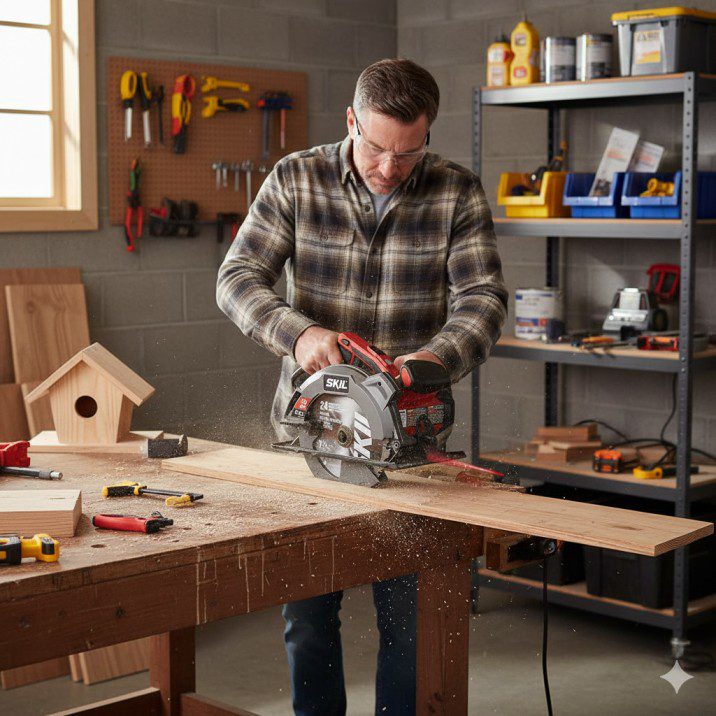
The saw completed his project without issues—probably 300 cuts through dimensional lumber and a few sheets of plywood. Two years later, he’s used it for a handful of other small projects and it still works fine.
That’s the use case: occasional, light-duty projects where you’re unsure if the investment in better tools is justified.
Honest limitations: Build quality is basic plastic construction—expect 3-5 years of life, not 15. The laser guide drains battery quickly and isn’t always accurate (I ignore it). Depth adjustments are wrench-based, not lever-based (slower). No electric brake. The stock blade is terrible—you’ll need a $20 upgrade for plywood work.
This isn’t a saw for serious DIYers or regular use. It’s for someone making a few cuts once or twice a year.
Best for: Absolute minimum budgets (under $70 total). Occasional users doing light projects. Anyone uncertain about tool usage who wants to start cheap.
4. Craftsman CMES510 – Best American Brand Value
Price: ~$75-90 | Blade Size: 7-1/4 inch | Weight: 9.2 lbs | Motor: 15 amp, 5,500 RPM

CRAFTSMAN Circular Saw, 7-1/4 inch, 15 Amp, Corded (CMES510)
- High performance motor runs at 5, 500 RPM’s for aggressive fast cutting
- 71/4inches 18T Carbide tipped blade with up to 21/8inches Capacity for 2x material
- Tool-free BEVELING shoe pivots up to 55 deg. For angled cuts with detents at 22.5 and 45 Degree for ease of use
List Price :
Offer: 99.00 $
Go to AmazonIf you value American brand heritage and want solid performance at budget pricing, Craftsman delivers.
Why it’s good value:
- Magnesium shoe at this price point is rare—better durability than plastic or aluminum
- 5,500 RPM is respectably fast for the price
- Includes rafter hook (DeWalt and SKIL don’t have this)
- Craftsman 3-year warranty backs up the saw
- 50-degree bevel capacity with positive stops
- Available at Lowe’s and Amazon with good parts/service availability
Real-world value experience: A friend bought this saw two years ago for deck and fence projects. He’s put it through serious use—cutting hundreds of pressure-treated boards—and it’s held up well.
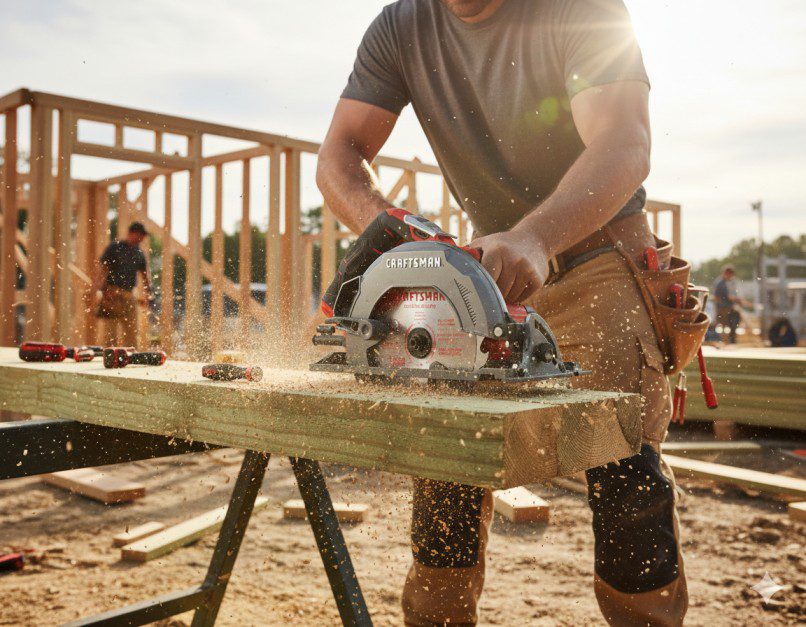
The magnesium shoe is the standout feature at this price. It’s stayed flat and square despite regular jobsite use. The saw cuts straight, adjustments lock solidly, and performance hasn’t degraded noticeably.
The rafter hook actually gets used. He hangs the saw on studs and joists constantly, which beats bending down to pick it up off the deck.
What you’re giving up: No electric brake. No LED lights. The laser guide is hit-or-miss on accuracy. Slightly heavier than the DeWalt but lighter than the Makita.
Best for: DIYers who want American brand familiarity. Anyone shopping at Lowe’s. People who value the rafter hook feature for ladder/scaffold work.
| Saw Model | Price | Weight | RPM | Key Feature |
|---|---|---|---|---|
| DeWalt DWE575SB | $130-150 | 8.8 lbs | 5,200 | Electric brake + lightweight |
| Makita 5007MG | $160-180 | 10.6 lbs | 5,800 | Magnesium + fastest RPM |
| SKIL 5280-01 | $50-70 | 8.1 lbs | 5,300 | Budget price |
| Craftsman CMES510 | $75-90 | 9.2 lbs | 5,500 | Mag shoe + rafter hook |
Hidden Value Factors Most People Miss
Electric Brake: Worth $20-30 Extra

Saws with electric brakes cost $20-40 more than those without. This feature is absolutely worth paying for if you’re doing any volume cutting.
The time savings add up fast. If you’re cutting 100 studs and the brake saves 8 seconds per cut, that’s 13 minutes saved. Over multiple projects, you recoup that $30 premium in saved time.
Safety-wise, the brake prevents accidents from grabbing a saw with a spinning blade. I’ve had close calls with coasting blades—never with braked saws.
Cord Quality Matters More Than You Think
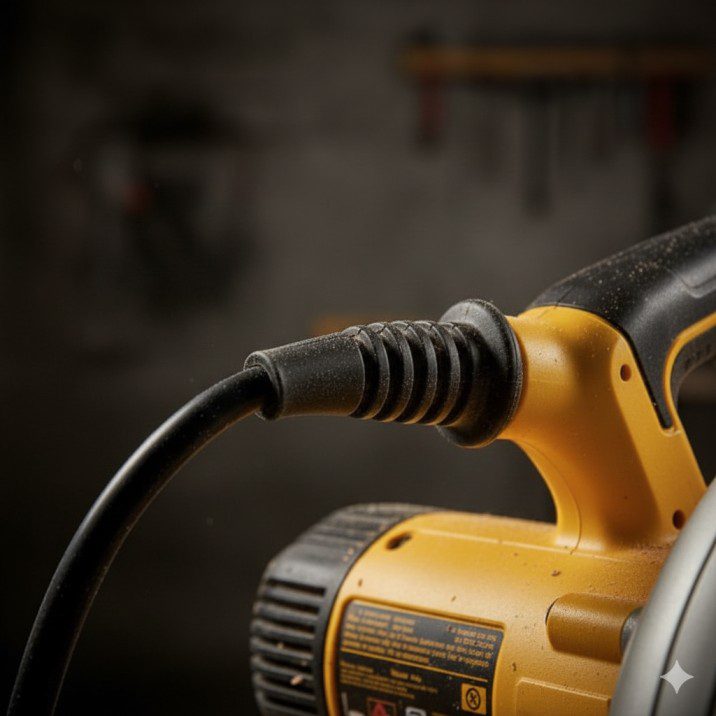
Cheap saws use cheap cords that pull out of the saw body after a few months of use. This is frustrating and potentially dangerous.
DeWalt’s ToughCord system and similar reinforced designs actually prevent pullouts. I’ve yanked my DeWalt cord countless times—it’s never budged.
Replacing a pulled-out cord costs $15-25 plus downtime. A saw with a quality cord system pays for itself.
Blade Replacement Costs
All these saws use standard 7-1/4 inch blades. Replacement blades cost:
- Basic 24-tooth framing blade: $12-18
- Quality 40-tooth combination blade: $20-30
- Premium 60-tooth finishing blade: $35-50
Budget saws and premium saws use the same blades, so blade costs don’t factor into value calculations. Upgrade immediately to a quality blade regardless of which saw you buy.
Warranty Comparison
- DeWalt DWE575SB: 3-year limited warranty
- Makita 5007MG: 1-year warranty (but legendary reliability)
- SKIL 5280-01: 1-year warranty
- Craftsman CMES510: 3-year limited warranty
Warranty length matters less than build quality. Makita only offers 1-year warranty because their saws rarely fail. SKIL offers 1-year because they know their budget saws won’t last forever.
Value Tip: If you’re torn between spending $140 on a DeWalt or $70 on a SKIL, consider how often you’ll use the saw. For weekly use, the DeWalt saves you money long-term through better durability. For monthly or less frequent use, the SKIL works fine and saves $70 you can spend on other tools.
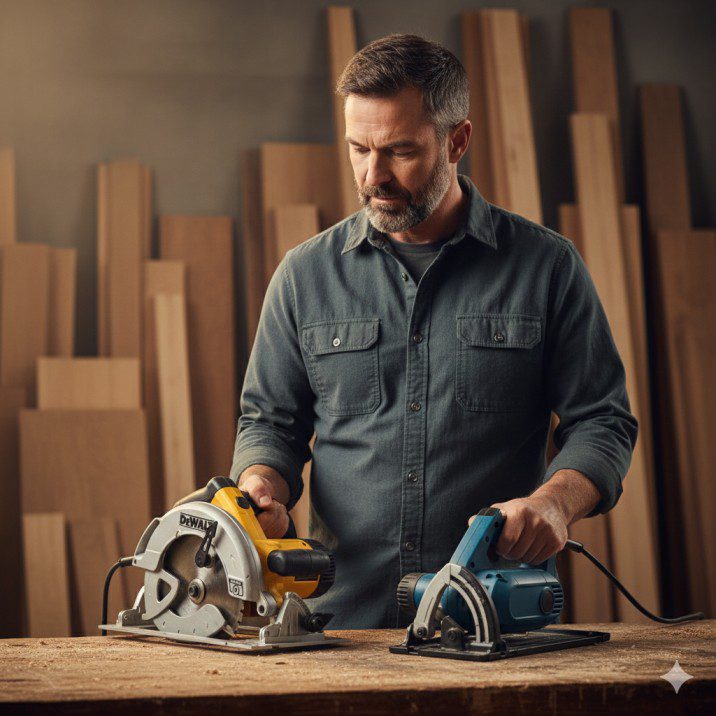
Value Saws vs Premium Saws: The Real Performance Gap
Where Premium Saws Genuinely Excel
After testing both value and premium saws extensively, here’s where $250+ premium saws actually perform better:
- Refinement: Smoother adjustments, better ergonomics, nicer materials throughout
- Weight reduction: Extensive magnesium use drops weight below 10 pounds
- Advanced features: Things like tool-free blade changes, better dust collection integration
- Longevity: Premium saws might last 20 years versus 10-12 for value saws
Where Value Saws Match Premium Performance
For typical DIY and contractor use, value saws perform identically to premium saws in these areas:
- Cutting power: All 15-amp motors deliver adequate power for framing and general carpentry
- Cut quality: Blade choice matters 10x more than saw price for cut quality
- Accuracy: Both cut square and straight when properly maintained
- Reliability: Quality value saws (DeWalt, Makita) last 10+ years of regular use
I’ve completed identical projects with my $140 DeWalt and borrowed $280 premium saws. The premium saw felt nicer and was slightly more refined. But the finished work—actual cut quality and project results—looked the same.
Want to see how these value saws compare to premium models? Check out our detailed comparison guides or browse our expert saw reviews for hands-on testing results.
The Honest Bottom Line: Which Value Saw Should You Buy?
After nine years of testing budget and premium corded saws, here’s my straight recommendation on the best corded circular saw for the money:
If you have $130-150 to spend: Buy the DeWalt DWE575SB. It’s the best overall value in corded saws—lightweight, powerful, features an electric brake, and the ToughCord system prevents the pullout failures that kill cheaper saws. This is the saw I’d buy if I were starting over.
If you can stretch to $160-180: The Makita 5007MG is worth the premium. The magnesium construction, 5,800 RPM motor, and proven 15-year lifespan make it a buy-once-cry-once investment. My crew guys who bought Makitas 10 years ago are still using them daily.
If your budget is truly under $75: The SKIL 5280-01 works for occasional, light-duty use. Just understand its limitations—this saw will last 3-5 years of casual use, not 15 years of regular work.
If you want American brand familiarity: The Craftsman CMES510 at $75-90 delivers solid performance with a magnesium shoe at budget pricing. Good middle ground between the SKIL and DeWalt.
My personal recommendation: For most DIYers and budget-conscious contractors, the DeWalt DWE575SB at $130-150 is the sweet spot. You get 95% of premium saw performance at 50% of the cost. The weight savings and electric brake alone justify the price over cheaper alternatives.
Don’t fall into the trap of thinking you need a $300 worm drive or premium saw to build a deck or frame walls. You don’t. The DeWalt or Makita will complete those projects just as well, and you’ll have $150 left over for better blades or other tools.
Ready to maximize your tool budget? Visit our comprehensive buying guide for tips on building a complete workshop on a budget, or check out our how-to tutorials for cutting techniques that work with any saw.
Frequently Asked Questions
What is the best budget corded circular saw?
The DeWalt DWE575SB is the best budget corded circular saw in 2026, priced at $130-150. It delivers professional-grade performance with a 15-amp motor, 5,200 RPM cutting speed, electric brake for safety and efficiency, and ToughCord system preventing cord pullouts. At just 8.8 pounds, it’s one of the lightest full-size saws available, reducing arm fatigue significantly. The 2-9/16 inch cutting depth handles all standard dimensional lumber in one pass. For the price, it offers exceptional value that rivals saws costing $100+ more.
Is it worth buying a cheap corded circular saw?
It depends on your usage and definition of “cheap.” Quality value saws in the $60-180 range (SKIL, Craftsman, DeWalt, Makita) offer excellent performance and are absolutely worth buying. Ultra-cheap saws under $50 typically lack durability and adequate power—they’re only worth it for very occasional, light-duty use. The sweet spot for value is $130-180, where you get saws that last 10+ years of regular use. Spending less than $60 usually results in frustration and eventual replacement, costing more long-term than buying quality initially.
How long do budget corded circular saws last?
Quality budget corded saws (DeWalt DWE575SB, Makita 5007MG) typically last 10-15+ years with regular DIY use and proper maintenance. Professional contractors might see 5-10 years of heavy daily use. Ultra-budget saws under $60 (like the SKIL 5280-01) last 3-5 years of casual use before motors wear out or components fail. Lifespan depends heavily on usage intensity, maintenance (cleaning sawdust, replacing carbon brushes), and build quality. Corded saws generally outlast cordless equivalents since there’s no battery degradation limiting usability.
Do I need an electric brake on a circular saw?
An electric brake isn’t essential but significantly improves safety and efficiency, especially for volume cutting. Electric brakes stop the blade in 2-3 seconds versus 10-12 seconds for non-braked saws. This matters for: repetitive cutting tasks where faster blade stops save measurable time, safety situations preventing accidental contact with spinning blades, and professional work where time savings justify the $20-40 premium. For occasional DIY use, non-braked saws work fine if you develop safe habits. For regular use, the electric brake is worth paying extra for.
What’s better: DeWalt DWE575SB or Makita 5007MG?
Both are excellent value saws with different strengths. DeWalt DWE575SB ($130-150) is lighter at 8.8 pounds, includes electric brake, has ToughCord protection, and costs less—best for those prioritizing lightweight ergonomics and budget. Makita 5007MG ($160-180) features magnesium construction throughout, faster 5,800 RPM motor, dual LED lights, better stock blade, and legendary 15-year lifespan—best for those wanting maximum durability and fastest cutting speed. If weight and electric brake matter most, choose DeWalt. If you value faster RPM and long-term durability, the Makita’s $30 premium is justified.

Finlay Connolly is a woodworking enthusiast and power tool specialist with over a decade of hands-on experience in the workshop. As the founder and lead writer at ProTableSawReviews.com, Finlay combines expert knowledge with real-world testing to help woodworkers, DIYers, and professionals choose the best tools for the job. With a sharp eye for detail and a passion for precision, Finlay is committed to providing trustworthy, practical advice backed by years of experience and research in the field. Whether you’re cutting dados or comparing fence systems, you can count on Finlay for honest, reliable reviews that make your next cut your best one.