Radial Arm Saw vs Table Saw: Is the Radial Arm Saw Worth It Anymore?
 Finlay Connolly
6 min read
Finlay Connolly
6 min read
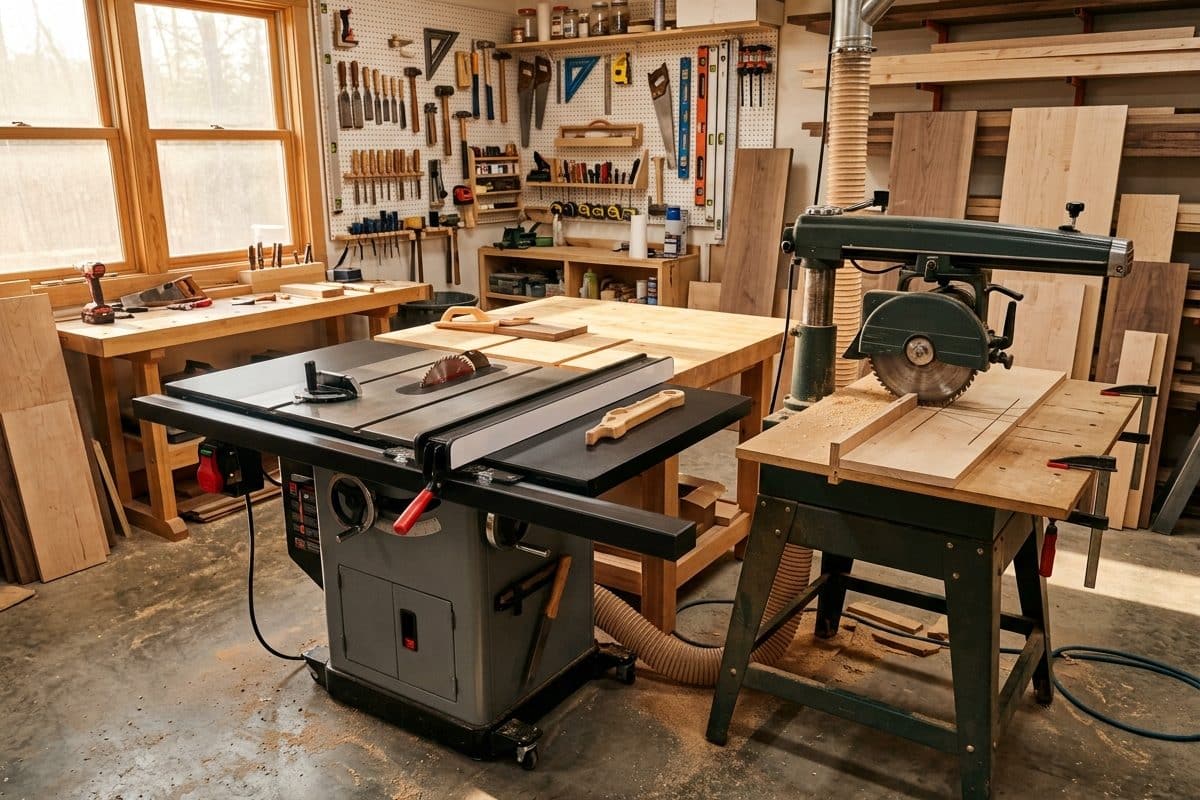
A radial arm saw is a saw with the blade hanging from an arm above a fixed table — you pull the spinning blade through the material instead of pushing the material through the blade. A table saw works the opposite way: the blade stays fixed below the table, and you push the material through it. That single difference in how the blade moves is the whole reason the rest of this comparison plays out the way it does.
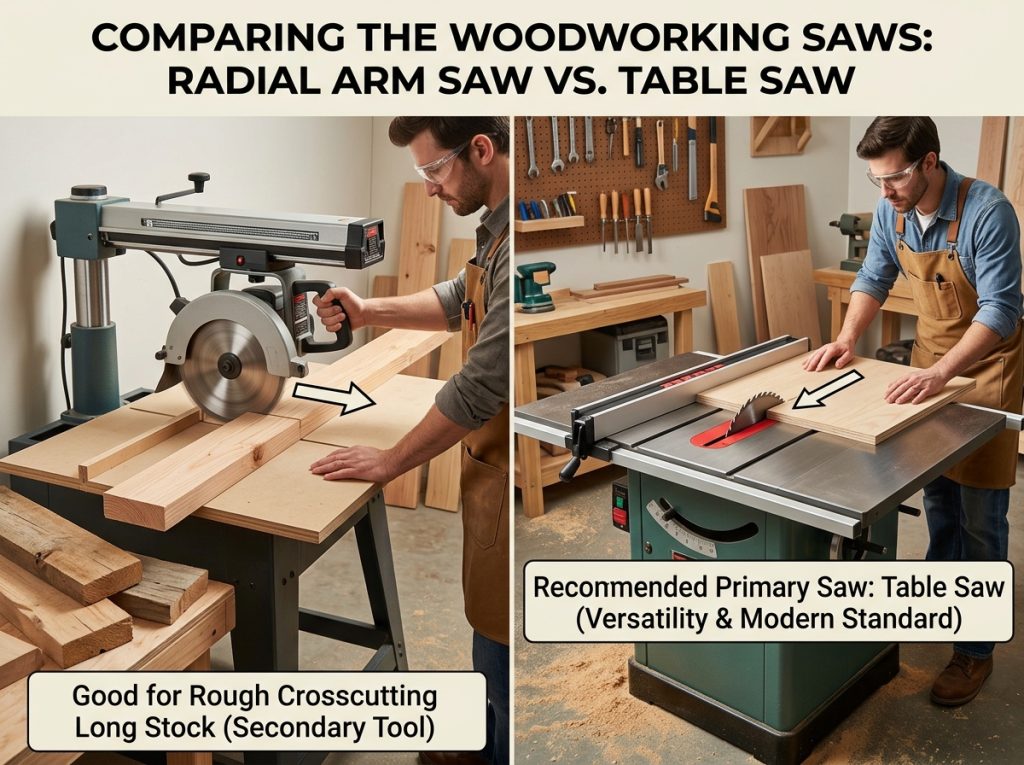
The direct answer: a table saw should be your primary saw, almost without exception. A radial arm saw isn’t a bad tool, and if you already own one or found a good used unit, it still has a place for rough crosscutting long stock. But building a shop around a radial arm saw instead of a table saw today means going against where the entire industry moved decades ago, and for real reasons, not just trends.
Here’s the full picture, including why this once-standard shop tool fell out of favor and where it still earns its keep.
Where it came from, and why it stuck around for decades
That design made it genuinely versatile for its time. One machine could crosscut, rip, cut dados, cut miters, and even do some limited shaping work with the right accessories. For decades, it was marketed as the one saw a home shop needed.
Why it fell out of favor
The honest answer is accuracy and safety, not fashion.
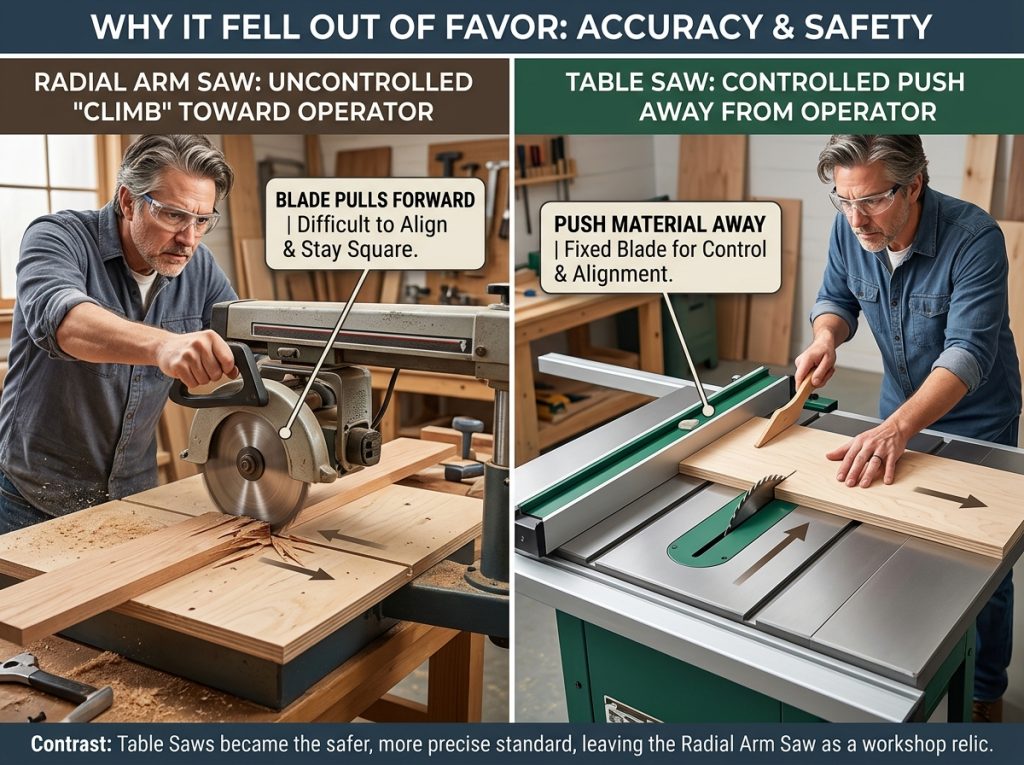
Because the blade pulls toward the operator during a crosscut, a radial arm saw has a tendency to “walk” or climb forward if it’s not perfectly tuned, which can pull the blade into the material faster than intended. Getting one properly adjusted — arm square to the fence, blade parallel to the table, all the alignment points holding over time — takes real effort, and it doesn’t always stay put. A saw that drifts out of alignment easily is a saw that produces inconsistent cuts, and on a tool where the blade is coming at you rather than the other way around, that inconsistency matters more.
Table saws have the opposite geometry. You’re pushing material away from you, into a fixed blade, which is inherently more controllable and more forgiving to keep aligned. That’s a big part of why the table saw became the standard shop centerpiece and the radial arm saw slowly faded into “that thing my dad has in the garage” territory.
Where each one still makes sense
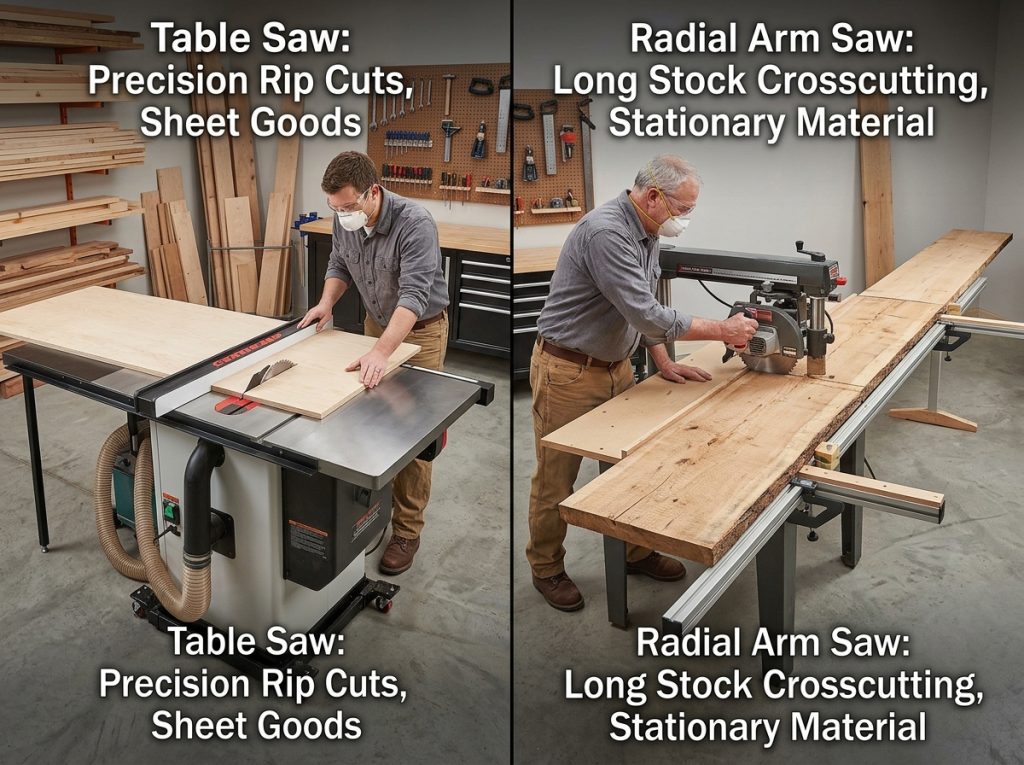
A table saw wins almost every category that matters for a modern shop: rip cuts, repeat precision, joinery, sheet goods, safety, and the sheer size of the accessory and jig market built around it. If you’re choosing your first or only saw, this isn’t a close call.
A radial arm saw still has one job it does well: crosscutting long stock, especially wide boards or trim, without needing outfeed support on both sides the way a table saw crosscut setup does. Since the material stays put and the blade travels, a long board can sit flat on a stationary table with support on either side, and you just pull the saw through it. For someone doing a lot of crosscutting on long lumber — framing stock, trim work, that kind of thing — this is a genuine advantage that some old-school carpenters still swear by.
| Table Saw | Radial Arm Saw | |
|---|---|---|
| Rip cuts | Excellent, this is its core strength | Possible, but awkward and less common in practice |
| Crosscutting long stock | Needs outfeed support on both sides | Material stays still, easier to support long boards |
| Alignment stability | Holds settings well once tuned | Prone to drifting, needs frequent re-checking |
| Accessory and jig market | Enormous — sleds, fences, jigs, blades | Small and shrinking, harder to source parts today |
| Beginner-friendliness | More forgiving to learn on | Steeper learning curve, less predictable |
| Resale and parts availability | Strong, wide market | Weak, mostly used and increasingly hard to service |
The safety conversation people don’t like having
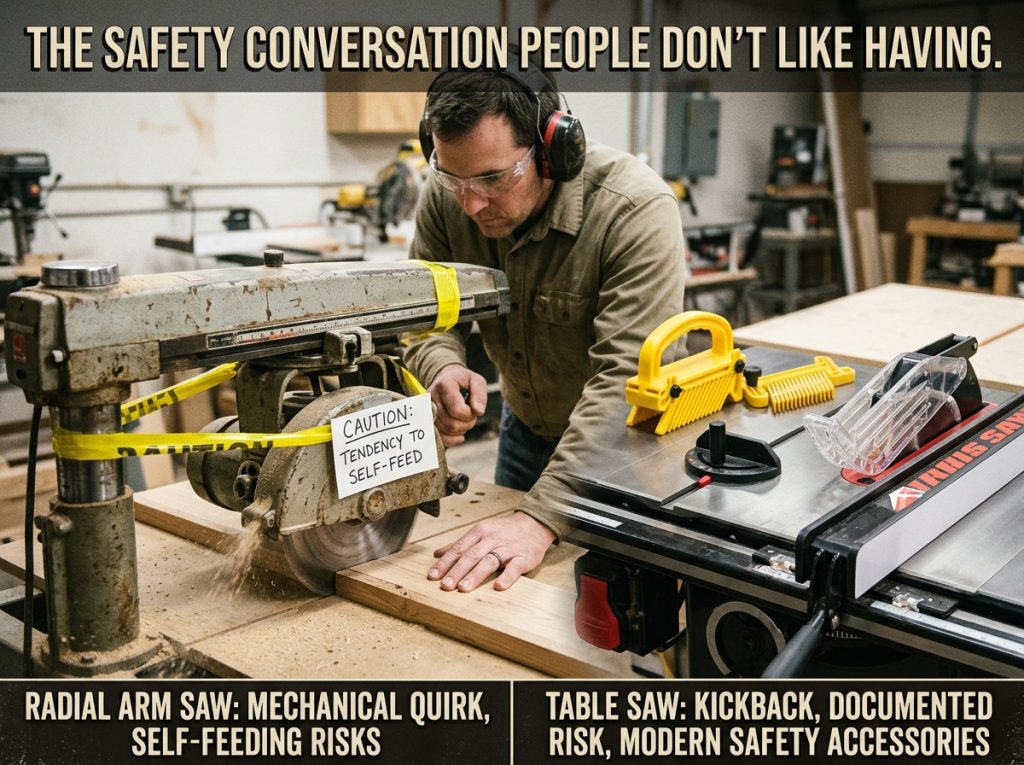
A lot of woodworking forums will tell you a radial arm saw is “just as safe as anything else if you know what you’re doing,” and there’s some truth in that — most tools are safer in careful hands. But it’s worth being straight about why professional shops largely walked away from these.
The saw’s tendency to self-feed during a crosscut, pulling toward the operator if the pivot isn’t perfectly tensioned, is a mechanical quirk that never fully goes away, no matter how experienced you get. Table saws have their own real risk in kickback, which is exactly why fence alignment, a good rip fence, and proper hand tools like a push stick or push block matter so much. But that risk is at least well understood, heavily documented, and addressed by a mature accessory market built specifically to reduce it. The radial arm saw’s risk is more about the tool’s own geometry working against you, and there’s less modern safety hardware built to solve it.
If you already own one
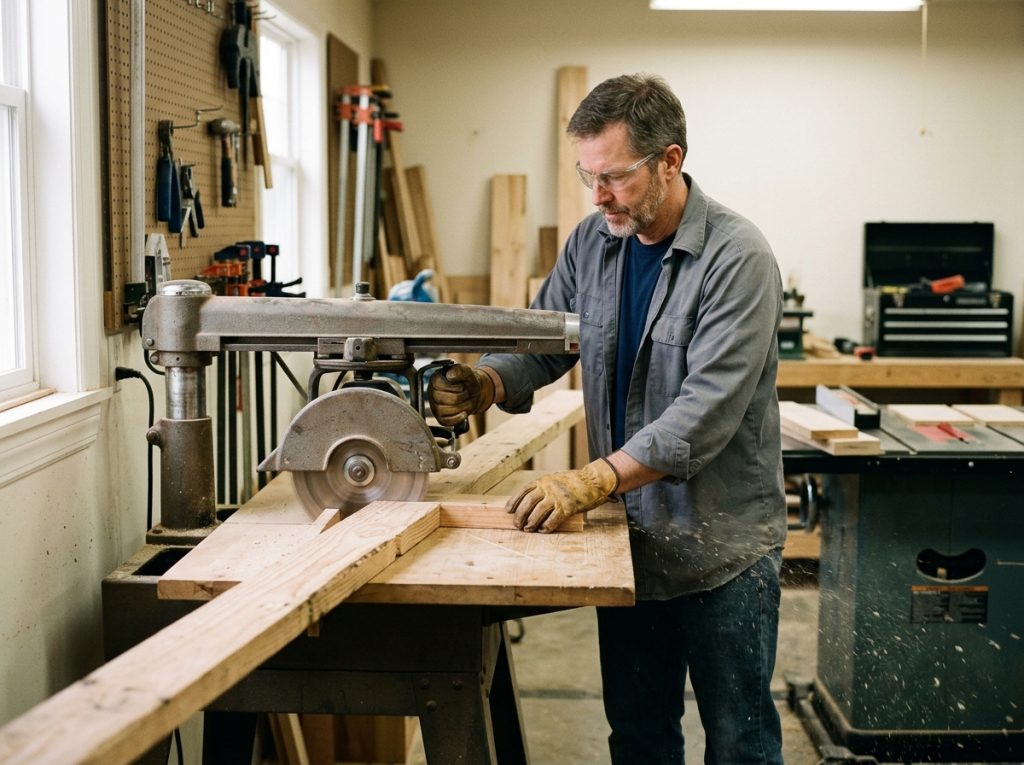
Plenty of woodworkers keep a radial arm saw around purely for rough crosscutting duty — breaking down long lumber to rough length before final, precise cuts happen elsewhere. Used this way, alongside a table saw rather than instead of one, it can still be a useful piece of shop equipment.
If you go this route, spend real time on alignment before trusting it with anything. Check that the arm is square to the fence, the blade tracks straight through the cut without climbing, and the whole assembly is tight with no play in the arm’s travel. A radial arm saw that hasn’t been checked in years is far more likely to be the unsafe version people warn about than one that’s properly tuned.
If you’re starting from scratch
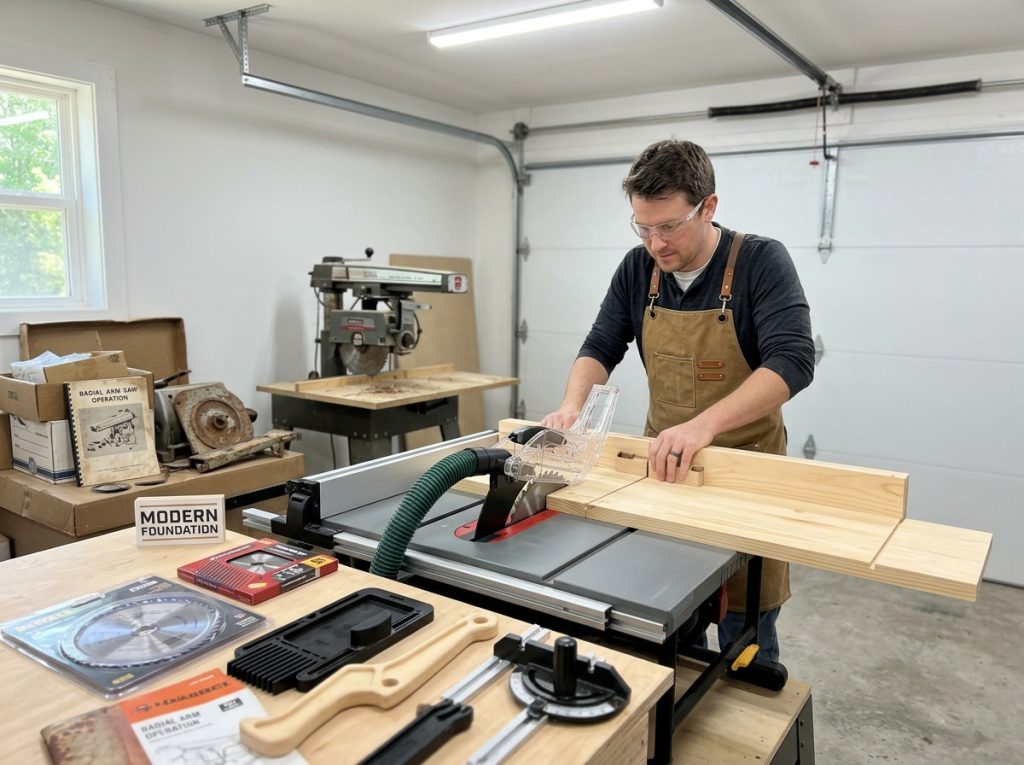
Buy the table saw. This isn’t close.
A modern table saw, even an affordable portable or jobsite model, gives you a wider range of safe, accurate cuts, an accessory ecosystem that keeps growing rather than shrinking, and a learning curve that’s more forgiving for someone building skills. Pair it with a crosscut sled for the kind of repeat square cuts a radial arm saw was traditionally used for, and you’ve replicated its main strength without the alignment headaches.
The radial arm saw isn’t gone because it never worked. It’s gone because something better at the same core job came along, and the whole industry — blade makers, jig manufacturers, safety equipment designers — followed the table saw instead. Building a shop today around a tool that industry mostly left behind means fighting an uphill battle for parts, accessories, and even good instructional material when something goes wrong.
A few honest questions people ask about this comparison
Can a radial arm saw do everything a table saw does? On paper, closer than you’d think — rips, crosscuts, dados, even shaping with the right attachments. In practice, it does most of those jobs worse or less safely than a table saw built specifically for them.
Is it worth restoring an old radial arm saw I found for free or cheap? If it’s mechanically sound and you’re willing to spend the time properly aligning it, sure, as a secondary saw for rough crosscutting. Just don’t expect it to replace a table saw for general shop work.
Why do old-school carpenters still like radial arm saws for trim work? Long stock support without needing an outfeed table is the real reason. A radial arm saw handles a long board sitting flat and still better than a table saw crosscut setup that needs support on both sides of the blade.
Are radial arm saws still being made? Very few major manufacturers still produce them for the general market. Most available today are used, which affects parts availability and long-term reliability.
Should a beginner ever choose a radial arm saw as their first saw? No. A table saw is the more forgiving, more versatile, and better-supported choice for anyone building shop skills from the ground up.

Finlay Connolly is a woodworking enthusiast and power tool specialist with over a decade of hands-on experience in the workshop. As the founder and lead writer at ProTableSawReviews.com, Finlay combines expert knowledge with real-world testing to help woodworkers, DIYers, and professionals choose the best tools for the job. With a sharp eye for detail and a passion for precision, Finlay is committed to providing trustworthy, practical advice backed by years of experience and research in the field. Whether you’re cutting dados or comparing fence systems, you can count on Finlay for honest, reliable reviews that make your next cut your best one.