Best Cordless Table Saw Reviews 2026: Tested & Compared
 Finlay Connolly
13 min read
Finlay Connolly
13 min read
By Finlay Connolly
Cordless Table Saws Aren’t a Novelty Anymore
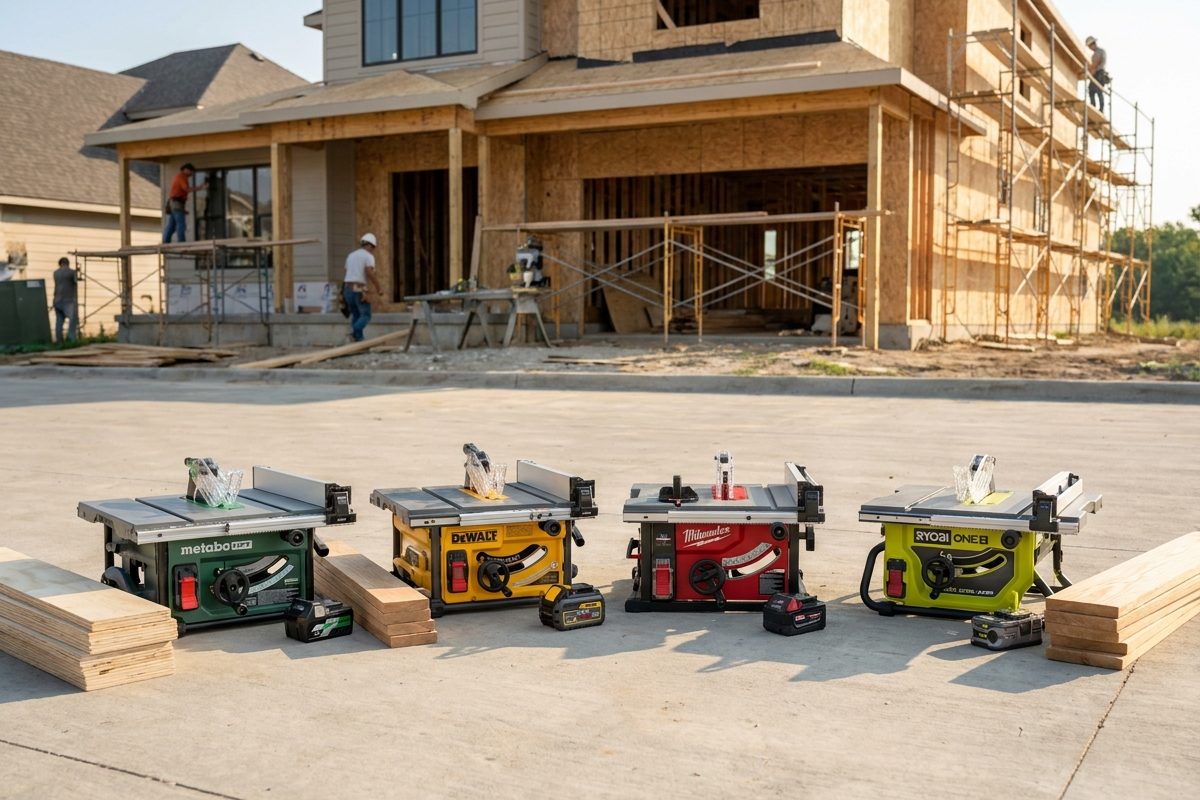
A few years ago, a cordless table saw was the kind of thing you bought if portability mattered more than actually finishing the cut. Underpowered motors, small blades, and rip capacities that couldn’t handle a real sheet of plywood. That’s changed. Battery platforms in the 36V to 60V range now push enough torque to rip hardwood and plywood without bogging down, and a couple of the saws below run full-size 10-inch blades instead of the smaller 8-1/4-inch blades that used to be the compromise.
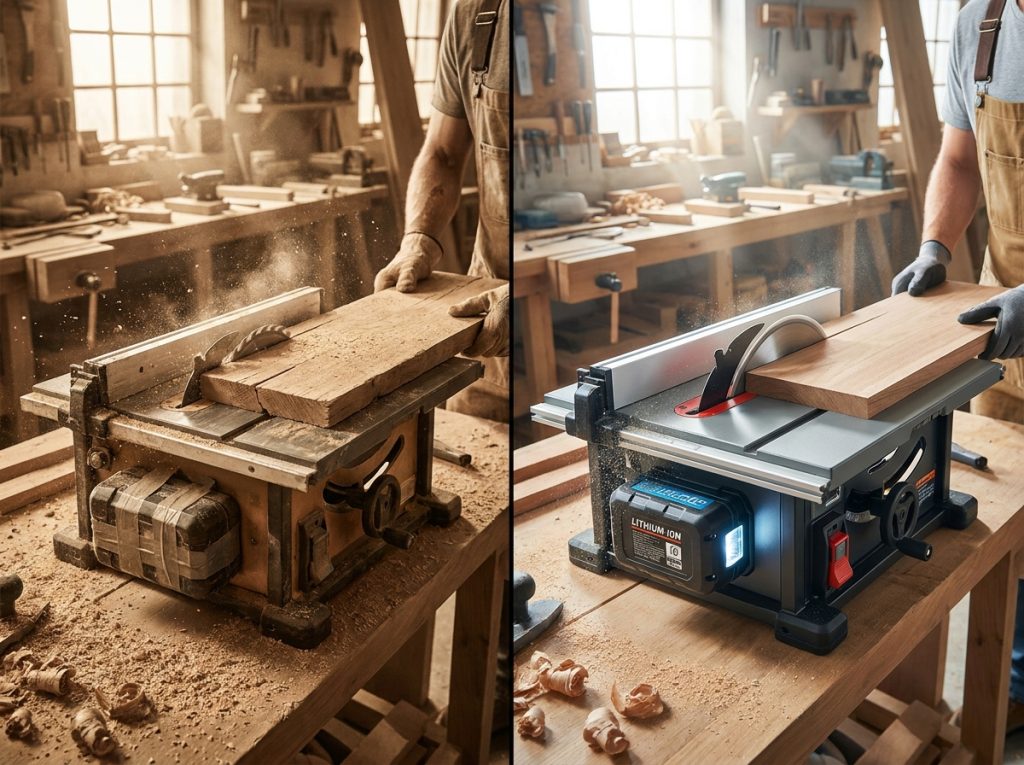
The real question isn’t whether cordless table saws are good enough anymore. It’s whether going cordless makes sense for how you actually work. If you’re running power to a fixed shop location every day, a cord was never the problem. If you’re setting up and breaking down on a different part of a jobsite every few hours, or working somewhere without reliable power, that’s where cordless earns its price premium.
This guide covers the models actually worth your money, what the battery platform commitment really means long-term, and where cordless still falls short of a corded saw doing the same job.
Quick Recommendations
Metabo HPT MultiVolt 36V Table Saw — Best Overall
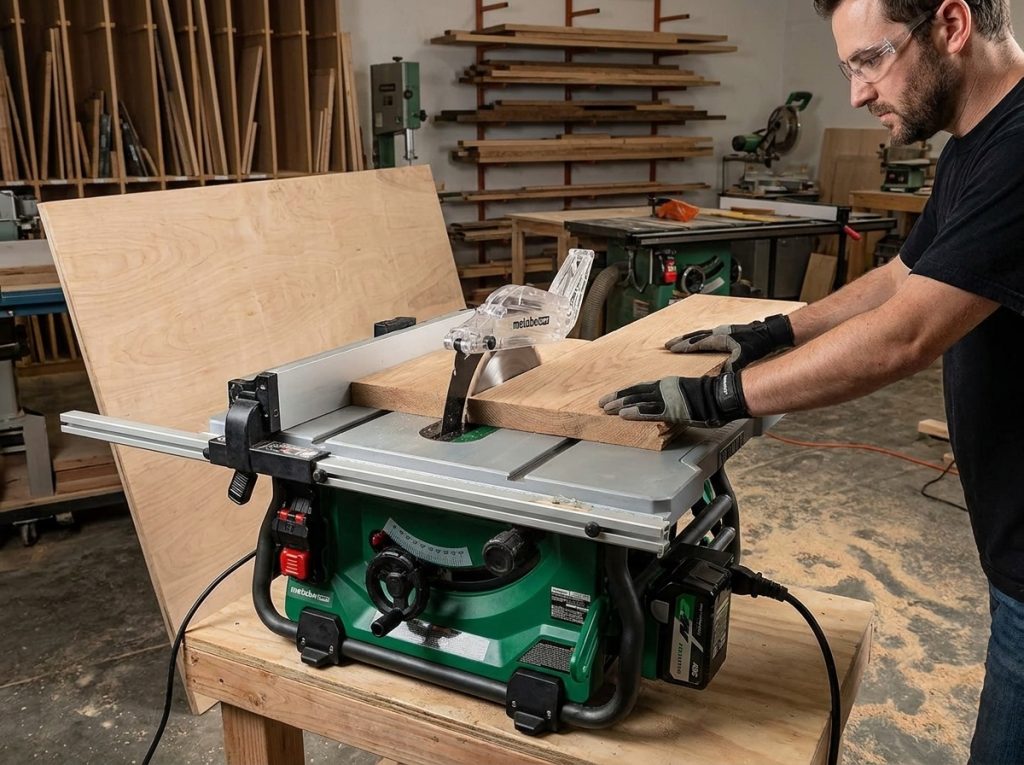
This is the only saw on this list that doesn’t ask you to compromise on blade size. It runs a full 10-inch blade instead of the smaller 8-1/4-inch blades on the DeWalt and Milwaukee, which means it cuts 3-1/8 inches deep at 90 degrees instead of the roughly 2 to 2-1/2 inches you get from the compact-blade competitors. It also has a 35-inch rip capacity to the right of the blade and 22 inches to the left, which is more room than most corded jobsite saws offer, let alone cordless ones.
The feature that actually sets it apart: MultiVolt technology lets you run it on a 36V battery or plug in an AC adapter and run it corded. That solves the single biggest complaint about cordless tools, which is running out of charge mid-project. Start the day on battery for mobility, plug in when you’re back near an outlet, and you’re not managing downtime around charge cycles.
It’s also the only saw here that accepts a dado stack, up to 13/16 inch, which matters if joinery is part of your workflow. If dado cuts are a regular part of your process no matter which saw you land on, it’s worth reading our Best Table Saws for Dado Cuts guide alongside this one, since dado capability is rare enough on cordless saws that it changes the shortlist significantly.
The trade-offs are real: at 67 pounds it’s the heaviest saw in this guide by a wide margin, and at roughly $699 for the tool with battery or adapter, it costs more than the DeWalt, Milwaukee, or Ryobi. This isn’t a saw you casually toss in a truck bed for a quick cut. It’s a saw you set up once and leave running most of the day.

Best for: pros who need full-size blade performance and dado capability without giving up battery flexibility, and who don’t mind the weight in exchange for not being tied to a single power source.
DeWalt FlexVolt 60V Table Saw — Best Power-to-Weight
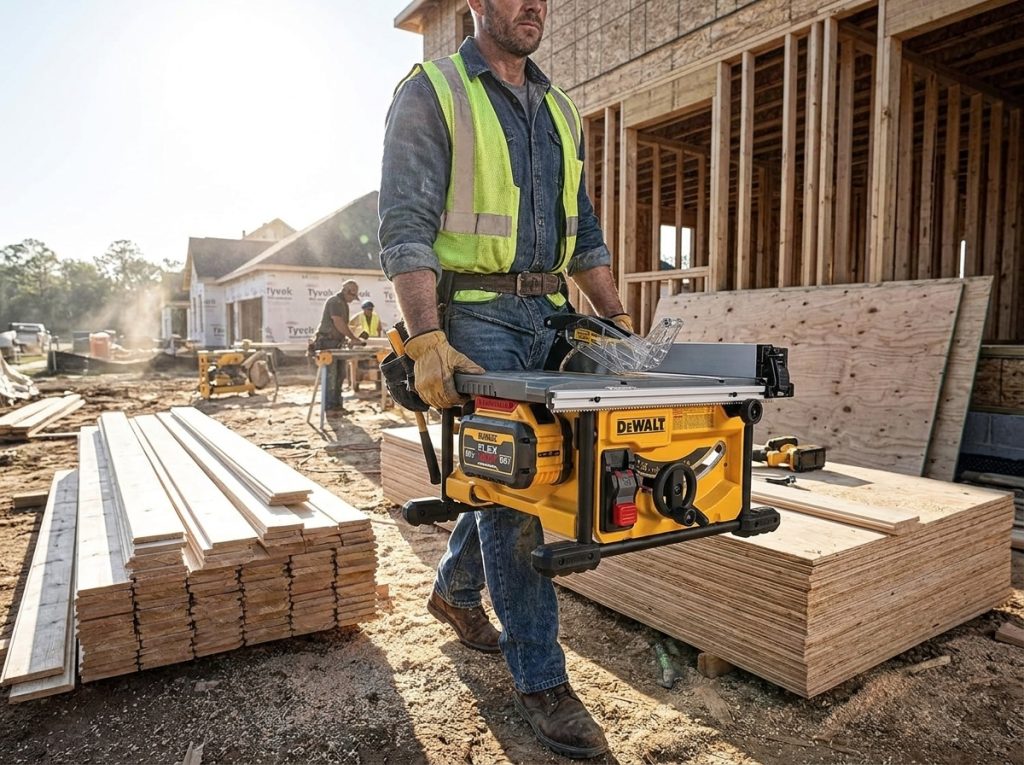
At 48 pounds with a built-in carry handle, this is light enough to genuinely move around a jobsite one-handed, which is not a small thing when you’re setting up and breaking down multiple times a day. The 60V FlexVolt battery automatically switches voltage depending on what tool it’s in, so if you’re already running FlexVolt tools, this saw slots into a battery ecosystem you’ve already invested in rather than adding a new one.
It runs at 5,800 RPM no-load with a 24-inch rip capacity to the right of the blade and 12 inches to the left, enough to break down a 4×8 sheet without wrestling the whole panel. For a full breakdown of how it performs on real trim and framing work, our DeWalt FlexVolt 60V Table Saw Review covers the fence behavior and cut quality in more depth than a quick-hit roundup like this one can.
The compromise is blade size. The 8-1/4-inch blade caps your cutting depth at 2-1/2 inches at 90 degrees and 1-3/4 inches at 45 degrees, which rules out thick stock and 4x material. It also runs on a single battery, unlike DeWalt’s 120V FlexVolt miter saw that doubles up two batteries for more sustained power, so expect the runtime to reflect that.

Best for: finish carpenters and remodelers doing trim, cabinet install, and general jobsite work who value carrying the saw with one hand more than maximum cutting depth.
Milwaukee M18 Fuel 8-1/4″ Table Saw — Best All-Around Cordless
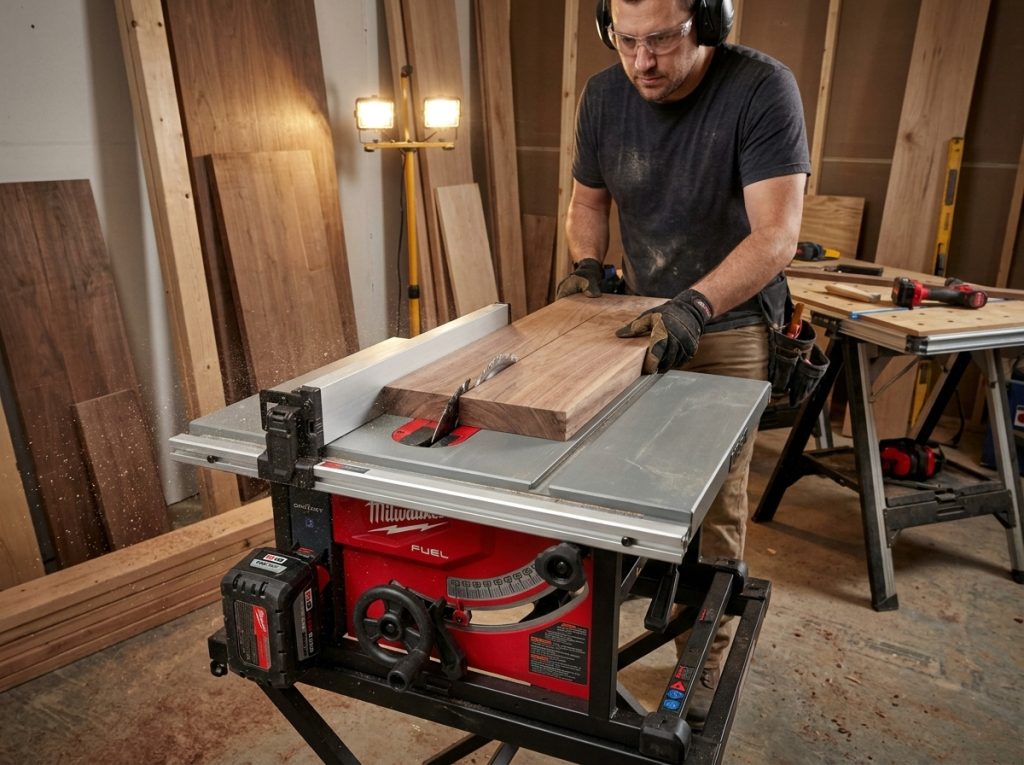
Milwaukee built this saw to match a 15-amp corded saw’s output, and independent hands-on testing backs that up. Reviewers who ran it against corded competitors found it cut through hardwood cleanly without burning or bogging down, and it was notably quiet, measured at 78 decibels in one head-to-head test, which is calmer than most jobsite saws in this class.
The specs hold up too: a 24-1/2-inch rip capacity, on-board storage for the guard and riving knife, and a rack-and-pinion fence that reviewers found square out of the box without needing adjustment. Paired with the HD12.0 battery, Milwaukee rates it for up to 600 linear feet of cutting per charge, which covers a full day of typical trim and panel work for most users.
If you’re already on the M18 platform for drills, impact drivers, or other Milwaukee tools, this saw doesn’t ask you to start a new battery ecosystem, which is worth factoring into the real cost even though the bare tool price looks similar to competitors.
Best for: contractors and remodelers already invested in M18 batteries who want a saw that performs close to corded without a big learning curve or adjustment period.
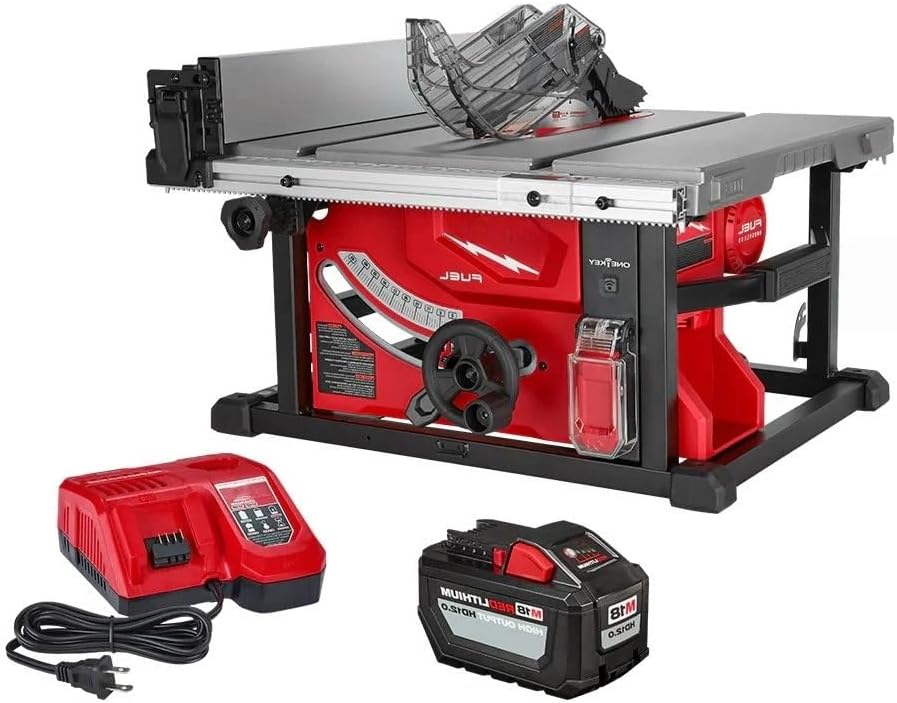
Ryobi 18V ONE+ HP Table Saw — Best Budget Cordless
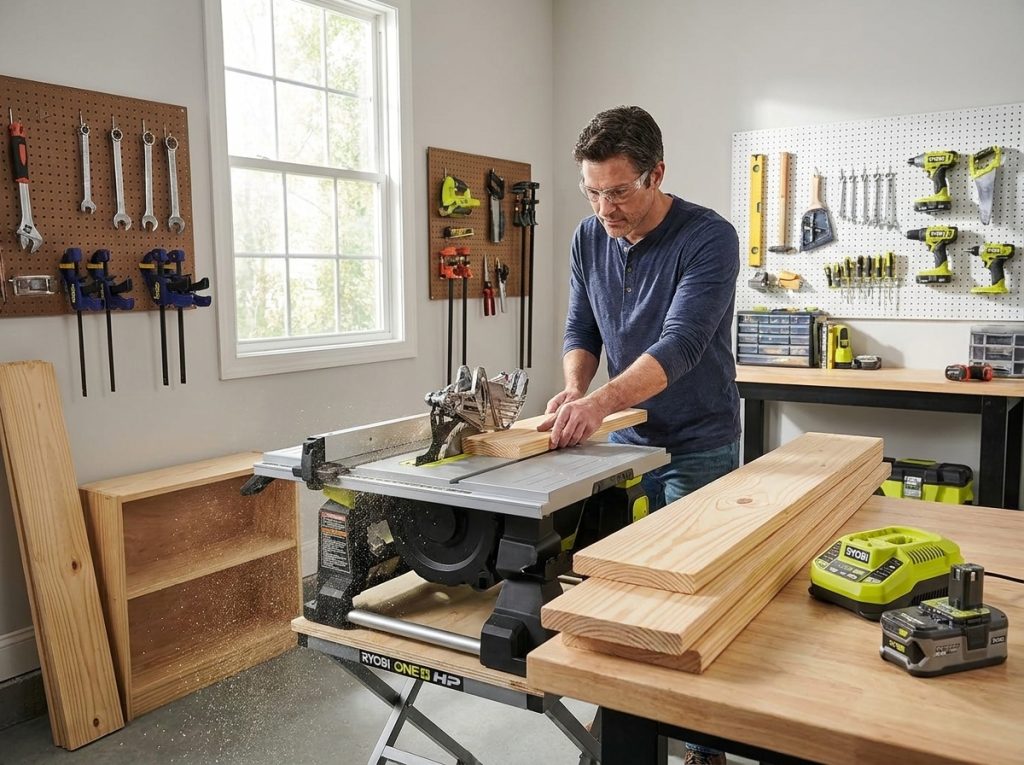
This is the saw for someone testing whether cordless fits their workflow without committing pro-tool money to find out. At roughly $349 to $399 for the full kit with two 4.0Ah batteries and a charger, it undercuts the other saws on this list by a wide margin, and it’s part of Ryobi’s massive 18V ONE+ platform if you already own other tools on that system.
The honest trade-off is capacity. Rip capacity tops out at 12 inches to the right of the blade, which means anything wider than that, including a lot of sheet good breakdown work, is out of reach without an auxiliary fence setup. It also doesn’t accept a dado stack, and Ryobi doesn’t advertise any dust collection port on this model, so plan on sweeping or running a shop vac loosely positioned nearby rather than connected.
At 4,500 RPM it’s the slowest blade speed of any saw in this guide, and it shows on denser hardwood, where it has less margin before you need to slow your feed rate. For trim, shelving, and general DIY ripping, that’s not a dealbreaker. For daily cabinet or furniture work, it will start to feel like a ceiling.
Best for: homeowners, hobbyists, and DIYers who want to try cordless without spending pro-tool money, and whose projects don’t regularly need to rip material wider than about 12 inches.

What Actually Matters When Choosing a Cordless Table Saw
Blade Size: 8-1/4″ vs. 10″
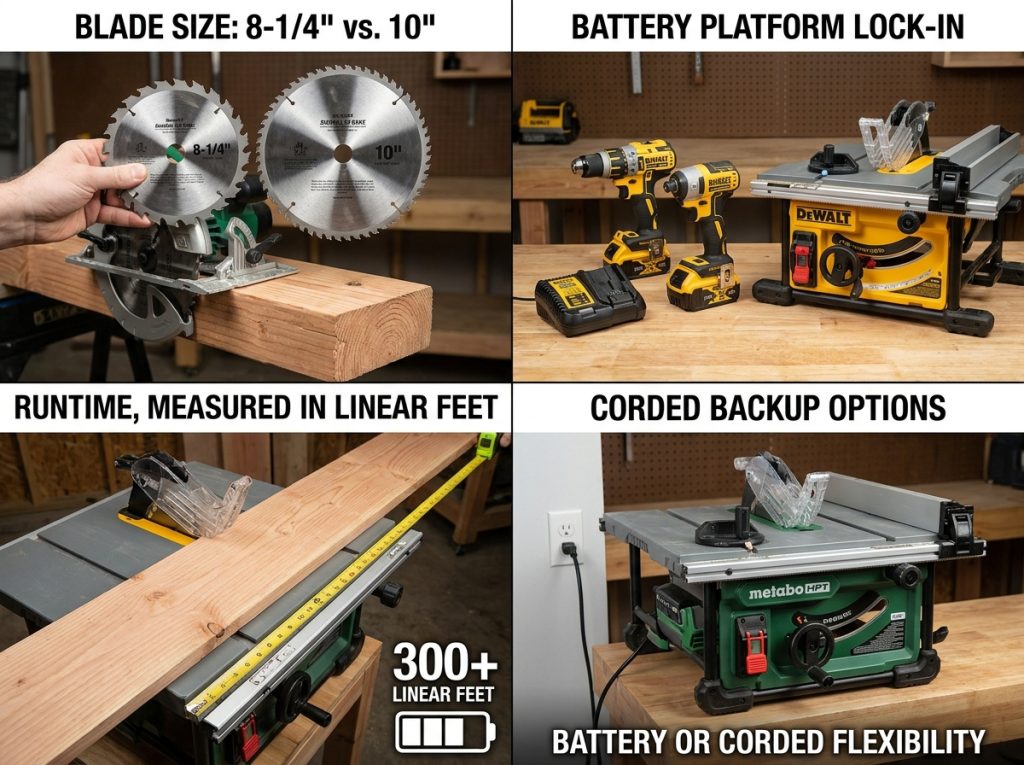
Most cordless table saws compromise on blade size to keep weight and battery draw manageable, dropping from the standard 10-inch blade down to 8-1/4 inches. That reduces your cutting depth, which matters if you’re working with 4x material or thick hardwood. If full cutting depth matters more than weight, the Metabo HPT is the only saw here that doesn’t ask you to give that up.
Battery Platform Lock-In
This is the decision that outlasts the saw itself. Buying into a battery platform for the table saw means every accessory battery, charger, and future tool purchase is easiest within that same ecosystem. If you already own drills, impact drivers, or other cordless tools, picking the saw from that same platform is almost always the right call, even if a competitor’s saw scores slightly better on paper. Spare batteries and chargers are worth budgeting for up front rather than as an afterthought once you’re mid-project on a dead pack, and our Table Saw Accessories guide covers what’s actually worth adding to a cordless setup beyond the saw itself.
Runtime, Measured in Linear Feet
Manufacturers rate runtime in linear feet of cutting per charge rather than a simple time estimate, since actual runtime depends heavily on material density and how hard you’re pushing the saw. Use these numbers as a rough comparison between models, not an exact promise, since ripping dense hardwood will eat through a charge noticeably faster than cutting softwood or sheet goods.
Corded Backup Options
Only one saw in this guide, the Metabo HPT, gives you the option to plug in when you want unlimited runtime. Every other cordless table saw here is battery-only, which means charged spares aren’t optional if you’re running the saw for a full workday. Budget for at least one extra battery on any of the battery-only options if you’re using the saw professionally rather than occasionally.
Real-World Use Cases
Jobsite Work With No Fixed Power
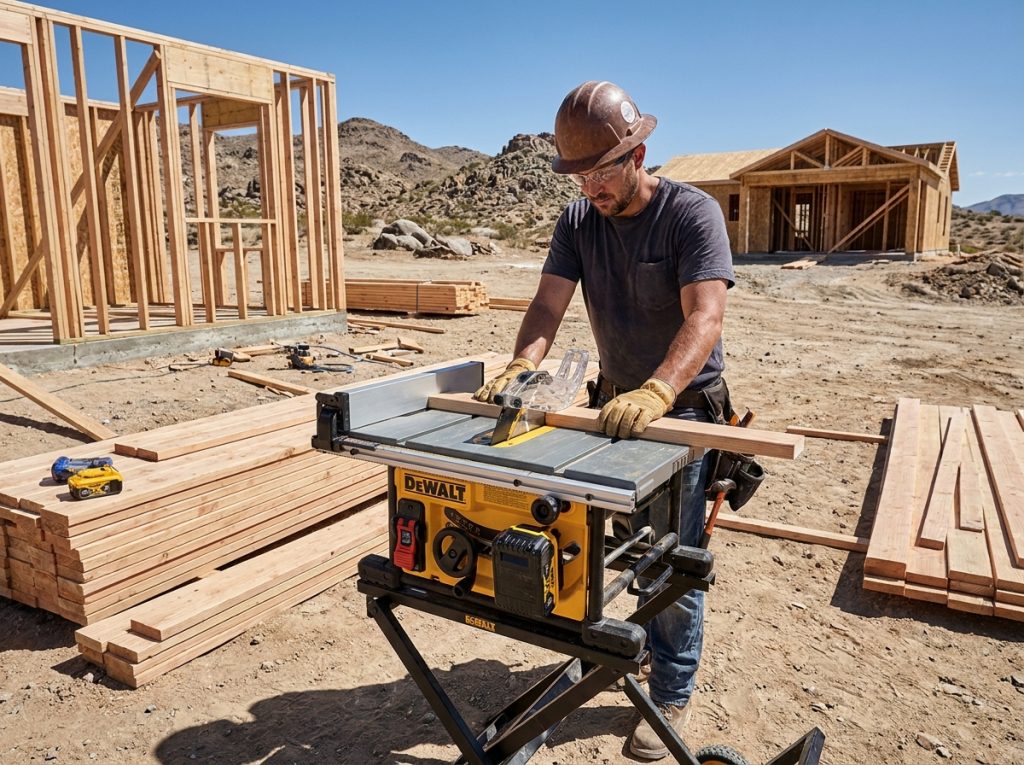
New construction and remodel work where generator access is limited or shared across multiple trades is where cordless earns its keep fastest. Not fighting over an outlet or running a hundred feet of extension cord across a job site adds up in saved setup time across a week.
Moving Between Rooms on a Remodel
Interior remodels often mean cutting trim or flooring in a different room every hour. A cordless saw you can pick up and carry, rather than one you have to unplug, coil, and re-run a cord for, changes how often you’re willing to move the saw closer to the actual cut instead of carrying material back to a fixed station.
Small Shop or Garage Without Dedicated 220V Circuits
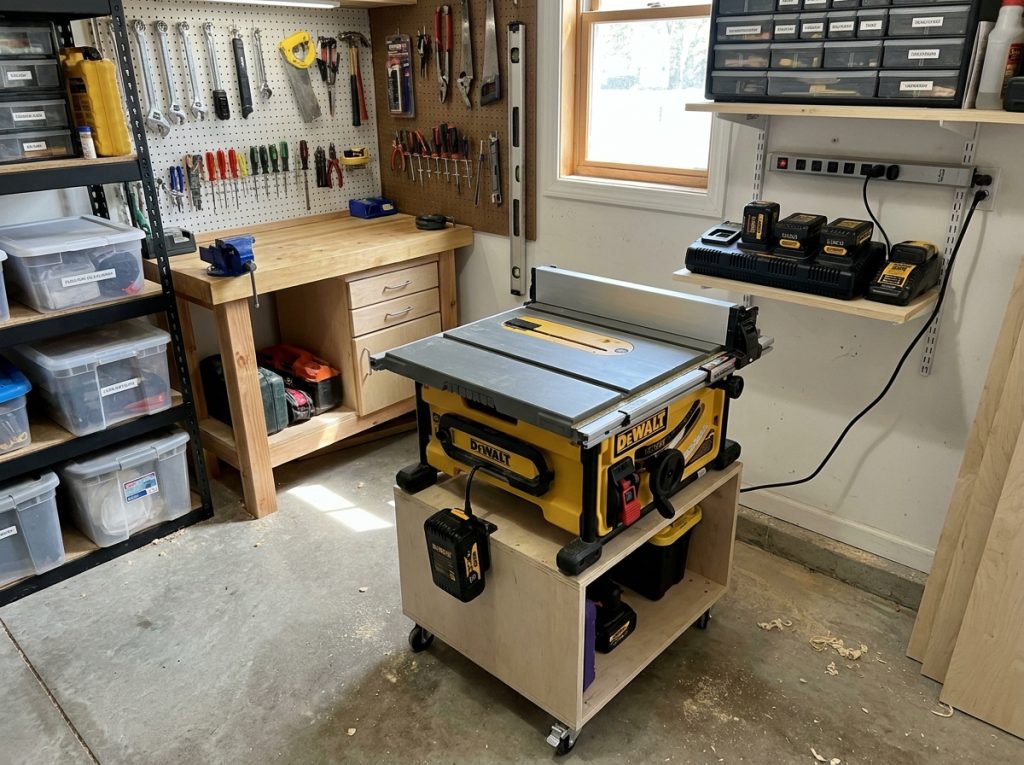
Some home shops are limited by what a standard household circuit can handle, especially if other tools are already drawing power. A cordless saw sidesteps that limitation entirely, though it introduces the battery management trade-off in exchange.
Occasional DIY Use Where Setup Time Matters More Than Runtime
If you’re pulling the saw out for a weekend project a few times a month, battery runtime is rarely the limiting factor. The convenience of skipping cord management for occasional use often outweighs the downsides that show up with all-day professional use.
Common Mistakes Buyers Make
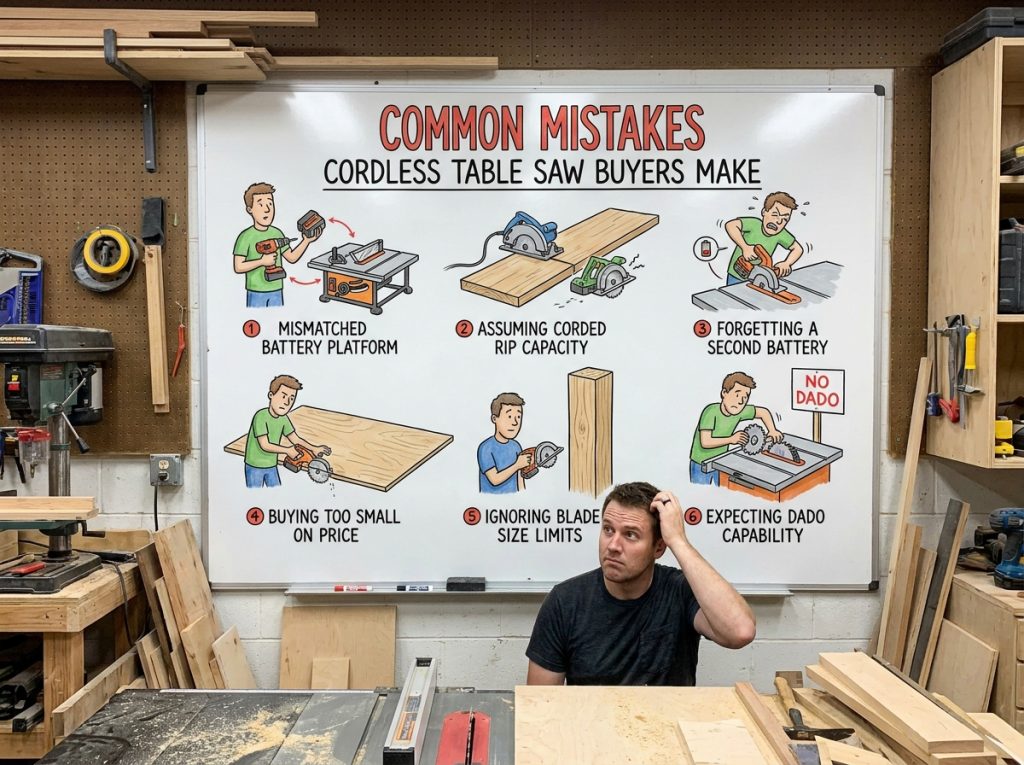
- Buying into a new battery platform for the table saw alone, without checking whether it matches tools they already own
- Assuming rip capacity numbers translate directly from corded saws, when most cordless saws cut that number roughly in half
- Not budgeting for a second battery, then getting stopped mid-project on a saw that’s otherwise perfectly capable
- Choosing based on price alone and ending up with a saw too small to rip sheet goods, which was the actual job it needed to do
- Ignoring blade size differences and being surprised when a cordless saw can’t get through 4x stock the way their old corded saw could
- Expecting dado capability on a cordless saw, when most models on the market don’t support it at all
When You Should Just Stick With Corded
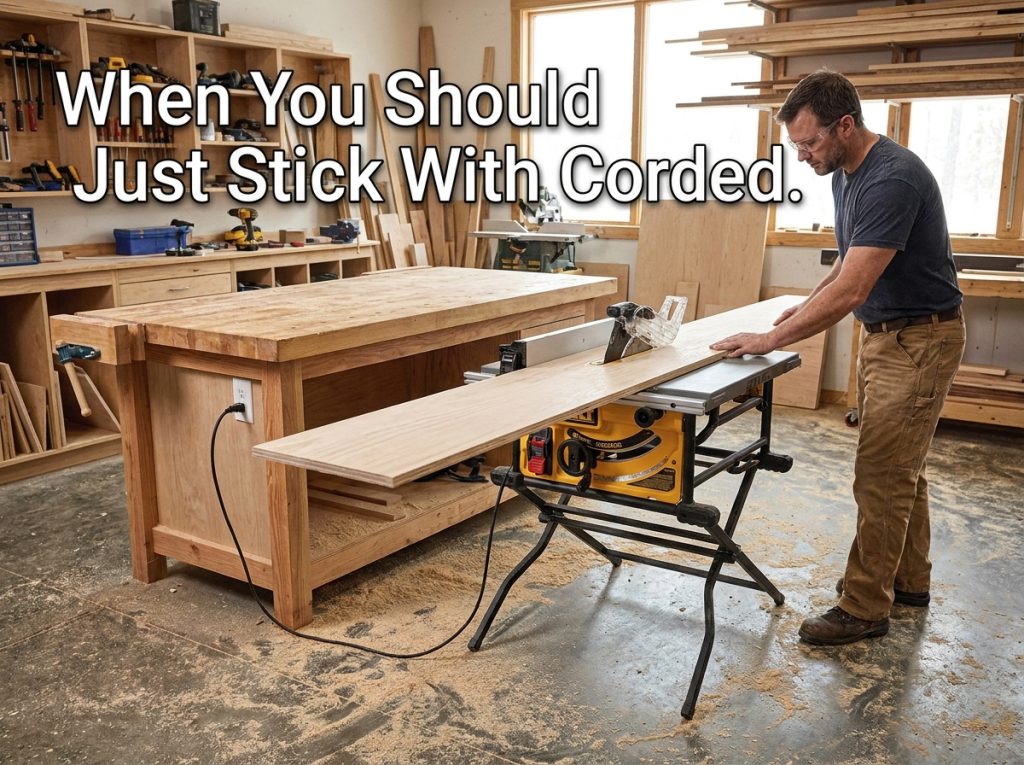
Cordless isn’t the right answer for everyone, and it’s worth saying plainly: if your saw lives in one spot in a shop with a wall outlet within reach, a cordless table saw is solving a problem you don’t have while charging you a premium to do it. Corded saws also still win on sustained runtime, since there’s no charge cycle to plan around, and many corded jobsite saws offer larger rip capacities for less money than a comparable cordless model.
If that’s your situation, our DeWalt DWE7491RS Table Saw Review covers the saw that’s remained the benchmark corded jobsite option for years, and it’s worth cross-shopping against anything on this list before committing to a battery platform you don’t actually need.
It’s also worth comparing overall value across both categories before deciding. Our Best Portable Table Saws for the Money roundup includes corded options that outperform some cordless saws at a lower price, if portability matters to you but battery power specifically doesn’t.
Which One Should You Buy
If you want the closest thing to a corded saw’s capability in a cordless package, and you don’t mind the weight or price, the Metabo HPT MultiVolt is the clear pick. It’s the only saw here that doesn’t force a real compromise on blade size or runtime.
If portability and carrying the saw one-handed matters more than maximum cutting depth, the DeWalt FlexVolt earns its price. If you’re already on the M18 platform and want a saw that performs close to corded without surprises, the Milwaukee is the safer, more all-around choice. And if you’re not ready to spend pro-tool money to find out whether cordless fits your workflow, the Ryobi gets you there without the commitment, as long as your rip capacity needs stay modest.
Final Thoughts
The gap between cordless and corded table saws has closed a lot faster than most buyers realize. The saws worth buying today aren’t compromises dressed up as convenience, they’re genuinely capable tools that happen to run on batteries. The decision that matters most isn’t which saw cuts fastest on a spec sheet. It’s whether your actual workflow needs the mobility badly enough to justify the battery platform commitment that comes with it.

Finlay Connolly is a woodworking enthusiast and power tool specialist with over a decade of hands-on experience in the workshop. As the founder and lead writer at ProTableSawReviews.com, Finlay combines expert knowledge with real-world testing to help woodworkers, DIYers, and professionals choose the best tools for the job. With a sharp eye for detail and a passion for precision, Finlay is committed to providing trustworthy, practical advice backed by years of experience and research in the field. Whether you’re cutting dados or comparing fence systems, you can count on Finlay for honest, reliable reviews that make your next cut your best one.