
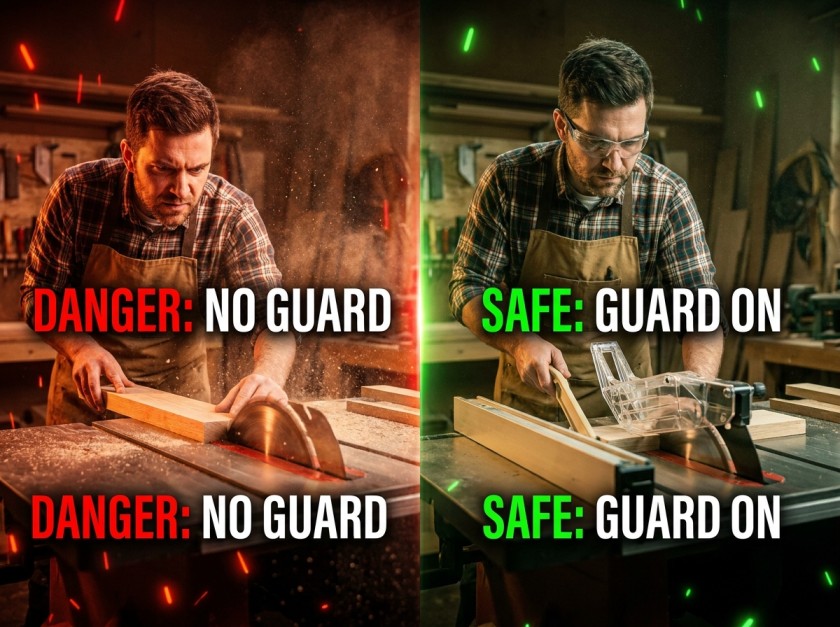
Best Saw Guard for Table Saw in 2026
Best all-round: MicroJig GRR-RIPPER Pro (~$65) — acts as a moving blade guard AND push block, works on any table saw, available on Amazon right now. For an overarm guard with dust collection, the PSI Woodworking TSGUARD (~$150–$180) is the one to get. Full breakdown of all 5 options below with honest pros, cons, and exactly who each one is for.
Here’s the thing about table saw guards that most woodworkers figure out too late: the guard that shipped with your saw is probably the worst one you’ll ever use. It’s clunky, it blocks your sightline, it has to come off for dado cuts, and eventually it gets thrown in a bin and forgotten. Sound familiar?
I’ve been through this cycle myself. My DeWalt DWE7491RS’s stock guard lasted about three months before I stopped using it. Not because guards are bad — because that particular guard was awkward enough that I stopped bothering. The solution wasn’t to run without a guard. It was to find a better one.
That’s what this guide is about. I’ve tested and compared five table saw guards and guard systems that are actually worth using, all of them available on Amazon right now. I’ll tell you honestly what each one does well, who it’s for, and where it falls short. No filler, no products that are out of stock or discontinued.
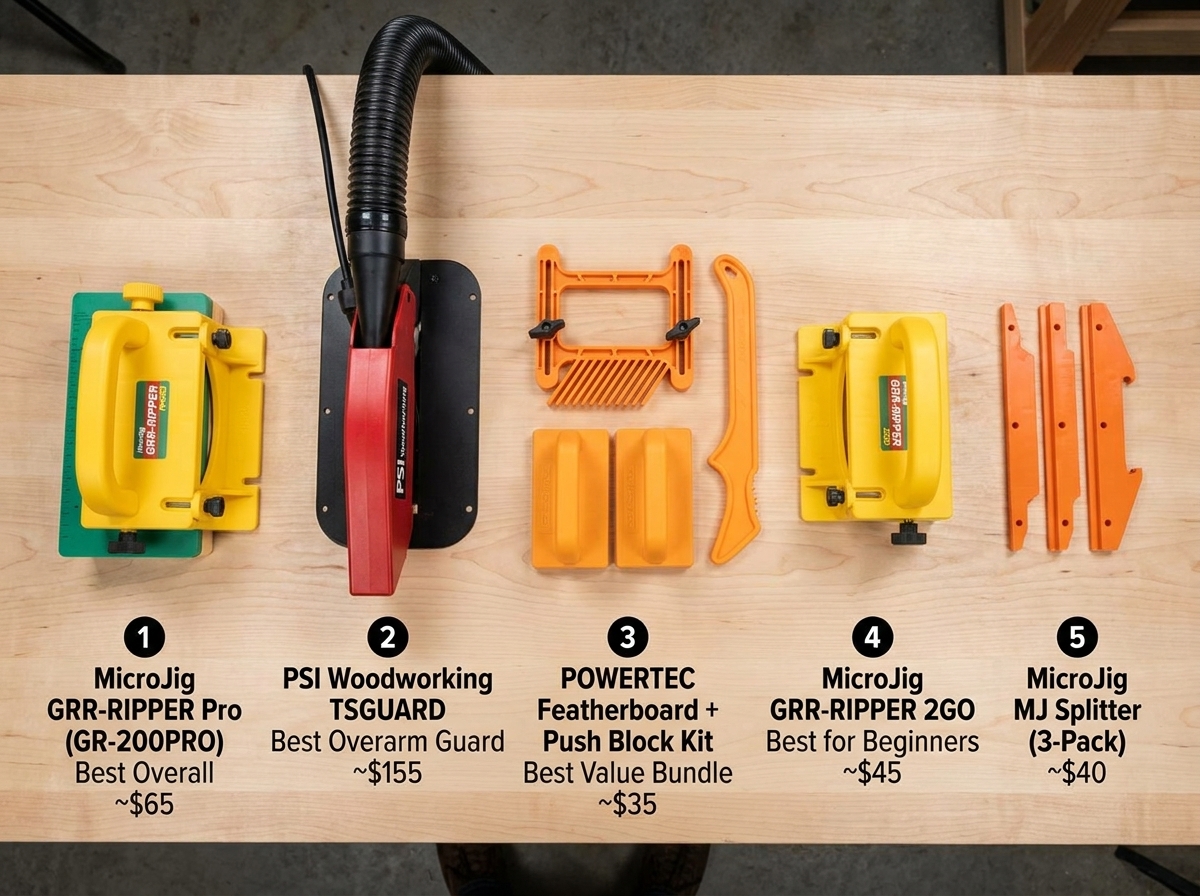
Five guards covering every budget and use case — from a $22 splitter to a $155 overarm dust collection system.
Types of Table Saw Guards — Know What You’re Buying
Not all table saw guards work the same way. Before you spend money, it helps to understand what type solves your specific problem — because buying the wrong type is how people end up with a guard that gathers dust on a shelf.
Stock (OEM) Guards
The guard that came with your saw. Usually a plastic shroud over the blade attached to the riving knife or splitter. These are adequate for basic safety but notoriously fiddly to remove and reinstall for dado cuts or specialty work. Most woodworkers either love them (they work, don’t overthink it) or stop using them entirely within six months because of the hassle. If yours is working and you use it — great. If yours went in the bin, read on.
Overarm (Floating) Guards
These mount to the saw’s extension table or ceiling and position a blade cover from above, rather than attaching to the riving knife. The big advantage: they don’t need to come off for dado cuts, and many include dust collection. The PSI TSGUARD in this guide is this type. They’re the most convenient guards for serious woodworkers because they stay in place through almost every operation.
Push Block Guards (Moving Blade Guards)
This is the category the GRR-RIPPER falls into. Rather than a fixed guard over the blade, you’re gripping the workpiece from above with a device that keeps your hands physically away from the blade throughout the entire cut. It’s a different philosophy — instead of a barrier between you and the blade, it’s a device that keeps your hands so far from the blade they could never reach it. For ripping operations, this is arguably the most effective approach.
Splitters and Anti-Kickback Devices
These don’t guard against blade contact directly — they prevent kickback, which is the main cause of table saw injuries. A splitter keeps the cut kerf open so wood can’t pinch the blade and be thrown back. Featherboards hold wood firmly against the fence. Both are essential safety devices that work alongside a blade guard, not instead of one.
The 5 Best Table Saw Guards — Reviewed
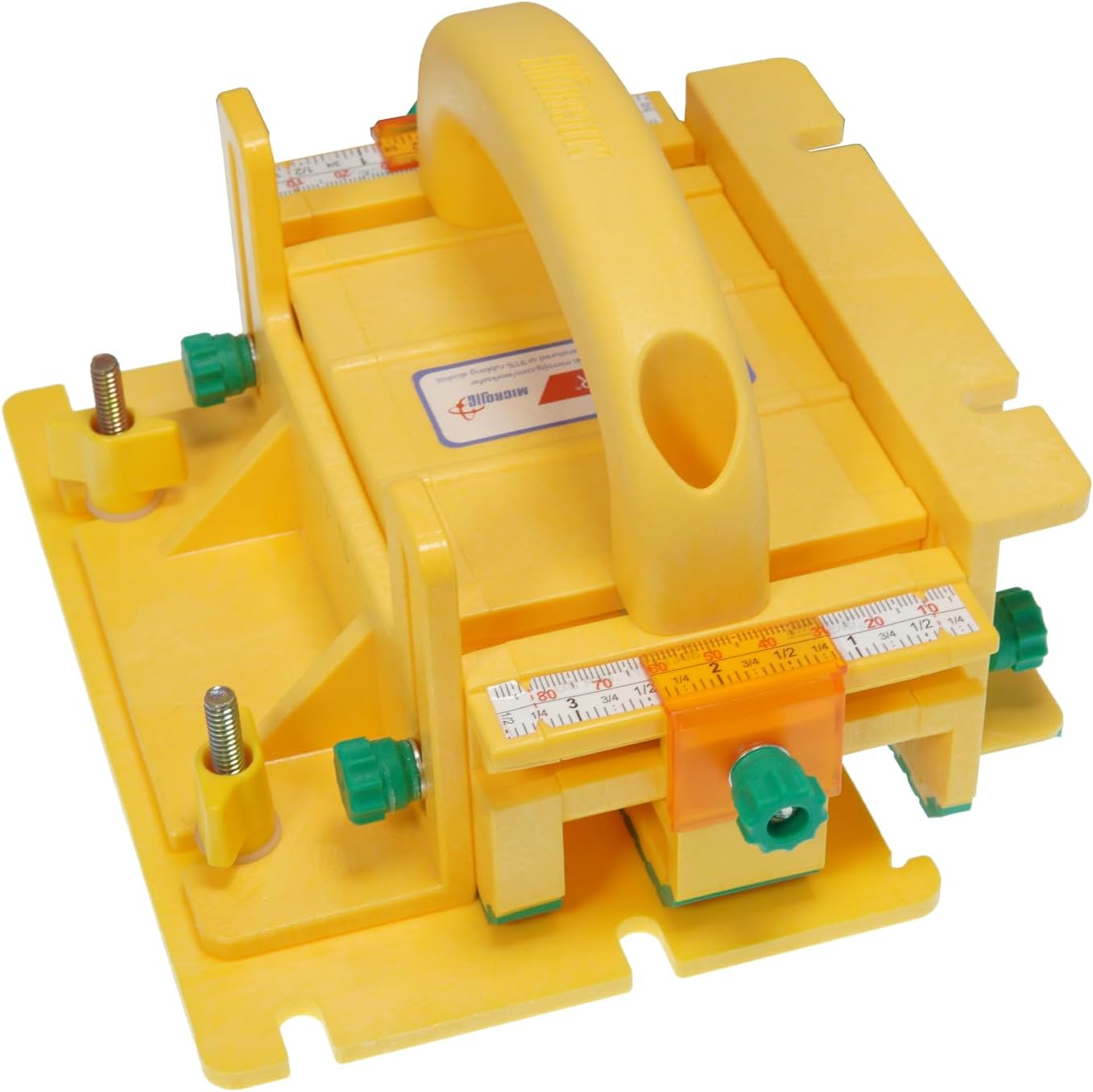
I’ve been using a GRR-RIPPER for three years and it’s genuinely the single safety tool I reach for first on every rip cut. The concept is simple but brilliant: instead of a fixed guard that sits over the blade, you grip your workpiece from above with this adjustable push block, keeping your hands about 6 inches above and behind the blade at all times. Your hands literally cannot reach the blade during a cut. It’s a moving blade guard — your body is the guard.
The Pro version adds a stabilizing plate and adjustable spacer to the base GR-100, which lets you handle narrower rips and more irregular stock. I use mine for everything from ripping 8-foot boards to cutting thin strips down to 1/4 inch. The Green Grr-rip material on the bottom grips the wood with surprising tenacity — I’ve never had a workpiece slip under it.
The three-directional force is the key feature: it pushes the wood down (preventing lifting), forward (through the blade), and inward (against the fence). Most push sticks only push forward. That inward pressure is what keeps the cut parallel to the fence and eliminates drift. My rip cuts have been noticeably cleaner since switching from a standard push stick.
It also doubles as a jointer guard — I use it on my jointer for face jointing, keeping my fingers well clear of the cutter head. It’s the most versatile safety tool I own.
- Works on any table saw — no installation
- Hands physically 6″+ away from blade
- 3-directional force eliminates drift
- Cuts stock down to 1/4″ × 1/4″
- Works on jointer, bandsaw, router table too
- 3-year warranty, lifetime grip guarantee
- Made in USA
- Doesn’t cover the blade (not an overhead guard)
- ~$65 more expensive than basic push sticks
- Needs both hands for longest boards
The most effective hand-protection system for table saw ripping. Acts as a moving blade guard — your hands stay 6 inches from the blade throughout the entire cut. Works on any table saw with zero installation.
- No installation — works on any saw immediately
- 3-directional force: down, forward, and inward pressure
- Cuts stock down to 1/4″ × 1/4″ safely
- 3-year warranty + lifetime grip material guarantee
- Also works on jointer, router table, and bandsaw
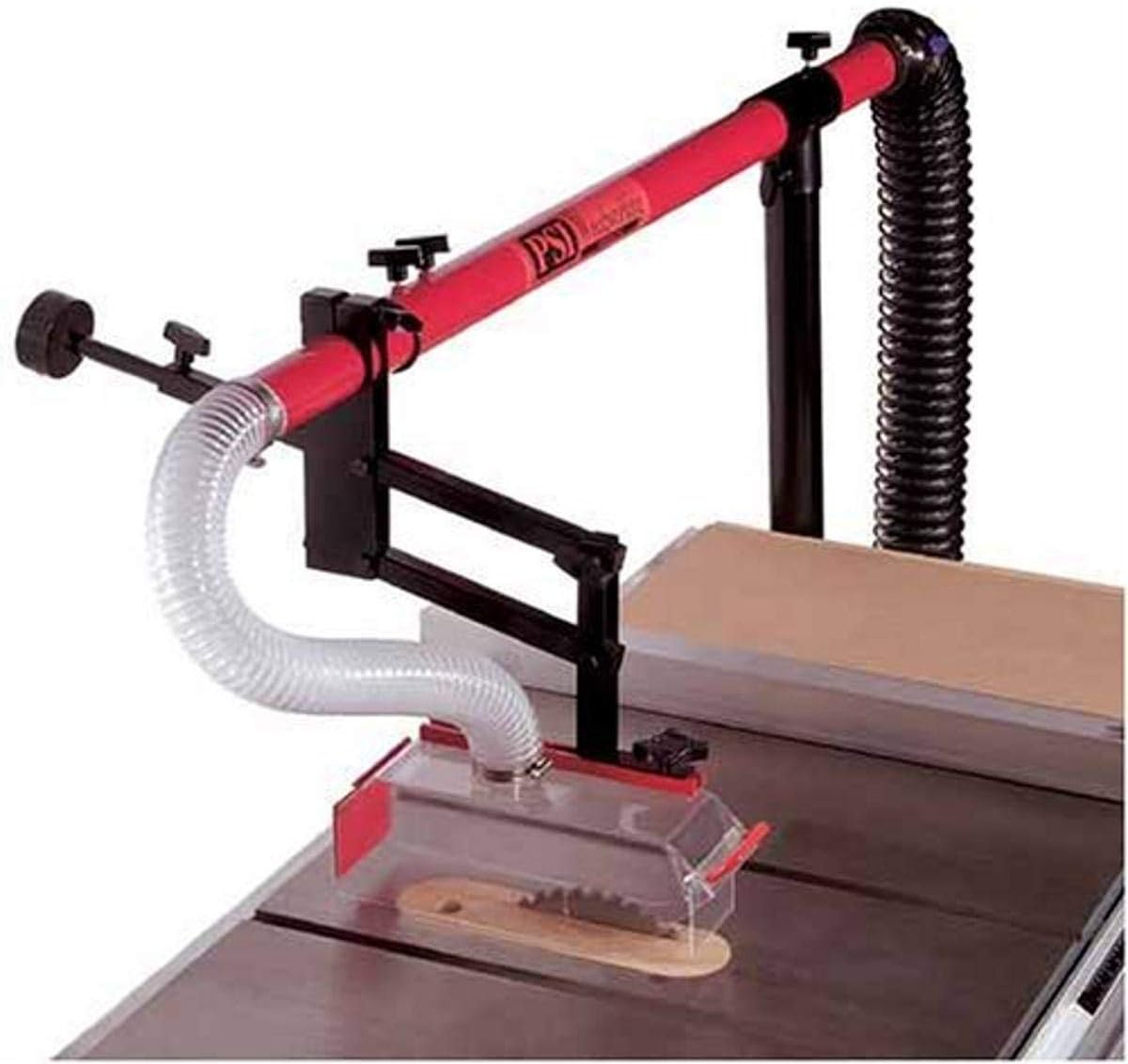
The PSI TSGUARD is the overarm guard I recommend to woodworkers who want a real blade cover — not just a push block — that stays out of the way when you don’t need it and provides meaningful dust collection when you do. It’s been on my Grizzly cabinet saw for over a year and it works exactly as advertised.
The setup is an adjustable boom that mounts either to your saw’s extension table or to the ceiling (a ceiling mount is ideal if you have the height — it keeps the saw table completely clear). A clear polycarbonate hood drops over the blade, and a standard 4-inch dust port connects to your shop vac or dust collector. The hood adjusts up and down for material thickness without tools.
The dust collection is genuinely effective. Not perfect — sawdust still escapes at the cut point — but the TSGUARD captures a significant amount of the debris that normally flies toward your face. My shop air quality improved noticeably after installing it. PSI claims 60–80% above-table dust reduction, which matches my experience.
One thing worth knowing: the TSGUARD’s manual notes it’s technically designed as a dust collection hood rather than a full safety guard (a legal disclaimer common in this product category). That said, the clear polycarbonate hood is thick and sturdy — plenty of protection against chips and flying debris. For dado cuts and other situations where the guard needs to swing away, it pivots out of the path in seconds.
- True overhead blade cover — stays in place
- Captures 60–80% of above-table dust
- Accepts blades up to 16″
- Table mount or ceiling mount options
- Swings out of the way without tools
- Standard 4″ dust port fits any collector
- ~$155 — higher upfront investment
- Requires an extension table for table mount
- Assembly takes 45–60 minutes
- Needs dust collector to maximize benefit
The best overarm guard available on Amazon. Clear polycarbonate hood covers the blade while the 4″ dust port connects to your shop vac or dust collector. Table or ceiling mount options. Accepts blades up to 16″.
- Overhead blade cover with 83″ boom reach
- Reduces above-table dust by 60–80%
- Ceiling mount keeps saw table completely clear
- Works with any standard 4″ dust collection system
- Swings away for dado cuts — no tools needed
Pairing a dust guard with a proper dust collection system makes a huge difference. See our guide to the best table saw dust collection systems — the right setup at the collector end matters as much as the guard.
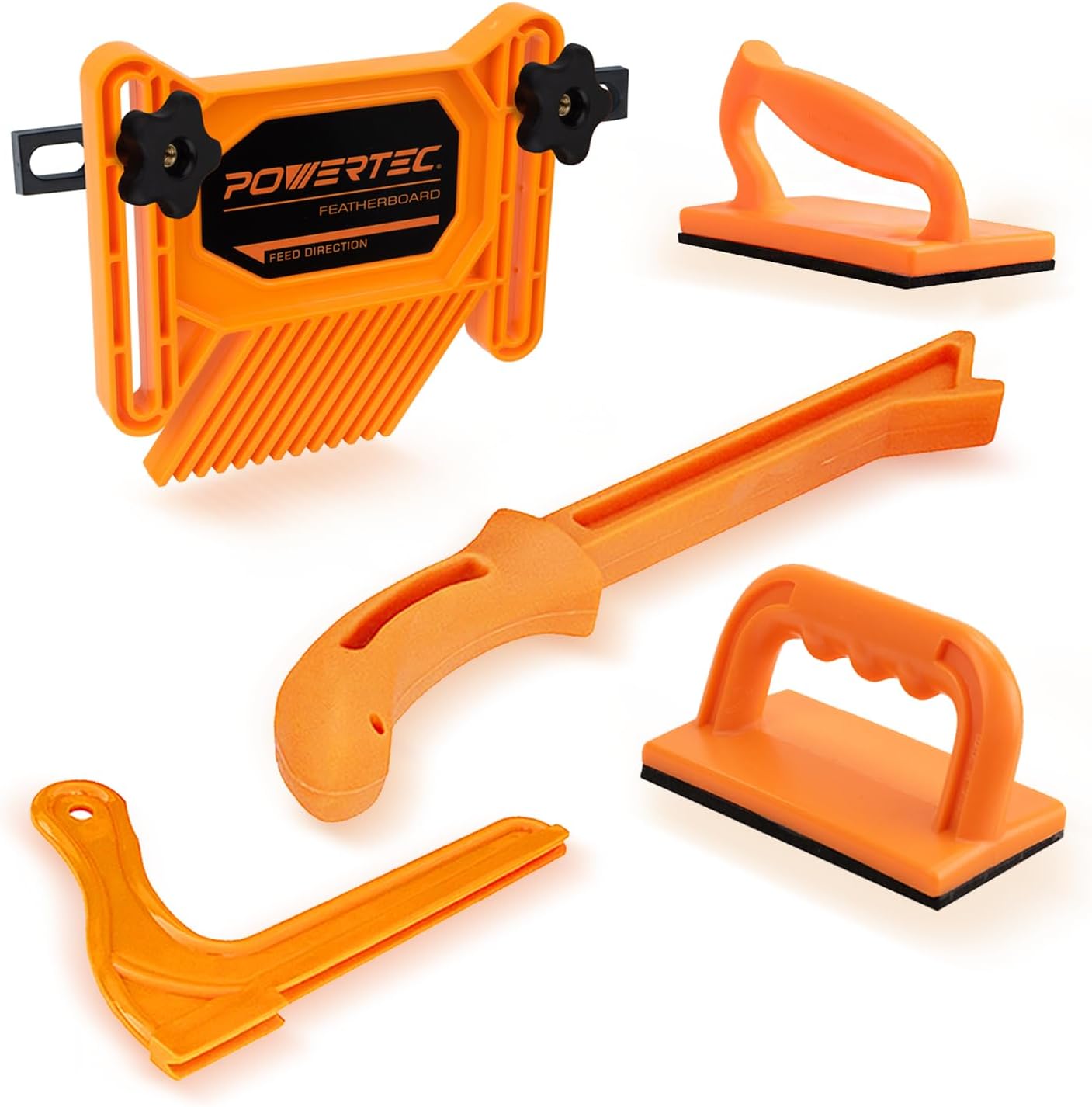
If your budget is tight or you want to complement your existing guard setup rather than replace it, the POWERTEC featherboard and push block kit is the best value safety bundle I’ve found on Amazon. With over 3,800 reviews at 4.6 stars, it’s not just cheap — it’s well-liked by the people who actually use it.
The tandem featherboard set mounts to your fence’s T-track or to the miter slot using the included hardware. They apply consistent lateral pressure to hold the workpiece firmly against the fence throughout the cut, which does two things: it makes your rip cuts more accurate (no drift mid-cut) and it significantly reduces the risk of kickback by keeping the wood in contact with the fence all the way through.
The included push sticks aren’t fancy, but they’re functional and ergonomic enough to use without feeling like you’re fighting the saw. For most hobby woodworkers who want a practical safety upgrade without spending $65 on a GRR-RIPPER, this kit is genuinely a solid place to start.
- ~$35 — best value safety kit available
- 4,600+ reviews, 4.6 stars on Amazon
- Fits T-track and standard miter slots
- Featherboards improve cut accuracy too
- Good for router table and bandsaw as well
- No overhead blade guard
- Push sticks are basic, not GRR-RIPPER level
- Featherboards need re-clamping position adjustments
4-piece featherboard combo set with push sticks. Fits T-track and standard miter slots on any table saw, router table, or bandsaw. 4.6 stars from 3,800+ Amazon reviews. The best entry-level safety upgrade for the money.
- Tandem featherboards hold wood firmly against fence
- Reduces kickback risk and improves cut accuracy
- Fits T-track and standard 3/4″ miter slots
- Works on router tables and bandsaws too
- 4,600+ verified reviews at 4.6 stars
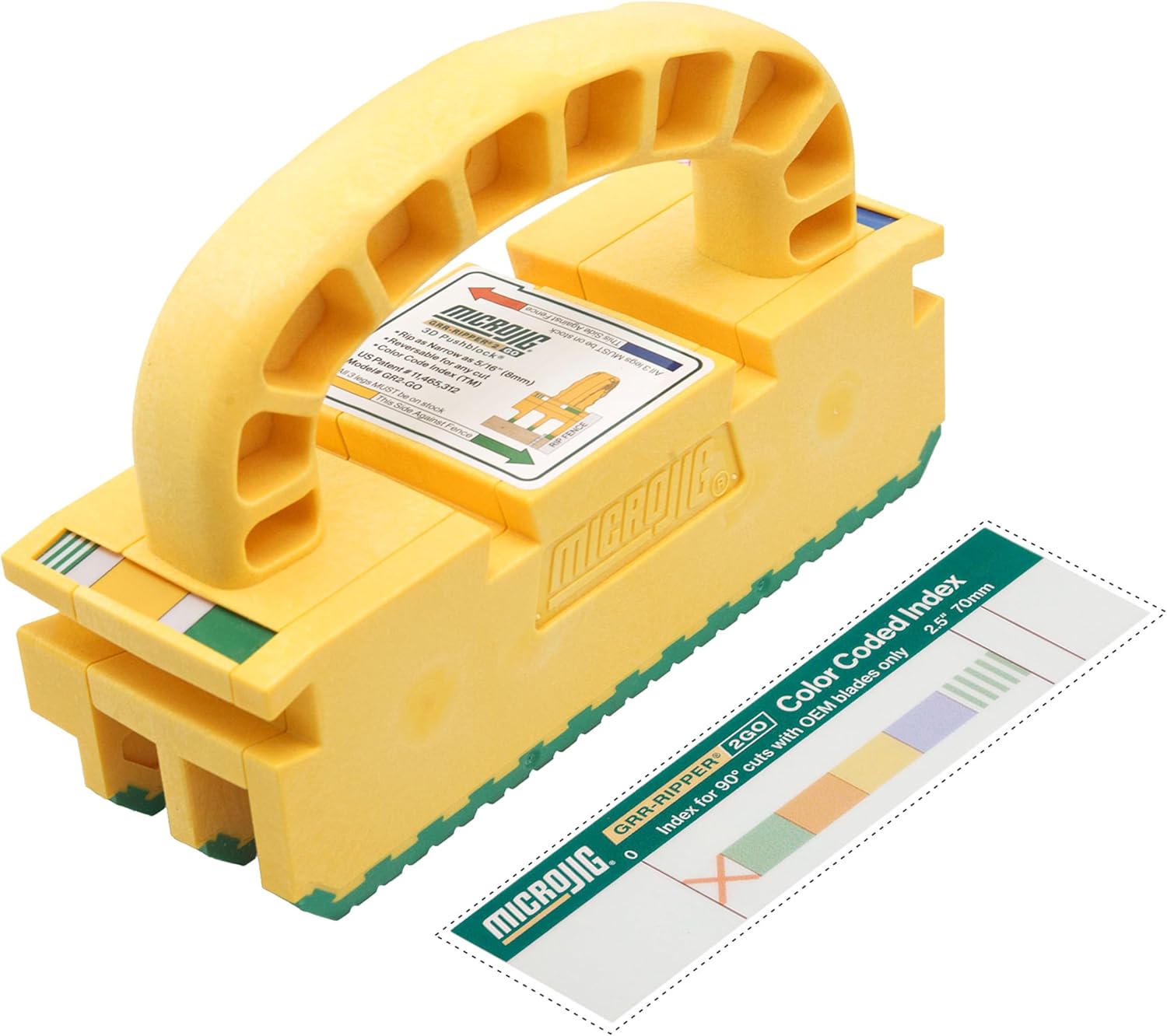
The GRR-RIPPER 2GO is the simplified, no-assembly version of the GRR-RIPPER system. Where the Pro version has an adjustable center leg and multiple interchangeable parts, the 2GO comes pre-assembled and ready to use immediately out of the box. You pick it up, put it on your workpiece, and go.
It’s explicitly designed for people who are new to table saws or who find the full GRR-RIPPER Pro slightly overwhelming to configure. The trade-off is that the 2GO doesn’t handle quite as narrow a minimum cut width (5/16″ vs 1/4″ on the Pro) and has fewer adjustment options for unusual stock sizes. For most standard ripping operations — boards wider than 3/4 inch, consistent thickness — it does everything the Pro does with less fuss.
I handed a 2GO to a beginner woodworker in my shop last year and she was using it confidently within five minutes. That’s the whole point of this version. If you’re buying your first table saw safety accessory and don’t want to spend time figuring out a complex system, start here.
- Zero setup — use it immediately
- Same hand protection as the full GRR-RIPPER
- $20 less than the Pro version
- Perfect for beginners or infrequent users
- 3-year warranty
- 5/16″ min cut width vs 1/4″ on Pro
- Less adjustable for irregular or very thin stock
- Fewer accessories available vs Pro system
The no-setup version of the GRR-RIPPER. Ready to use out of the box, same moving blade guard protection as the Pro, and $20 less. Best choice for beginners or occasional users who want real safety without configuration complexity.
- Zero setup — ready immediately out of the box
- Same moving blade guard principle as the GRR-RIPPER Pro
- Cuts stock as narrow as 5/16″
- Works on any table saw, router table, or bandsaw
- 3-year warranty, made in USA
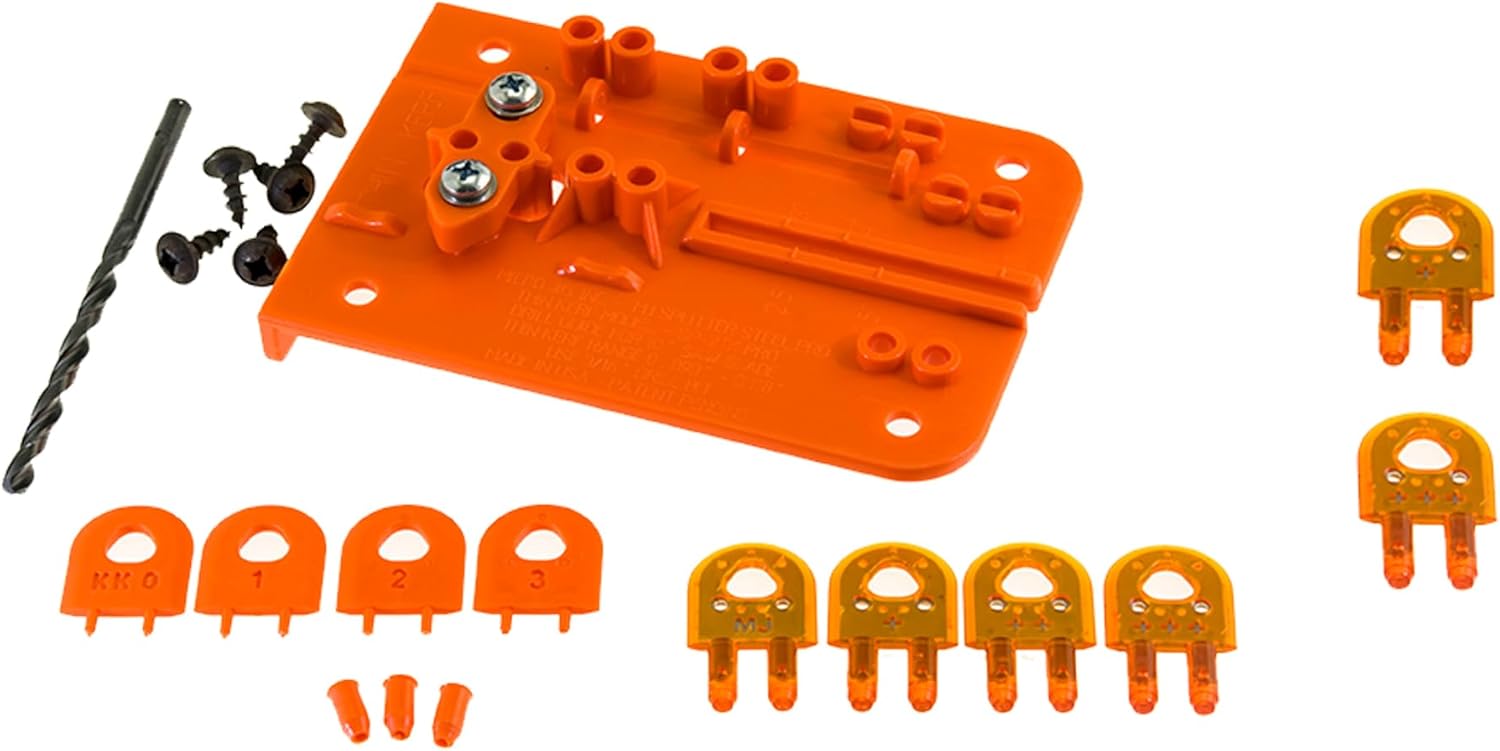
The MJ Splitter is at the bottom of this list not because it’s bad — it’s excellent — but because it solves only one part of the safety equation. It installs into a zero-clearance throat plate and sits just behind the blade, keeping the kerf open as the wood exits the cut. This is your primary kickback prevention device. It doesn’t cover the blade or guard your hands, but it directly addresses the mechanism behind the majority of serious table saw injuries.
At $22 for three different thicknesses covering standard and thin-kerf blades, it’s the most affordable item on this list and one of the highest-value safety investments you can make. I keep one in my standard ZCI, one in my thin-kerf ZCI, and a blank plate without a splitter for dado work. Three inserts, three minutes each to swap — zero excuses for running without one.
- $22 — the most affordable option
- Directly prevents kickback at the source
- Three sizes: fits standard + thin kerf
- Swap throat plates instead of removing splitter
- Also improves cut quality (prevents tearout)
- No blade guard — splitter only
- Requires making or buying a ZCI blank first
- 15-minute installation project
Three plastic splitters in multiple thicknesses — standard kerf and thin kerf covered. Glues into a zero-clearance insert in 15 minutes. Directly prevents kickback and improves cut quality. The cheapest real safety upgrade available.
- Three sizes cover standard and thin-kerf blades
- Installs in a zero-clearance insert in 15 minutes
- Keeps kerf open — directly prevents kickback
- Swap throat plates for dado cuts — no removal needed
- Works on any table saw that accepts a standard ZCI
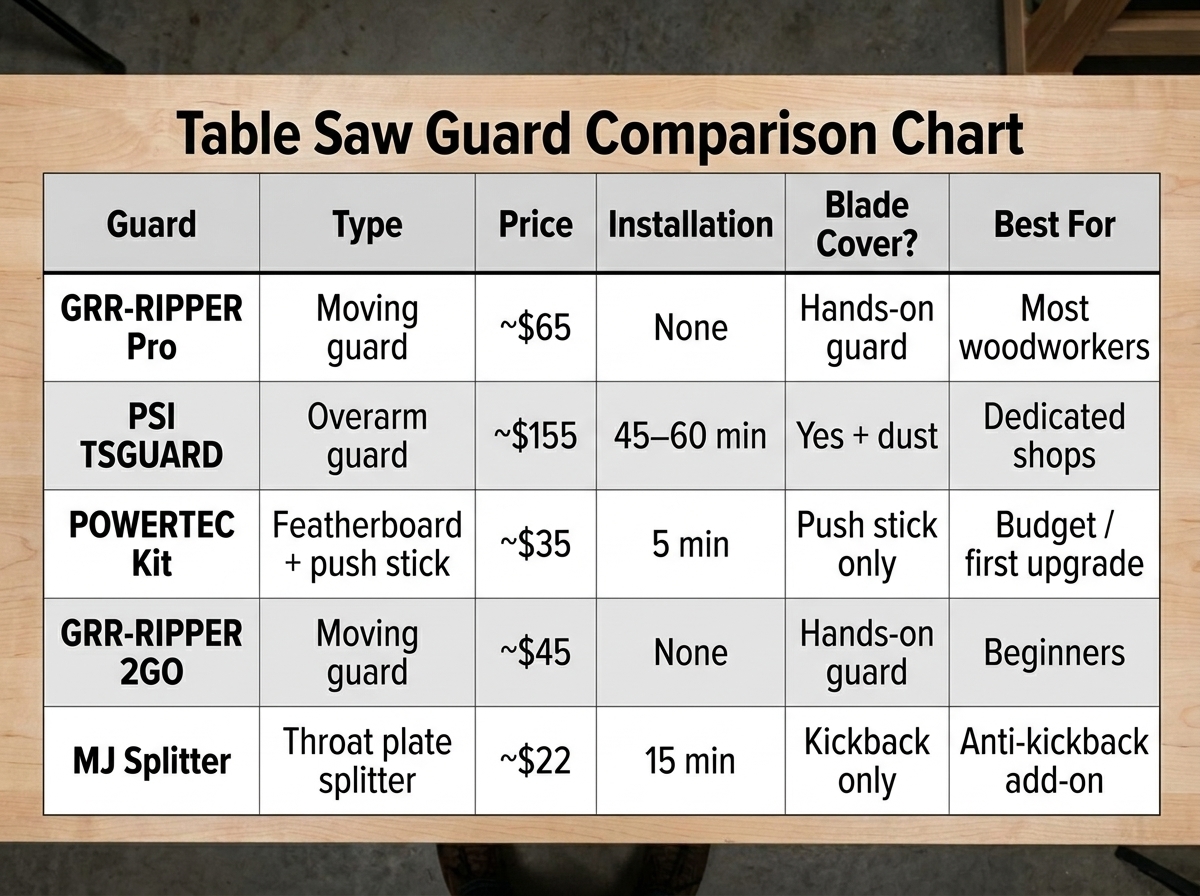
Side-by-Side Comparison
How to Choose the Right Table Saw Guard for Your Situation
The right guard depends on three things: what kind of work you do, whether you have a dedicated shop or a portable setup, and how much you want to spend. Here’s how I’d think through the decision:
If you do mostly ripping lumber and sheet goods
The GRR-RIPPER Pro or 2GO is your best answer. Ripping is where hands get close to the blade, and these tools keep your hands so far from the blade during a cut that contact is essentially impossible. Pair it with an MJ Splitter in your ZCI for kickback prevention and you have a genuinely comprehensive setup for under $90 combined.
If you have a dedicated shop and want a permanent overhead solution
The PSI TSGUARD is worth the $155. Once it’s mounted — ceiling mount is ideal — it stays in place for every cut and adds meaningful dust collection. If you’re spending hours a day at the saw, the reduced dust alone is worth the investment for long-term lung health.
If you’re a beginner just getting started
Start with the POWERTEC kit at $35 or the GRR-RIPPER 2GO at $45. The POWERTEC kit gives you featherboards and push sticks immediately. The 2GO gives you actual moving blade guard protection with zero configuration. Either one is a massive improvement over running with just a basic push stick or no guard at all.
If you have an older saw without a riving knife or original guard
The MJ Splitter in a ZCI is the fastest way to add anti-kickback protection to any saw. It works on vintage saws, modern saws, and everything in between. Combine it with any of the push block guards and you’re well protected even without an overhead blade cover.
Understand kickback fully before relying on any guard setup. Our complete guide to preventing table saw kickback covers feed technique, blade selection, and the full picture of how injuries happen — and how to avoid them.
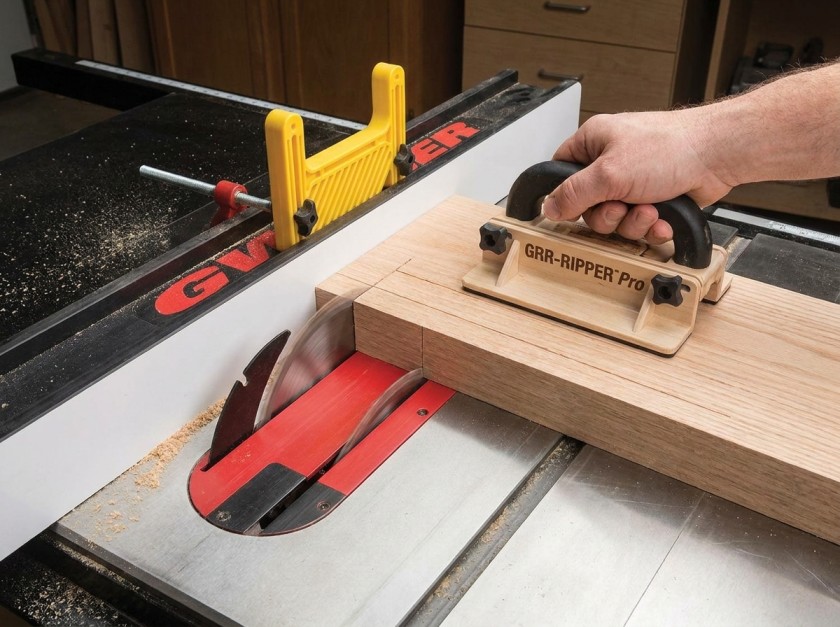
Layered safety: a GRR-RIPPER Pro above the workpiece, featherboards on the fence, and an MJ Splitter in the throat plate — three layers for under $110 total.
Frequently Asked Questions
Running a table saw without any guard is significantly riskier than using one. That said, the stock OEM guard that came with your saw is not the only option — and if your OEM guard is so annoying that you removed it and never reinstalled it, you’re better off replacing it with something that you’ll actually use, like the GRR-RIPPER or the PSI TSGUARD. A guard that lives on a shelf doesn’t protect anyone. The goal is real, consistent protection for every cut — and that means finding a guard setup you’ll actually use every time.
For contractor saws (Craftsman, older Delta, Ridgid, DeWalt DW745, etc.), the best aftermarket guard depends on what you need. For general ripping protection, the GRR-RIPPER Pro or 2GO is universal — it doesn’t attach to the saw at all and works with any model. For an overarm blade cover with dust collection, the PSI TSGUARD mounts to the extension table and is compatible with most contractor saws that have a standard extension wing setup. For pure kickback prevention on older saws that can’t accept a riving knife, the MJ Splitter in a shop-made ZCI is the most practical option.
Yes — but the best guards work by keeping your hands away from the blade, not just by placing a barrier between you and it. The research consistently shows that blade contact injuries happen when woodworkers reach past or around a guard, not when they use one correctly. A push block guard like the GRR-RIPPER addresses this differently: it physically holds your hands 6+ inches from the blade throughout the cut, making contact essentially impossible regardless of where the blade guard is. Combined with a splitter for kickback prevention and featherboards for workpiece control, the guards in this guide provide real, measurable protection.
Most OEM blade guards need to be removed for dado cuts because the dado stack is wider than the standard kerf and won’t clear the guard. The PSI TSGUARD swings away from the blade path without being fully removed — which makes dado work less of a hassle. The GRR-RIPPER and 2GO continue to work for dado cuts since they don’t attach to the blade at all — you’re still getting hand protection from the push block. Remove your MJ Splitter throat plate for dado work (or switch to a blank plate) and you’re set.
A blade guard is the physical cover — usually clear polycarbonate or plastic — that sits over the blade during a cut. A riving knife is a different device: it’s a metal plate mounted behind the blade that keeps the saw kerf open as the wood passes through, preventing the wood from closing on the blade and causing kickback. On modern saws, both come standard as an integrated unit. For safety, both serve different purposes — you ideally want both active simultaneously. The products in this guide address different parts of the equation: the GRR-RIPPER handles hand protection, the MJ Splitter handles kickback prevention, and the PSI TSGUARD provides an overhead blade cover.
This is the most common complaint about stock OEM guards and it’s a legitimate one — if the guard is blocking your sightline, you’re more likely to make inaccurate cuts and more likely to remove the guard entirely out of frustration. The GRR-RIPPER solves this completely: since it’s above and behind the workpiece rather than over the blade, your sightline to the blade and the fence measurement is completely unobstructed. The PSI TSGUARD uses a clear polycarbonate hood that maintains visibility better than most stock guards. If your stock guard is the problem, replacing it with either of those two options eliminates the visibility issue without compromising safety.
Final Thoughts — Which Guard Should You Buy?
Here’s the honest summary:
For most woodworkers, the GRR-RIPPER Pro is the answer. It’s $65, works on any saw, requires zero installation, gives you better hand protection than a traditional blade guard for ripping, and doubles as a push block that genuinely improves your cut quality. It’s the one item I’d buy first if I were setting up a new shop today.
If you have a dedicated shop and want an overhead guard with dust collection, the PSI TSGUARD is the best option available on Amazon at around $155. Ceiling mount it, connect it to your dust collector, and it stays in place through almost every operation.
If you’re on a tight budget, start with the POWERTEC featherboard kit at $35. It won’t give you overhead blade cover, but the featherboards plus push sticks are a genuine safety improvement over nothing — and the $35 spent here means you can put the rest toward a GRR-RIPPER later.
Whatever else you buy, add an MJ Splitter in a zero-clearance insert. Twenty-two dollars, 15 minutes, and it directly prevents the mechanism behind most serious table saw injuries. There’s no excuse not to have one.
Don’t run unprotected. Any of these five options will make your saw meaningfully safer today — and they all ship from Amazon in two days.
See our guide to the best push sticks for table saws for more hand-protection options, or read our zero clearance table saw inserts guide to find the right ZCI blank for your saw before installing the MJ Splitter.
More Table Saw Safety Guides
Everything you need to run your saw safely and confidently.

Finlay Connolly is a woodworking enthusiast and power tool specialist with over a decade of hands-on experience in the workshop. As the founder and lead writer at ProTableSawReviews.com, Finlay combines expert knowledge with real-world testing to help woodworkers, DIYers, and professionals choose the best tools for the job. With a sharp eye for detail and a passion for precision, Finlay is committed to providing trustworthy, practical advice backed by years of experience and research in the field. Whether you’re cutting dados or comparing fence systems, you can count on Finlay for honest, reliable reviews that make your next cut your best one.