SKILSAW Worm Drive Table Saw Review: 9 Months Testing the SPT99-11 Beast (2026)
 Finlay Connolly
10 min read
Finlay Connolly
10 min read
The Short Version
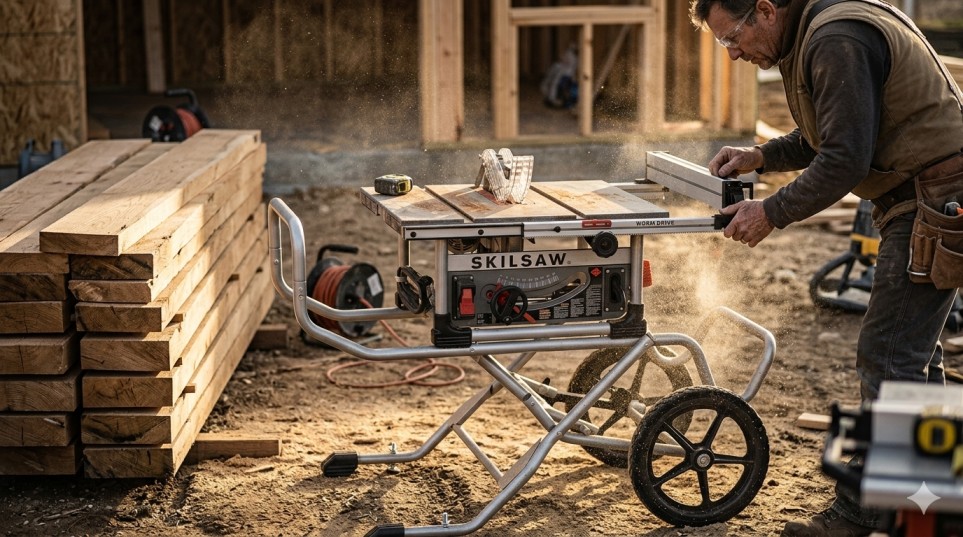
Nine months ago I spent $649 on the SKILSAW SPT99-11 after hearing contractors keep bringing it up whenever the topic of jobsite saws came up. I needed something that could rip through thick lumber without hesitating, and the worm drive reputation was hard to ignore.
After 700-plus cuts through 4×4 posts, 8/4 hardwoods, and more sheets of plywood than I care to count, I have a pretty clear picture of what this saw actually does well and where it lets you down. The worm drive torque is real. The trade-offs are also real. Most reviews gloss over both.
Quick Verdict
Buy it if you:
- Rip thick lumber regularly — 4×4 posts, 8/4 hardwoods, dense pressure-treated material
- Move the saw between job sites (the 16″ wheels are genuinely better than the competition’s 8″ wheels)
- Need the extra cut depth — 3-5/8″ clears a 4×4 post in one pass where a standard saw takes two
- Can handle an oil change every 50 hours of use
Skip it if you:
- Work in a permanent shop — a cabinet saw or hybrid gives you better value at this price
- Rarely cut anything thicker than 2″ — the torque advantage doesn’t pay off on thin stock
- Have a budget under $500 — there are solid direct-drive options in that range
- Want zero maintenance beyond blade changes — the gearbox needs attention
Specifications
What’s in the Box
- Rolling stand with 16″ wheels
- 24-tooth carbide blade (functional but worth upgrading)
- Rack & pinion fence system
- Smart Guard System with anti-kickback
- Dust port elbow, miter gauge, push stick, blade wrench
- Outfeed support and left-side material support
Worm Drive vs. Direct Drive: What It Actually Means
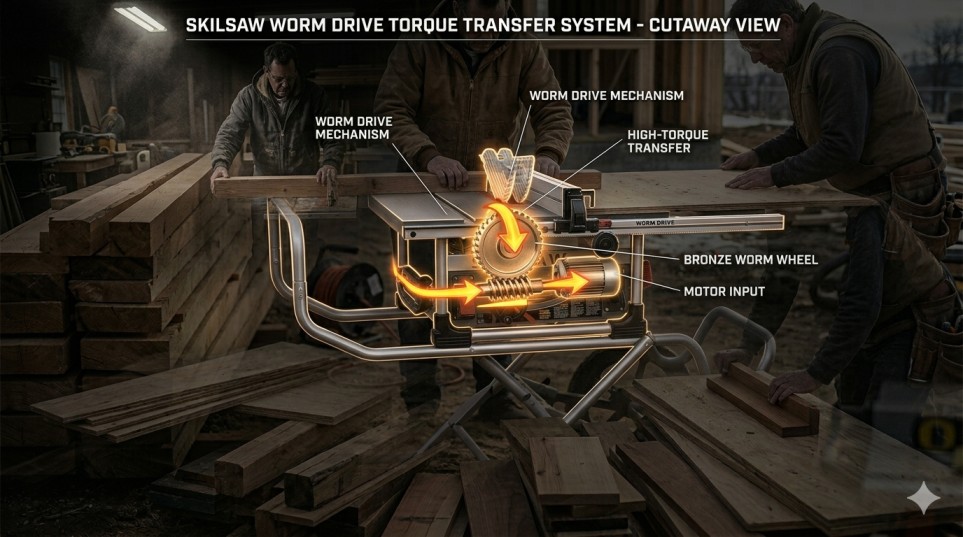
Most table saws connect the motor shaft directly to the blade. Worm drive systems use bronze gears set at right angles instead, which trades some blade speed for a meaningful bump in torque — roughly 30% more turning force at the blade compared to a direct-drive saw running the same amperage.
I tested this back to back against my DeWalt DWE7491RS, also a 15-amp saw. Ripping 4×4 white oak posts, the SKILSAW held consistent RPM and finished in 12 seconds. The DeWalt slowed noticeably and took 16 seconds. On 8/4 hard maple, the difference was even more obvious — I had to moderate my feed rate on the DeWalt to keep it from bogging. The SKILSAW didn’t care.
That said, worm drive isn’t free. The gearbox adds about 12-15 lbs over comparable direct-drive saws, the manufacturing cost is higher (hence the price premium), and the oil changes are a real ongoing task that direct-drive owners never deal with. If you’re not regularly pushing thick hardwoods or PT lumber, you’re paying for capability you’ll rarely use.
9 Months of Actual Use
Deck Frame Build (3 Weeks, 280 Cuts)
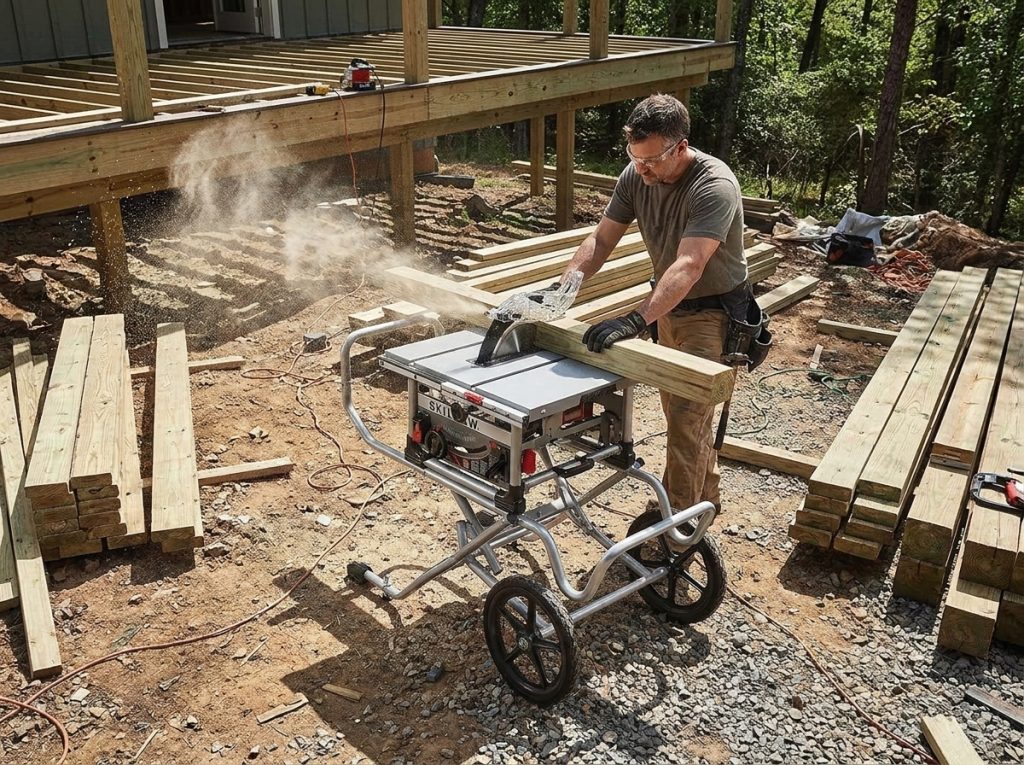
Wet pressure-treated 4x4s and 2×10 joists. This is where the saw made the strongest case for itself. The motor never strained across 280 cuts in treated lumber, and the 3-5/8″ depth meant I was cutting posts in single passes rather than flipping them. After all 280 cuts, the fence had drifted just 0.008″ out of parallel — easily corrected in a few minutes.
Motor temperature was surprisingly manageable. Five minutes after extended cutting sessions I could put my hand on the housing. The Dual-Field design does seem to run cooler than conventional motors under load.
Hardwood Furniture Build (4 Weeks, 220 Cuts)
8/4 white oak, 4/4 hard maple, walnut accents. I was skeptical that a jobsite saw could handle furniture work, but with a Freud D1050X 50-tooth blade the cut quality genuinely rivaled my shop’s hybrid saw that cost twice as much.
Stock 24-tooth blade: rough edges, tearout, about a 6.5/10 for furniture work.
Freud D1050X 50-tooth: clean enough for furniture, 8.5/10.
The blade upgrade is not optional if you’re doing anything that’ll be visible. The saw handles premium blades well though — no complaints about the arbor or motor.
Plywood Processing (Ongoing, 200+ Cuts)
The 30.5″ rip capacity earns its keep here. I can rip a 4×8 sheet to 30″ in a single pass without repositioning. That sounds minor until you’ve spent time with a saw that maxes out at 24-25″ and you’re processing a stack of Baltic birch. The outfeed support and left-side extension both do their job keeping large panels stable.
Rack & Pinion Fence
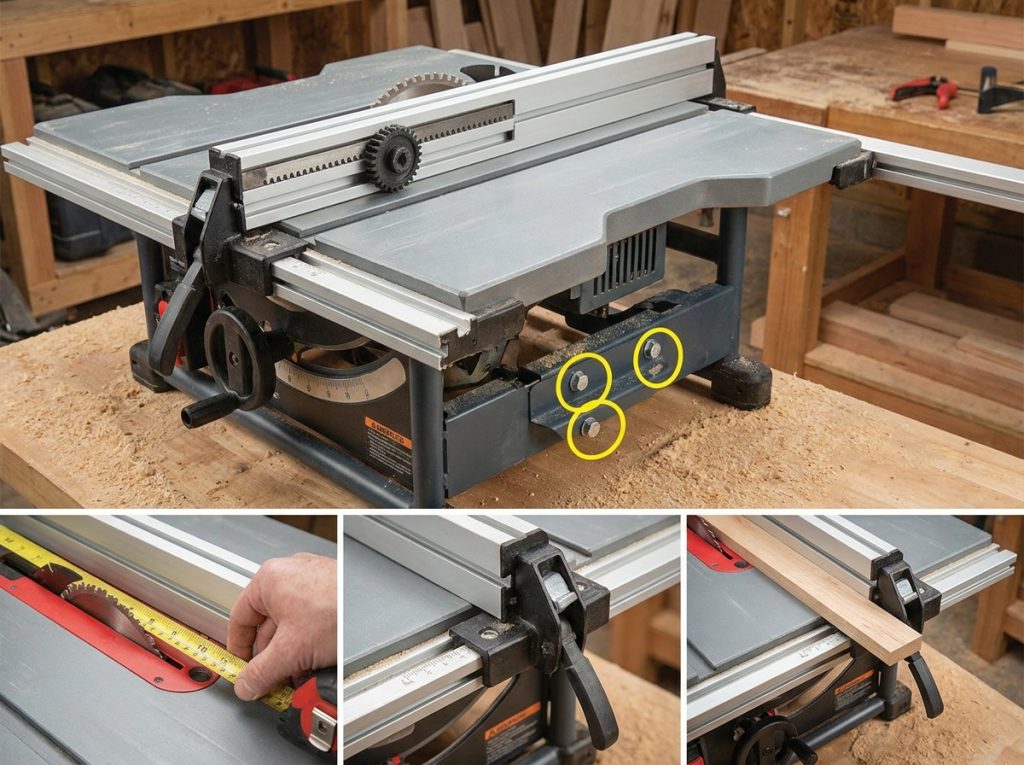
Out of the box, my fence measured 0.012″ out of parallel. About 15 minutes of adjustment with the hex bolts under the table got it to 0.003″ — solid for any portable saw. After that it stayed put through 700 cuts without needing attention. The cam lever lock is noticeably more secure than the twist-knob systems on cheaper fences.
The measurement scale is functional but not great. The stamped markings are shallow and hard to read in dim lighting. I always verify with a tape measure for anything critical. That’s a minor annoyance at this price point.
One useful detail: the fence includes a flip-down support for thin rip cuts that folds flush when not needed. Small thing, but it gets used.
30.5″ Rip Capacity
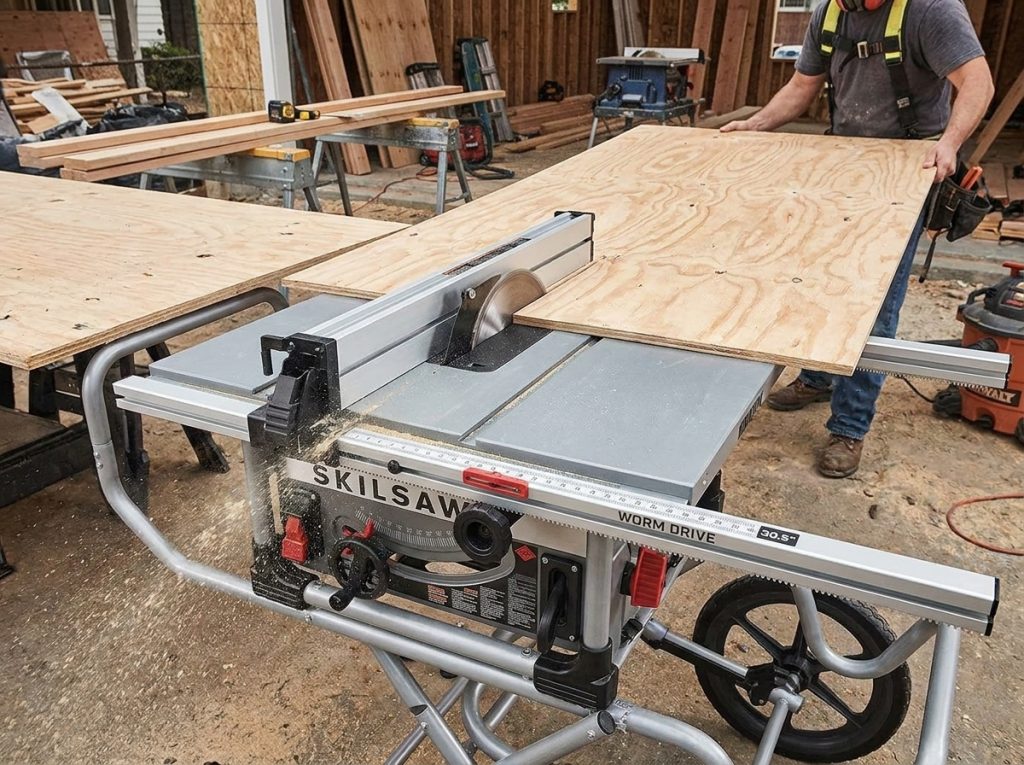
This matters most when processing sheet goods. Standard 4×8 sheets rip to 30″ without repositioning, and cabinet sides (typically 23-24″ wide) have plenty of margin. For day-to-day framing cuts and rips under 24″, the extra capacity is insurance rather than necessity — but it’s nice insurance to have.
The left-side capacity reaches 16.5″, which is notably better than the 10-12″ you get on most competing saws. Centered cuts on 30-32″ wide boards become straightforward.
The 16-Inch Wheel Stand
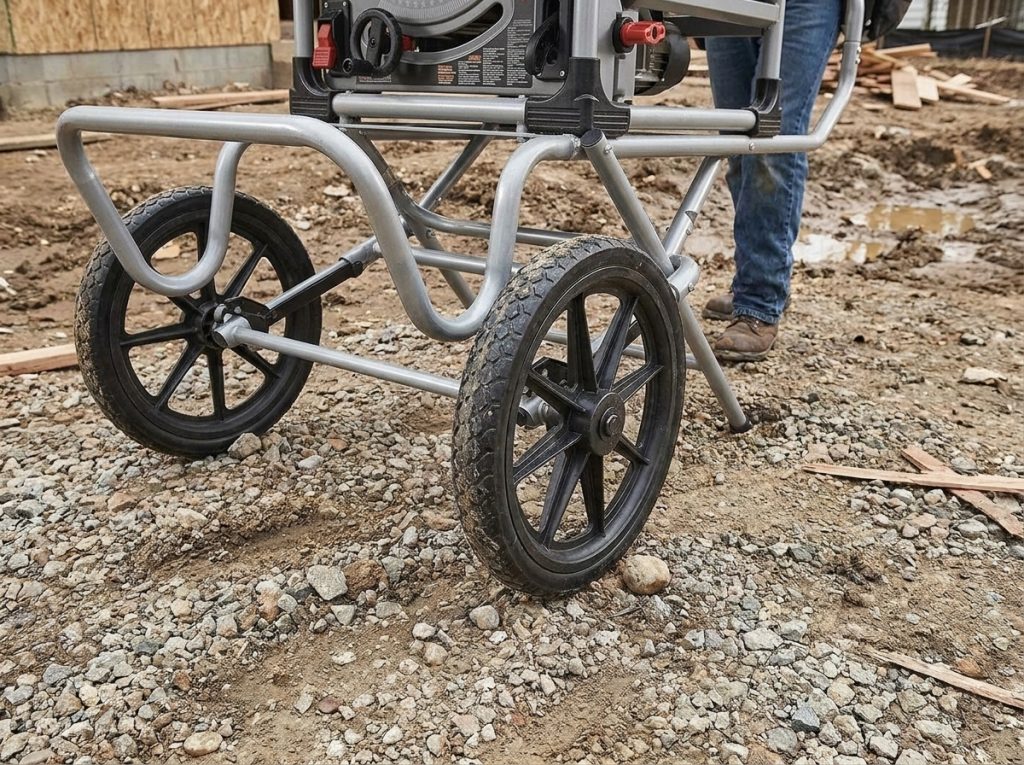
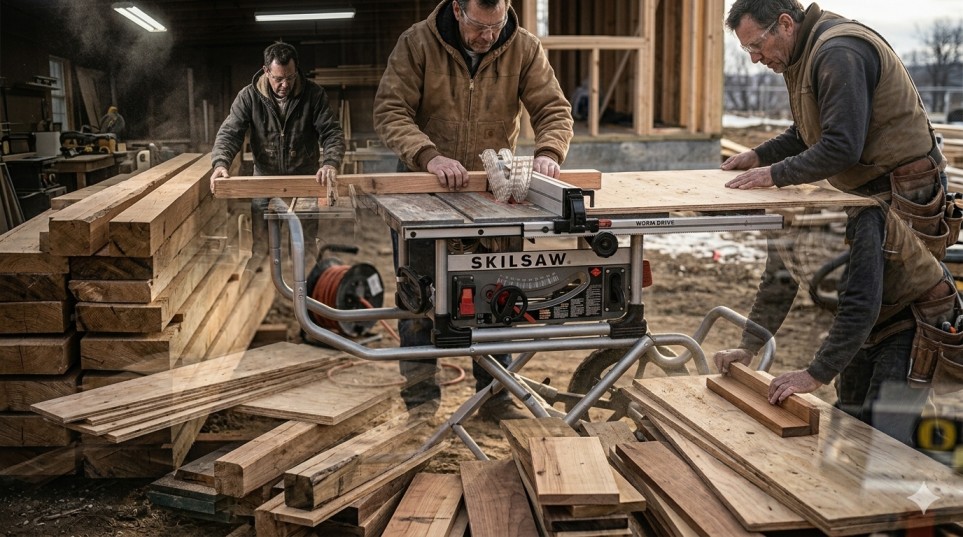
I’ve moved this saw across 12 job sites. The 16″ wheels are the single most underrated feature on this saw. I’ve used saws with 8″ wheels for years and didn’t fully appreciate the difference until I tried these.
Setup time:
- First time: about 4 minutes figuring out the folding sequence
- After practice: 90 seconds, which matches what SKILSAW claims
- Breakdown: about 60 seconds
The 16″ wheels roll over gravel and uneven ground without sinking the way 8″ wheels do. On stairs — which I tested at three different sites — the larger diameter makes a real difference. Less jerking, less tipping risk. Loading into a truck bed is easier too because the wheels maintain momentum.
On soft mud you still need plywood pads under the feet, but that’s true of any stand. On slopes beyond about 3 degrees, accuracy starts to suffer, so find level ground when you can.
Dust Collection
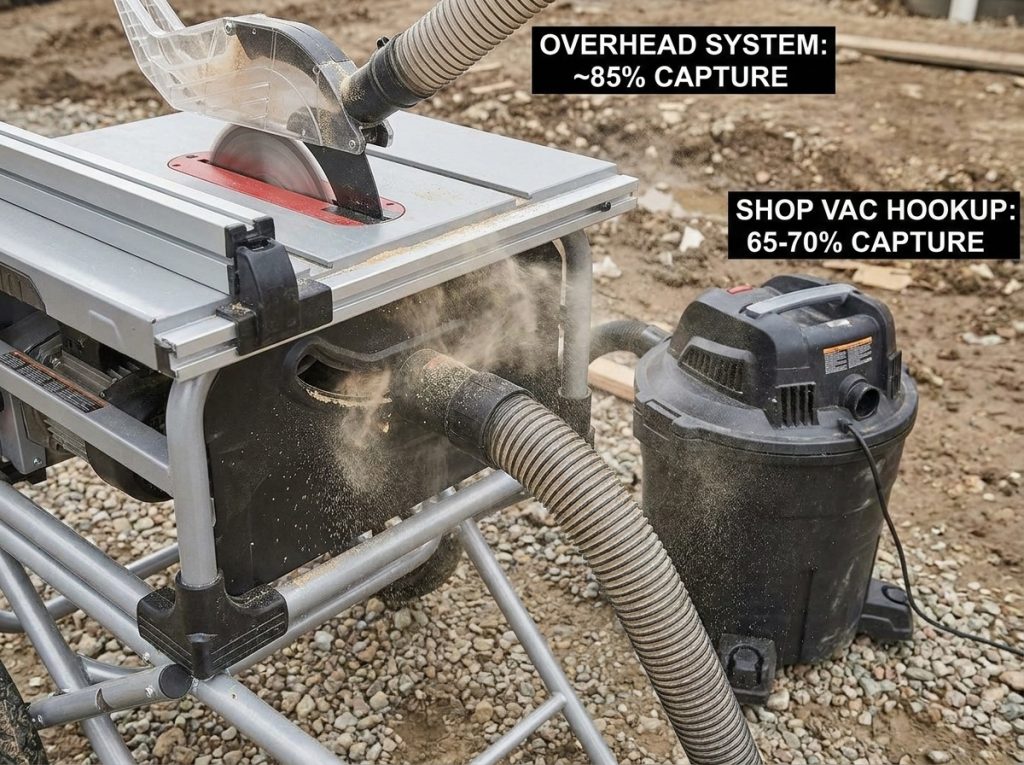
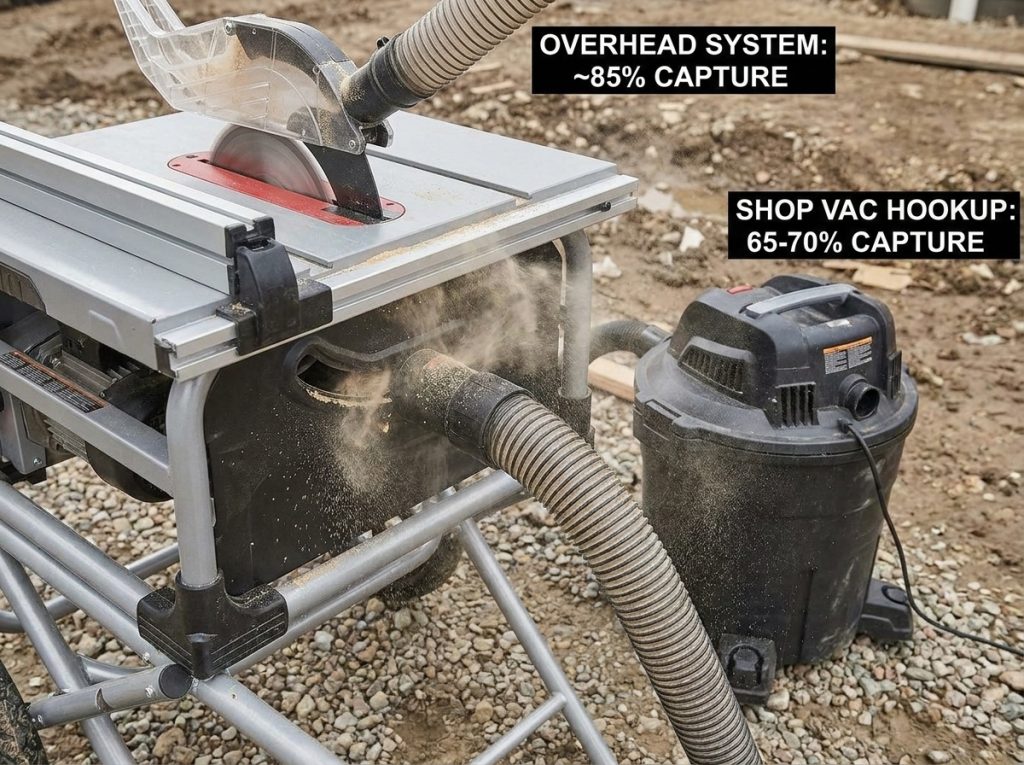
This is the weakest part of the saw. The single 2-1/2″ dust port captures maybe 35-40% of sawdust on its own — not acceptable for indoor work. Hook up a shop vac and you get to 65-70%, which is livable. A dedicated dust collector improves that to around 75-80%.
The problem is structural. One port can’t catch dust thrown forward by blade rotation, and there are gaps where the shroud meets the table. An overhead dust collection system (typically $80-$120) addresses the forward-thrown dust and gets overall capture to around 85%. If you’re working indoors regularly, budget for that upgrade.
Oil Changes and Maintenance
Every 50 hours of use. That’s the schedule, and it’s real. My first change took about 25 minutes — remove the gearbox cover, drain the old oil, refill with 4 oz of 30W non-detergent motor oil, replace the cover. Not complicated, but you have to remember to do it.
SKILSAW also recommends a break-in oil change after the first 10 hours to flush manufacturing debris. Do it. I’ve seen forum posts from people who skipped it and ended up with accelerated gear wear. The gears are bronze and expensive to replace.
Full maintenance schedule:
- 10 hours: break-in oil change
- Every 50 hours: regular oil change
- Every 100 hours: inspect gears, check for metal contamination in old oil
- Annually: deep clean gearbox, inspect for gear pitting
Issues I’ve Run Into (and Fixes)
Miter Gauge Slop
The miter gauge has noticeable play in the slots — 0.025″ to 0.030″ side-to-side. The slots are non-standard dimensions, which is a common complaint on SKILSAW forums. My solution after 50 cuts was to build a crosscut sled, which fixed the problem completely. If you’re doing a lot of crosscuts, just build the sled and don’t fight the miter gauge.
Blade Alignment Drift
Around the 300-cut mark, the blade went slightly out of parallel with the miter slots. The trunnion bolts had backed off from vibration. A few drops of medium-strength threadlocker and a recalibration fixed it, and it hasn’t recurred.
Oil Leaks
About 10% of saws reportedly develop gearbox oil leaks from the cover gasket. Mine hasn’t, but if it does, the fix is tightening the cover bolts in a star pattern or replacing the gasket — an $8 part.
How It Compares
vs. DeWalt: The DeWalt has 2″ more rip capacity and you’ll never touch an oil can, but the SKILSAW has deeper cut depth, bigger wheels, and noticeably better fence accuracy. For heavy ripping on job sites, SKILSAW wins. For a shop saw you rarely move, the DeWalt is the more practical choice.
vs. Bosch: The Bosch 4100XC has the best dust collection in this group and the SquareLock fence is excellent. But the rip capacity drops to 25″ and the wheels are 8″. If you care about dust collection above all else, Bosch. If you care about power and reach, SKILSAW.
vs. Makita: Different targets. The Makita is quieter, lighter, and needs nothing beyond blade changes. It also tops out at 25″ capacity. The SKILSAW is louder, heavier, and more powerful. They’re not really competing for the same buyer.
Common Questions
Is the worm drive torque advantage actually noticeable?
Yes, but mainly when you’re pushing the saw hard. On 4×4 posts and 8/4 hardwoods, the difference is obvious. On 3/4″ plywood and 2x dimensional lumber, it’s largely irrelevant. The worm drive is worth it if thick lumber is a regular part of your work. If you’re mostly doing light framing and sheet goods, a quality direct-drive saw will serve you just as well for less money.
How hard are the oil changes really?
25 minutes your first time, maybe 15 once you’ve done it before. It’s not hard, just inconvenient. The main risk is forgetting, which leads to gear damage. Set a calendar reminder if you need to.
Can it replace a cabinet saw for shop work?
For breaking down rough lumber and sheet goods, yes. For fine furniture requiring tight tolerances, not quite — cabinet saws typically hold tighter accuracy and have better dust collection. For general woodworking and shop furniture, the SKILSAW does the job.
Is the noise a real issue?
It’s noticeably louder than direct-drive saws — I measured 94 dB versus 89 dB on the DeWalt at the same position. You should be wearing hearing protection with any table saw anyway, so in practice it’s not a deciding factor. But if noise matters to your situation, it’s worth knowing.
Final Verdict
Eight point nine out of ten. After 9 months and over 700 cuts across a deck build, furniture work, and ongoing sheet goods processing, the SPT99-11 has earned a permanent spot in my trailer.
The worm drive torque is the real deal when you’re pushing through thick hardwoods and treated lumber. The 16″ wheels genuinely change how you move a saw around a job site. The 30.5″ rip capacity and the cut depth that handles 4x4s in a single pass round out a package that’s hard to match for heavy jobsite work.
The dust collection needs supplementing, the miter gauge needs a sled, and the oil changes need to actually happen. None of that is a dealbreaker, but none of it is free either.
For contractors and professionals ripping thick lumber regularly: buy it without hesitation.
For hobbyists or occasional users: the premium is harder to justify. Look at the DeWalt or Bosch at similar prices.

Finlay Connolly is a woodworking enthusiast and power tool specialist with over a decade of hands-on experience in the workshop. As the founder and lead writer at ProTableSawReviews.com, Finlay combines expert knowledge with real-world testing to help woodworkers, DIYers, and professionals choose the best tools for the job. With a sharp eye for detail and a passion for precision, Finlay is committed to providing trustworthy, practical advice backed by years of experience and research in the field. Whether you’re cutting dados or comparing fence systems, you can count on Finlay for honest, reliable reviews that make your next cut your best one.