
Before You Buy a Delta 10-Inch Table Saw, Read What Happened to Their Motor
Delta 36-725T2 contractor saw reviewed: cast iron top, Biesemeyer-style fence, the reported motor capacitor issue, how to buy safely and the best alternative.

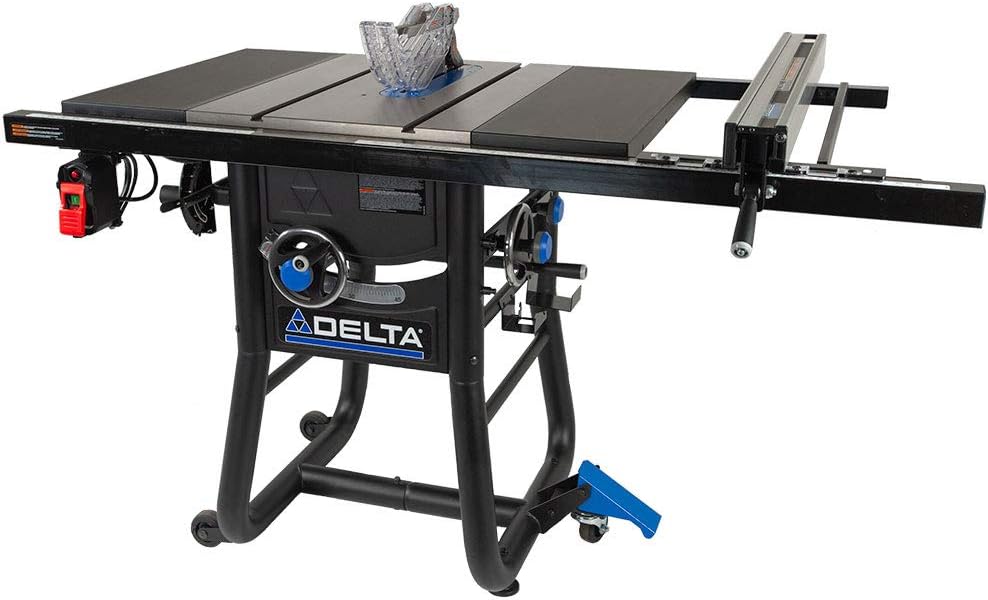
The Delta 36-725T2 is a legitimately excellent contractor saw. Cast iron top. Belt-driven induction motor. Biesemeyer-style fence that most saws at twice the price would be proud to include. On paper — and in-shop, when it works correctly — it’s one of the best deals in the contractor saw segment.
The short answer: the Delta 36-725T2 gives you a cast iron top, a belt-driven induction motor and a Biesemeyer-style fence for contractor-saw money. But some units, mostly 2020–2022 builds, have had motor capacitor failures. Buy new from a store with an easy return window, test the saw in the first 30 days, and know that the usual fix is an inexpensive capacitor swap.
- ✅ Best for: buyers who want cast iron and a great fence on a budget and are happy to check the saw carefully
- ⚠️ Watch out for: motor capacitor issues and cast iron flatness on some units
- 🔁 Hassle-free alternative: the DeWalt DWE7491RS jobsite saw

But there’s a documented motor problem that’s been spreading across WoodworkingTalk, LumberJocks, The Garage Journal, and the Delta 36-725 Facebook Owners Group since 2020. Failed capacitors. Motors that smoke on first use. Delta warranty service that’s been described by multiple owners as actively obstructive. One owner on The Garage Journal wrote: “I have a brand new $600 paperweight. Delta refuses to stand behind it in any meaningful way.”
That’s not a reason to avoid the saw. It might be a reason to buy it differently.
Here’s what the entire Delta 10-inch lineup actually looks like in 2026 — and how to buy smart if you decide one is right for you.
In this article
- The Delta 10-Inch Lineup, Honestly Sorted
- The 36-725T2: What Makes It Good
- The Motor Problem — What’s Actually Happening
- Cast Iron Flatness: The Other QC Issue
- The 36-725T2 vs. 36-5100T2: Worth the Step Up?
- The 36-6013 Portable: A Different Tool Entirely
- Delta 36-725T2 vs. The Competition
- Delta 36-5000T2 Contractor Table Saw
- Setup Steps Before Your First Cut
- The Honest Buying Recommendation
- Frequently Asked Questions
The Delta 10-Inch Lineup, Honestly Sorted
Delta currently offers three meaningfully different 10-inch table saws in regular production. They look similar in marketing photos. They’re not the same saw.
| Model | Type | Motor | Rip Capacity | Table | Price (2026) | Weight |
|---|---|---|---|---|---|---|
| Delta 36-725T2 | Contractor | 15A Belt-Drive | 30″ | Cast Iron | ~$599–699 | ~220–234 lbs |
| Delta 36-5100T2 | Contractor | 15A Belt-Drive | 30″ | Cast Iron + CI Wings | ~$799–899 | ~255 lbs |
| Delta 36-5152T2 | Contractor | 15A Belt-Drive | 52″ | Cast Iron + CI Wings | ~$999–1,199 | ~280 lbs |
| Delta 36-6013 | Portable Jobsite | 15A Direct-Drive | 25″ | Aluminum | ~$399–449 | ~57–65 lbs |
| Delta 36-L552 Unisaw | Cabinet | 3HP Single-Phase | 52″ | Cast Iron | ~$3,000+ | ~665 lbs |
Prices as of mid-2026. Verify current availability at Lowe’s, Home Depot, or deltamachinery.com.
The saw most people are actually researching is the 36-725T2. That’s where this article spends most of its time. The portable 36-6013 gets its own section. The Unisaw is in a different category entirely and won’t be treated as a direct comparison.
The 36-725T2: What Makes It Good
Start with what’s right about this saw, because a lot is right.
The Biesemeyer-style fence is the headline feature, and it earns that status. The T-square fence design clamps at a single front point and maintains its position relative to the blade consistently. The scale reads accurately. The fence face is tall enough to support boards on edge. LumberJocks forum members who’ve owned $1,500+ saws with aftermarket fences consistently say the 36-725T2’s stock fence rivals what most contractor saws offer as an upgrade.

To put that in context: the Ridgid R4514 at a similar price point has a fence that’s been widely criticized for toe-in under load. The Delta’s fence — when the saw is properly set up — doesn’t have that problem. It’s a genuine competitive advantage.
The belt-drive induction motor is another meaningful distinction. Most saws at this price point use direct-drive brushed motors. The 36-725T2’s belt-drive configuration isolates the motor from blade vibration, runs quieter under load, and produces more consistent torque through difficult cuts. For sustained ripping of 8/4 hardwood — oak, maple, walnut — the difference between belt-drive and direct-drive is audible and feelable.

The cast iron table provides vibration dampening and dimensional stability that aluminum tables can’t match. The surface is machined flat, and when it’s actually flat (more on that below), stock moves across it smoothly and consistently without the slight flex that aluminum tables show under pressure.
5-year warranty is longer than most competitors at this price tier — Ridgid’s R4514 carries the lifetime LSA, but standard DeWalt contractor saws carry 3 years. Delta’s 5-year coverage is on paper a good deal.
The Motor Problem — What’s Actually Happening
This is the section that most reviews either skip or soften. Let’s be direct.

A meaningful percentage of Delta 36-725T2 units — concentrated heavily in builds from 2020–2022 but with documented cases through 2024 — have failed capacitors. The start capacitor and run capacitor in the motor’s induction circuit have failed at rates high enough that Delta’s own warranty service became overwhelmed, and multiple authorized service centers reportedly refused to continue taking Delta warranty work because of administrative friction.
The symptom: the motor smokes, emits a burning rubber smell, loses torque, or won’t start. The root cause: undersized or low-quality capacitors for the duty cycle the motor runs. The fix, for those who DIY it: replace the start capacitor (typically 50–70 µF, 250VAC) and run capacitor (typically 40 µF, 370VAC) with quality replacements from Grainger, Amazon, or a local electrical supplier. Total cost: $15–35 for both. Time: 45–60 minutes with basic electrical comfort.
What this means for buying decisions:
If you buy new from Lowe’s: register the warranty immediately, keep your receipt, and within the first 30 days if anything seems wrong with motor sound or startup behavior — return it to the store, no questions. Lowe’s 30-day return window is your protection here, not Delta’s warranty service.
If you buy used: test the motor thoroughly before purchasing. Let it run for 5 minutes at no load. Listen for any grinding, hesitation on startup, or unusual heat from the motor housing. If the seller won’t allow that test, walk away. A seized motor on a used 36-725T2 costs more to replace ($600+ for OEM, or $150–200 for a compatible aftermarket motor) than the saw is worth.
The good news: Multiple WoodworkingTalk members with units from 2023 onward report no motor issues. The consensus on the forum, as of a January 2025 thread, is that Delta appears to have addressed the capacitor quality problem in recent production runs. The older the unit, the higher the risk.
Cast Iron Flatness: The Other QC Issue
Less common than the motor problem but worth knowing: a small percentage of 36-725T2 units have shipped with cast iron tops that aren’t flat to acceptable tolerances. The symptom is usually noticed when a straight edge laid across the table shows a bow of more than 0.005 inches — enough to cause inconsistent cut depth and binding on narrow rips.

Check this before your first cut: lay a reliable straight edge (a known-good steel rule or machinist’s straight edge) across the table in three directions — front-to-back, left-to-right, and diagonally. Any visible gap over 0.005 inches at the center indicates a table that needs to go back.
If you discover this after your 30-day Lowe’s return window: this is exactly what the 5-year warranty is supposed to cover. Document it with photos, contact Delta, and be persistent. The warranty service process has been inconsistent, but documented flatness defects have been remedied under warranty for owners who pushed the issue through proper channels.
The 36-725T2 vs. 36-5100T2: Worth the Step Up?
The 36-5100T2 adds cast iron extension wings (versus the 36-725T2’s stamped steel wings) and runs approximately $150–200 more. FineWoodworking forum members who’ve owned both consistently say the cast iron wings are worth the premium if you regularly support wide material during ripping.

Stamped steel wings flex under lateral load from wide boards. Cast iron wings don’t. For furniture makers who regularly rip 8/4 wide stock, the 36-5100T2’s stability during those cuts is genuinely better. For general hobbyist woodworking that doesn’t involve a lot of wide-panel ripping, the 36-725T2’s steel wings are functionally adequate.
The fence system is identical between both models. The motor is identical. The blade elevation and tilt mechanisms are essentially the same. The only meaningful operational difference is the wings.
One thing both saws share: the miter gauge that ships with each is functional but basic. A crosscut sled — DIY from $20 of plywood — outperforms the stock miter gauge for furniture crosscuts immediately. LumberJocks users consistently recommend building a sled before relying on the stock gauge for any precision crosscut work.
The 36-6013 Portable: A Different Tool Entirely
The 36-6013 is Delta’s jobsite saw — 15-amp direct-drive motor, aluminum table, 25-inch rip capacity, 57–65 lbs. At $399–449, it sits in the same market as the Ridgid R4514 ($549), DeWalt DWE7491RS ($599), and the SawStop CTS ($974).

On paper the 36-6013 looks competitive on price. In practice, it’s giving up meaningful ground in three areas:
Fence quality — The 36-6013’s fence is not a Biesemeyer system. It’s a more basic front-lock design, and the rip capacity (25 inches) is tighter than both the Ridgid (30 inches) and DeWalt (32.5 inches).
No safety brake — Neither the 36-6013 nor any Delta saw includes anything comparable to the SawStop flesh-detection system or even Ridgid’s 4-second blade brake. Standard riving knife and anti-kickback pawls only.
Aluminum table — Fine for jobsite work. Noticeably less stable than cast iron for shop use where you’re making repeated precision rips.
The 36-6013 makes sense if the price point is the priority and you need a portable saw for occasional jobsite or renovation work. For a dedicated shop setup, spending another $150 to get the 36-725T2 produces a dramatically better experience — better fence, belt-drive motor, cast iron table.
(For portable jobsite saw comparisons including the SawStop CTS, DeWalt, and Ridgid options, see our best portable table saw reviews.)
Delta 36-725T2 vs. The Competition
| Delta 36-725T2 | Ridgid R4514 | DeWalt DWE7491RS | SawStop CTS | |
|---|---|---|---|---|
| Price (2026) | ~$599–699 | ~$549 | ~$649 | ~$974 |
| Motor type | Belt-drive induction | Direct-drive brushed | Direct-drive brushed | Direct-drive |
| Table material | Cast iron | Cast aluminum | Cast aluminum | Cast iron |
| Fence quality | Biesemeyer-style ✅ | Basic (known issues) | Rack-and-pinion ✅ | Rack-and-pinion ✅ |
| Rip capacity | 30″ | 30″ | 32.5″ | 24.5″ |
| Safety brake | ❌ Standard only | ❌ 4-sec blade stop | ❌ Standard only | ✅ Flesh detection |
| Dado capable | ✅ (13/16″ x 8″) | ✅ | ✅ | ❌ (CTS only) |
| Warranty | 5 years | Lifetime (LSA) | 3 years | 1 year |
| Known issue | Motor capacitors | Fence toe-in | None significant | False triggers |
Where the Delta wins: belt-drive motor, cast iron table, Biesemeyer fence, dado capacity, and 5-year warranty — all at a price that undercuts DeWalt and SawStop. For a shop-based hobbyist who wants a stationary contractor saw that will last, the 36-725T2 offers more for the money than the direct-drive competition.
Where it loses: the motor history creates real buying risk on older units, the warranty service process has been reported as difficult, and there’s no active safety technology. If an active safety brake is a priority, you’re looking at SawStop’s lineup — starting at $974 for the CTS.
(See our SawStop Compact Table Saw review for a full breakdown of what that premium buys you.)
Setup Steps Before Your First Cut
Whether you buy new or used, do these before running a real project:

1. Check table flatness. Straight edge across the table in multiple directions. Any visible bow over 0.005 inches — address it before anything else. On a new unit, this is a warranty return issue.
2. Align the blade to the miter slots. Mark a tooth, measure its distance to the miter slot at front and rear of rotation. Both measurements should be within 0.003 inches. Adjust via the trunnion bolts if needed.
3. Set fence parallelism. Lock the fence at 6 inches. Measure front and back of blade. Fence should be parallel or have minimal toe-out. Never toe-in.
4. Check the 45° and 90° bevel stops. Use a reliable square. The stops on the 36-725T2 can ship slightly off and need the set screws adjusted.
5. Wax the table and fence rail. Paste wax on the cast iron surface, fence rail, and miter slots. Prevents surface oxidation and makes everything slide cleanly.
6. Make a crosscut sled. The stock miter gauge is adequate for rough work. For any furniture precision crosscuts, a shop-made sled is the right tool and takes two hours to build.
The Honest Buying Recommendation
The Delta 36-725T2 is a good saw in a problematic package — a motor reliability history that requires you to buy smart, a warranty service process that requires you to be proactive, and a QC record that requires you to inspect before trusting.
If you buy it new from Lowe’s, test everything within the 30-day return window, and are comfortable doing a $15–35 capacitor swap if the motor acts up in year one: this is one of the best contractor saws available for under $700. The Biesemeyer fence, belt-drive motor, and cast iron table together represent a genuinely better package than what Ridgid and DeWalt offer at the same price.
If you want to skip the motor drama entirely and get something that works reliably out of the box at the contractor saw tier: the DeWalt DWE7491RS has a better fence than Ridgid, a larger rip capacity than Delta, and no documented motor reliability history. It’s the clean choice if reliability matters more than belt-drive smooth or cast iron surface.
And if you’re considering the used market: only buy a 36-725T2 you can test in person. The capacitor issue is real, the repair is straightforward, but you should know what you’re getting into before the money changes hands.
(For other saws worth comparing at this tier, see our best rated table saw guide and best table saw reviews.)
Frequently Asked Questions
Is the Delta 36-725T2 a good table saw?
Yes, on paper and when it works correctly. It combines a cast iron top, a belt-driven induction motor and a Biesemeyer-style fence, which is a strong package for the price. The catch is a history of motor capacitor failures on some units, so buy where returns are easy.
What is the Delta 36-725T2 motor problem?
Some units, concentrated in 2020–2022 builds, have had failing start or run capacitors. Symptoms include smoke, a burning smell, loss of torque or a motor that will not start. Owners who fix it themselves typically replace both capacitors for about $15–35 in parts.
Where should I buy a Delta 36-725T2?
Buying new from a store with a simple return policy, such as Lowe’s 30-day window, gives you the most protection. Register the warranty, keep the receipt and test the motor, fence and table flatness early.
Is the 36-5100T2 worth the extra money over the 36-725T2?
The 36-5100T2 adds cast iron extension wings for more mass and a larger flat surface. If you mostly need the fence and motor, the 36-725T2 offers most of the value for less.
Can I buy a used Delta 36-725T2?
Only if you can test it in person. Run the motor for a few minutes with no load and listen for hesitation on startup, grinding or unusual heat before you pay.
What is a good alternative to the Delta 36-725T2?
If you want to avoid motor worries entirely, the DeWalt DWE7491RS is a popular alternative with a rack-and-pinion fence and 32½ inches of rip capacity, though it uses an aluminum top and a direct-drive motor. See our DWE7491RS review and our table saw buying guide.

Finlay Connolly is a woodworking enthusiast and power tool specialist with over a decade of hands-on experience in the workshop. As the founder and lead writer at ProTableSawReviews.com, Finlay combines expert knowledge with real-world testing to help woodworkers, DIYers, and professionals choose the best tools for the job. With a sharp eye for detail and a passion for precision, Finlay is committed to providing trustworthy, practical advice backed by years of experience and research in the field. Whether you’re cutting dados or comparing fence systems, you can count on Finlay for honest, reliable reviews that make your next cut your best one.


