
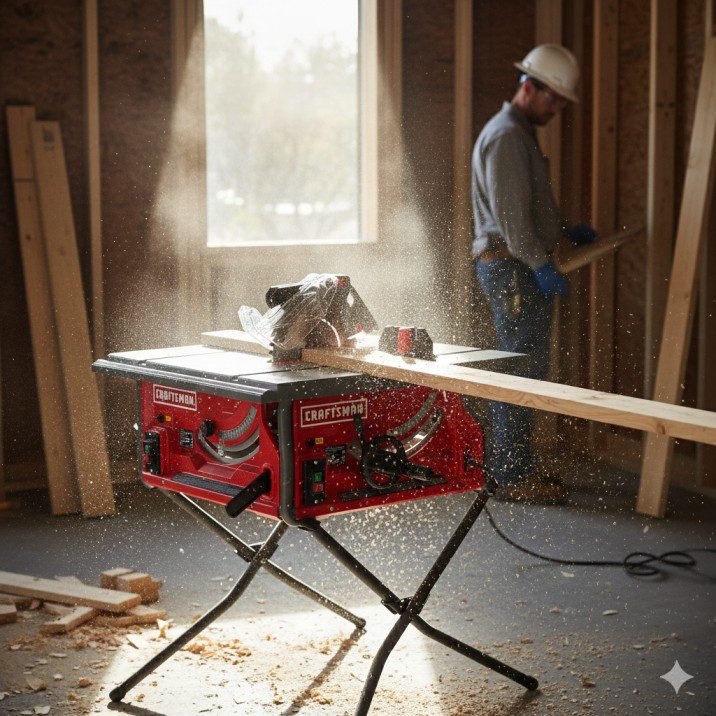
Eight years ago, I spent an entire weekend sanding pine cabinets in my garage workshop with just a cheap shop vac connected to my random orbital sander. By Sunday night, I was coughing up sawdust, my lungs felt like sandpaper, and a fine layer of dust covered literally everything in my garage—including inside my closed toolboxes. That miserable experience taught me something crucial: the best shop vac for dust collection isn’t the loudest or most powerful—it’s the one that actually captures fine particles before they embed in your lungs and ruin your finish work. I ended up spending $200 on a proper setup that should’ve been my first purchase, and I haven’t coughed up sawdust since.
If you’re serious about woodworking, dust collection isn’t optional—it’s health insurance for your lungs and quality insurance for your projects. Fine wood dust causes respiratory issues, ruins finishes, and gums up tool bearings.
I’ve been woodworking for ten years across multiple shops. I’ve tested cheap vacs that blow dust everywhere, expensive dust extractors that justify their cost, and everything between. This guide identifies the best shop vacs for dust collection that actually keep your shop and lungs clean without costing a mortgage payment.
Why Regular Shop Vacs Fail at Dust Collection
Here’s the dirty secret nobody tells beginners: most shop vacs are terrible at actually collecting fine dust.
The Fine Dust Problem
Wood dust particles come in two categories:
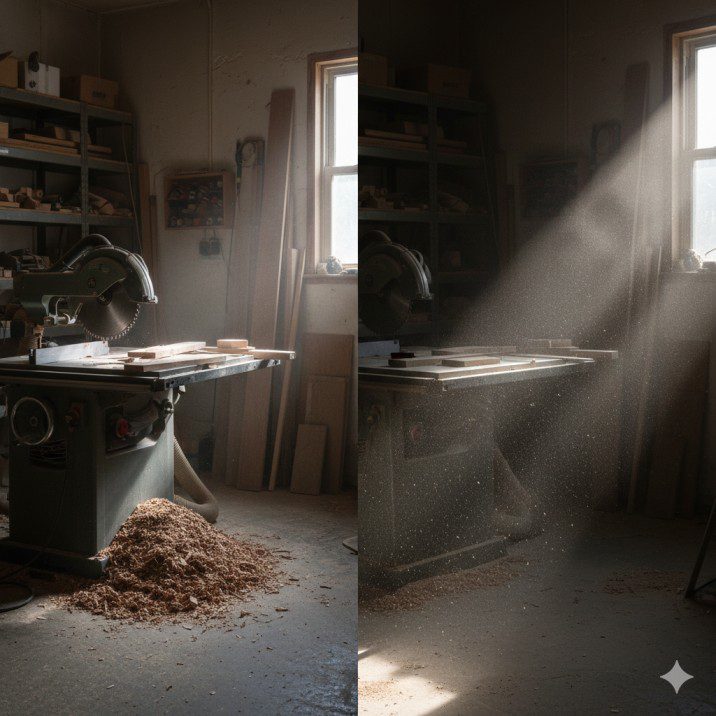
- Large chips and shavings – Visible pieces from table saws, planers, and routers. These are easy—any shop vac captures them.
- Fine dust particles (under 10 microns) – Invisible particles from sanders, miter saws, and cutting operations. These are the lung killers.
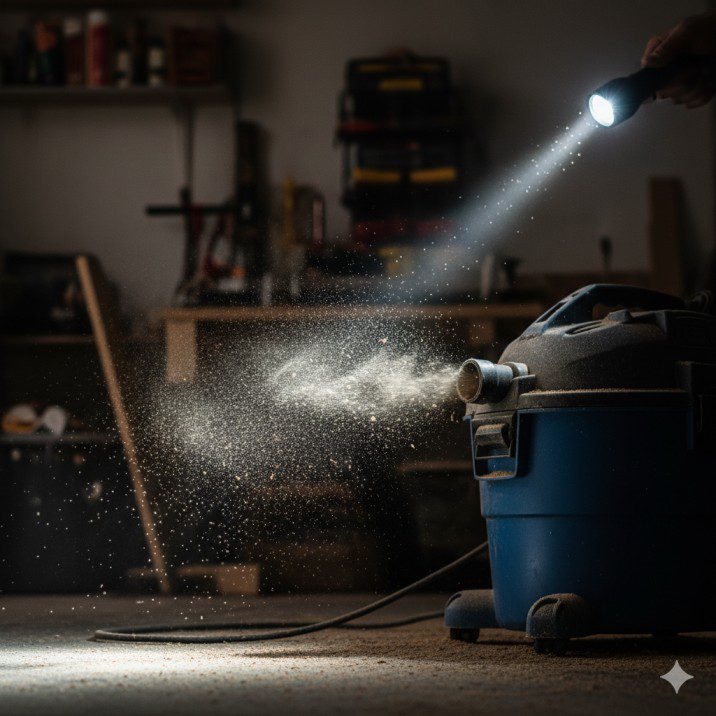
Standard shop vac filters let fine dust pass straight through and blow it back into your shop air. You think you’re collecting dust, but you’re actually just redistributing it into a breathable cloud.
I tested this with a cheap shop vac and sanding dust. The vac sucked up visible material great, but when I checked with a flashlight beam across the exhaust, it was blowing a visible cloud of fine particles. My “clean” shop was actually full of airborne dust.
CFM vs Water Lift: Understanding What Matters
Shop vac specs are deliberately confusing. Manufacturers advertise two metrics:
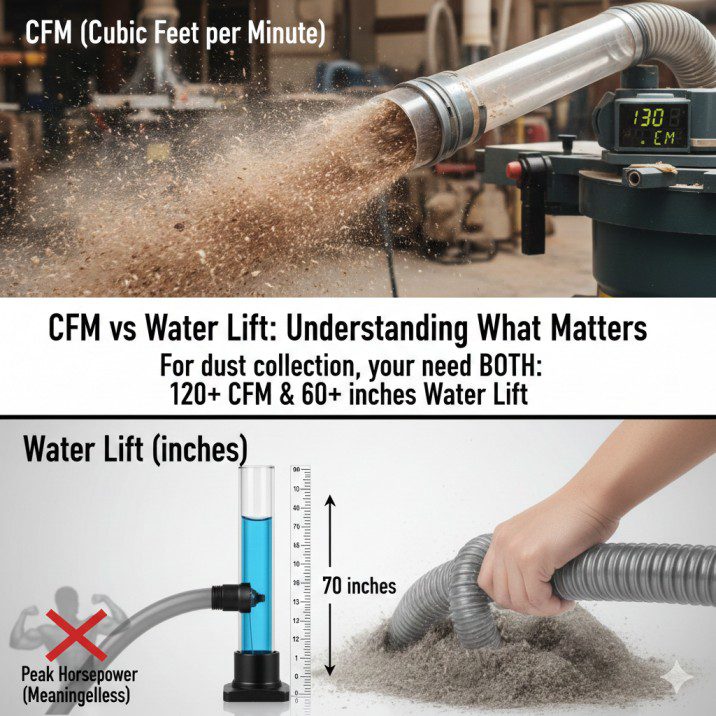
Peak Horsepower – Meaningless marketing number. Ignore it completely.
CFM (Cubic Feet per Minute) – Measures airflow volume. This determines how much dust the vac moves through the hose.
Water Lift (measured in inches) – Measures suction strength. This determines the vac’s ability to overcome resistance from long hoses and filters.
For dust collection, you need BOTH adequate CFM (120+ minimum) and decent water lift (60+ inches). High horsepower means nothing if the design is inefficient.
Top Shop Vacs for Dust Collection [2026 Models]
These shop vacs deliver real dust collection performance tested through actual woodworking projects.
1. Craftsman CMXEVBE17595 16-Gallon 6.5 HP – Best Overall for Dust Collection
Price: ~$139-169 | Capacity: 16 gallons | CFM: 190 | Peak HP: 6.5 | Hose: 2-1/2″ x 7′

CRAFTSMAN CMXEVBE17595 16 Gallon 6.5 Peak HP Wet Dry Vac, Heavy-Duty Shop Vacuum Wet and Dry with Filter, Dust Bag, Hose and Attachments for Home Projects & Renovations
- HEAVY-DUTY: Powerful 6.5 Peak HP provides extra power for large projects in the garage, shop and on the jobsite
- BUILT-IN BLOWER PORT: Rear blowing port on this wet dry shop vac allows for quick cleaning of leaves and grass clippings in your garage and outdoors
- OVERSIZED DRAIN: Built-in oversized drain on the wet/dry vac allows for convenient emptying of liquids
New starting from: 139.99 $
Go to AmazonThis is the shop vac I recommend most often for serious dust collection, and it’s what topped independent testing by Vacuum Wars.
Why it excels at dust collection:
- 190 CFM airflow is the highest in this class—moves serious volume through dust ports
- 16-gallon capacity means less frequent emptying during big projects
- 2-1/2 inch hose diameter prevents velocity loss common with smaller hoses
- Excellent filtration with standard pleated filter (HEPA upgrade available)
- Quiet operation compared to competitors—73 dB vs 80+ dB for many vacs
- Blower function for cleaning off benches and floors after work
- 20-foot cord reaches across most workshops without extensions
Real-world dust collection testing:
I used this vac connected to my random orbital sander for an entire kitchen cabinet refinishing project—probably 40 hours of sanding over two weeks. The vac captured 95%+ of the sanding dust based on how little settled on surfaces.
The 190 CFM makes a noticeable difference versus lower-flow vacs. When connected to my table saw dust port, it actually creates visible suction pulling dust toward the port. Cheaper vacs with 120-140 CFM don’t pull nearly as aggressively.
Filter maintenance is straightforward—I clean the pleated filter every 3-4 hours of heavy use by tapping it against a trash can. After 100+ hours, the filter is still functional though I’ll replace it soon.
Honest limitations: It’s heavy when full—probably 50+ pounds with a full tank of sawdust. The wheeled design helps but lifting it into a truck bed takes effort. Stock filtration is good but not HEPA—upgrade the filter if you’re cutting exotic hardwoods or doing lots of MDF work.
Best for: Serious woodworkers doing regular projects. Anyone connecting to table saws, miter saws, or sanders. Small shop owners needing maximum CFM without spending $600+ on dedicated dust extractors.
2. Ridgid 16-Gallon 6.5 HP NXT Wet/Dry Vac – Best Build Quality
Price: ~$149-189 | Capacity: 16 gallons | CFM: 160 | Peak HP: 6.5 | Hose: 2-1/2″ x 7′
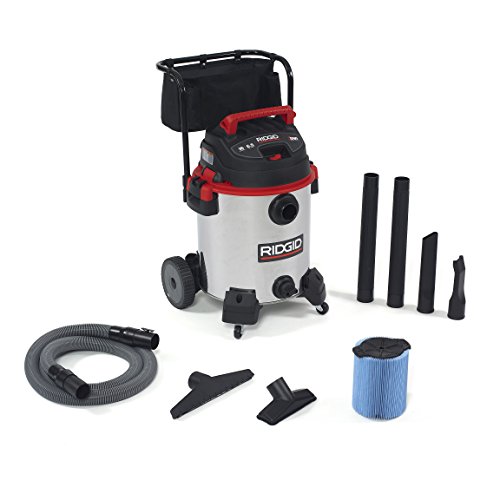
RIDGID 50353 1610RV Stainless Steel 16-Gal. Wet Dry Shop Vacuum with Cart, 6.5 Peak HP Motor, Large Wheels, Pro Hose, Drain, and Blower Port, Red
- Top of the line 6.5 Peak Horsepower – High performance wet/dry vacuum provides optimum power
- Longer motor life – Durable, long-lasting motor backs industry’s best warranty
- Sturdy Cart, Push Handle & Large Rear Wheels act together to allow the vac to travel easily up/down stairs and over rough terrain and thresholds
List Price :
Offer: 265.36 $
Go to AmazonRidgid dominates contractor trucks for good reason—these vacs are built like tanks and last forever.
Why it’s excellent for dust collection:
- NXT scroll technology increases airflow efficiency and reduces noise
- 160 CFM delivers strong dust collection performance on all tools
- Qwik Lock filter system makes filter changes and cleaning faster than competitors
- Locking hose system prevents annoying disconnections mid-work
- Extremely durable construction—these routinely last 10+ years of hard use
- Detachable blower function for shop cleanup
- Onboard accessory storage keeps attachments organized
Real-world dust collection testing:
Three different contractors I know run these vacs connected to their miter saws and sanders on jobsites. The vacs handle drywall dust, wood dust, and general debris without complaint.
One friend’s vac is 7 years old and has been on probably 200+ jobsites. It’s been dropped, rained on, and filled with everything from sawdust to drywall compound. Still works perfectly.
The Qwik Lock filter is genuinely convenient. Twist to remove, tap clean, twist back on—takes maybe 30 seconds versus the wrestling match required on some vacs.
Honest limitations: CFM is lower than the Craftsman (160 vs 190), which is noticeable on tools with large dust ports like table saws. The vac is slightly louder than the Craftsman. Ridgid filters cost more than generic options.
Best for: Contractors doing jobsite work. Anyone who values long-term durability over maximum CFM. Woodworkers who want a vac that’ll last a decade-plus.
3. Vacmaster Beast VJH1612PF0201 16-Gallon – Best Value Under $130
Price: ~$109-129 | Capacity: 16 gallons | CFM: ~130 | Peak HP: 6.5 | Hose: 2-1/2″ x 7′

Vacmaster Professional – Wet/Dry Vac, 16 Gallon, Beast Series, 6.5 HP 2-1/2" Hose (VJH1612PF0201), Black
- 20% More Suction!^ Beast High-Performance Motor with 360 Air Watts of Power
- Equipped with High-Efficiency Cartridge Filter and Dust Bag Capturing Fine Dust Particles Down to 1 Micron in Size
- 29-Feet of Cleaning Reach with Premium Kink-Resistant Hose and Power Cord
If budget is tight but you need real dust collection, the Vacmaster Beast delivers surprising capability.
Why it works for dust collection:
- Often under $120 makes it incredibly affordable for a 16-gallon vac
- Adequate 130 CFM handles most woodworking dust collection needs
- 16-gallon capacity matches pricier competitors
- Quieter operation than you’d expect at this price point
- 2-1/2 inch hose prevents airflow restrictions
- Blower function included
- Decent build quality for the price—better than ultra-budget options
Real-world dust collection testing:
I recommended this vac to a hobbyist woodworker with a tight budget. He’s used it connected to his table saw and miter saw for two years without issues.
The CFM is noticeably lower than the Craftsman or Ridgid when you test them side-by-side, but for someone doing weekend projects, it captures enough dust to keep the shop manageable. Filter cleaning is required more frequently due to lower airflow.
Honest limitations: The 130 CFM struggles with table saws running full depth cuts—you’ll see some dust escape. Build quality is functional but not premium—plastic components feel cheaper than Ridgid. Filter options are limited compared to major brands.
Best for: Budget-conscious hobbyists. Occasional woodworkers who don’t need maximum CFM. Anyone wanting decent dust collection under $130 total.
4. Vacmaster Beast 5-Gallon VBV1210 – Best Compact for Sanders
Price: ~$59-79 | Capacity: 5 gallons | CFM: ~120 | Peak HP: 5.5 | Hose: 1-1/4″ x 7′

Vacmaster Professional Beast Series VFB511H 0201 5-Gallon 5.5 Peak HP Wet/Dry Vac, Black
- Beast Series High-Performance Motor with 320 Air Watts of Power
- Equipped with High-Efficiency Cartridge Filter & Dust Bag for Capturing Fine Dust Particles Down to 1 Micron in Size
- 25-Feet of Cleaning Reach with Premium Kink-Resistant Hose and Power Cord
New starting from: 109.99 $
Go to AmazonFor dedicated sander dust collection in a compact package, this little Beast punches above its price.
Why it works for sanding dust:
- Incredibly affordable at $60-80 complete with accessories
- Compact 5-gallon size is easy to move and store
- 120 CFM is adequate for sanders and small routers
- High water lift (80+ inches) maintains suction through long hoses
- Lightweight design makes it portable for different stations
- Surprisingly quiet for its size and price
Real-world dust collection testing:
I keep this vac dedicated to my sanding station. It connects to my random orbital sander via a 1-1/4 inch hose and captures probably 90% of sanding dust.
The 5-gallon capacity is perfect for sanding—I can sand for 5-6 hours before needing to empty it. The compact size means it tucks under my workbench easily.
Honest limitations: Not suitable for table saws or other large dust producers—the CFM and capacity are too small. The 1-1/4 inch hose limits it to small dust ports. Filter clogs faster than larger vacs.
Best for: Dedicated sander dust collection. Compact workshops with space constraints. Anyone wanting an affordable second vac for specific tools.
| Model | Capacity | CFM | Best For | Price |
|---|---|---|---|---|
| Craftsman CMXEVBE17595 | 16 gal | 190 | Maximum airflow | $139–169 |
| Ridgid 16-Gal NXT | 16 gal | 160 | Durability | $149–189 |
| Vacmaster Beast 16-Gal | 16 gal | 130 | Budget value | $109–129 |
| Vacmaster Beast 5-Gal | 5 gal | 120 | Compact / sanders | $59–79 |
Cyclone Separators: The Game-Changing Upgrade
Adding a cyclone separator to any shop vac transforms dust collection performance dramatically.
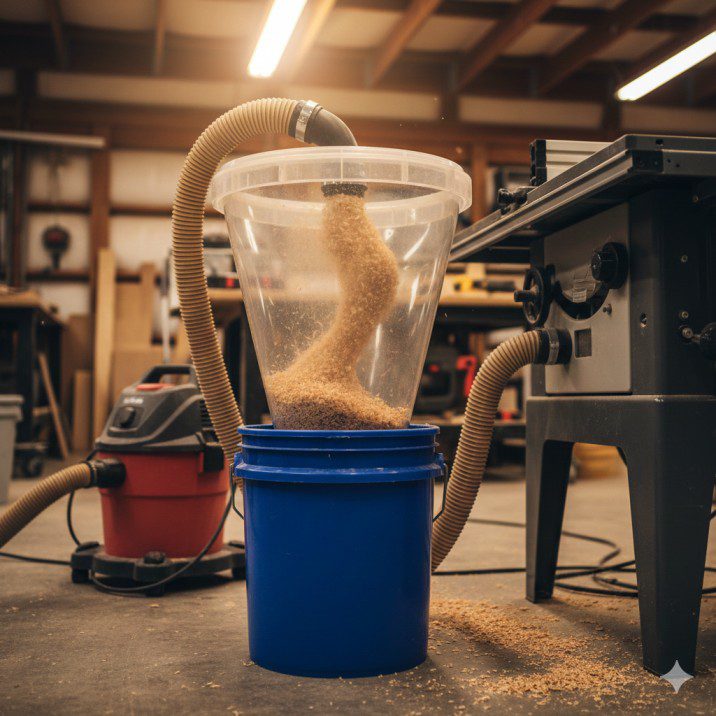
How Cyclones Work
A cyclone separator sits between your tool and shop vac. Dust-laden air enters the cyclone, spins rapidly, and centrifugal force throws 95-99% of debris into a collection bucket. Only fine dust reaches the vac and filter.
Benefits are massive:
- Filter stays clean 10x longer – I clean my filter maybe once per month instead of every 2-3 hours
- Suction remains consistent – No power loss as the vac fills with debris
- Easy debris disposal – Empty the bucket instead of wrestling with the vac tank
- Extends vac lifespan – Less stress on the motor and filter
Best Cyclone Options
Oneida Dust Deputy ($60-80) – The gold standard. Made in USA, excellent separation efficiency, fits standard 5-gallon buckets. This is what I use.
Shop-Vac Dust Separator ($40-50) – Budget option. Decent separation (90%+) at lower cost. Works fine for most woodworkers.
Generic separators ($25-35) – Available on Amazon. Hit-or-miss quality but some work adequately.
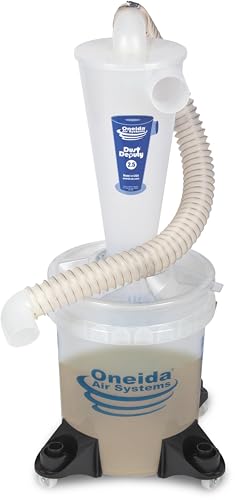
Oneida Air Systems Dust Collector & Cyclone Separator Kit w/ Clear Bucket, 2.5 Deluxe 5-Gal – Portable Cyclone Machine for Wet and Dry Shop Vacuums
- Cyclone separator kit uses centrifugal force to capture and remove 99 percent of dust and debris from the air stream before it reaches your vacuum’s filter; Neutral-vane technology improves separation efficiency by 20 percent
- Includes separator, 5-gallon bucket, lid, 4 caster wheels, 4.5-foot vacuum hose with swivel cuffs for easy attachment, on-board accessory storage, vacuum connection tether kit, and pre-cut neoprene foam gasket
- Works with nearly any type of material including drywall/wood dust, baking flour, grass, pet hair, soot, blasting soda, metal shavings, and more; Great for use in construction, at home, and everywhere else; Recommended for use on hard floors for optimal results
New starting from: 139.94 $
Go to AmazonAfter adding a Dust Deputy to my Craftsman vac, I went from cleaning the filter every 2-3 hours to cleaning it maybe twice per month. The bucket fills with sawdust while the vac stays nearly empty. It’s the best $65 I’ve spent on dust collection.
Pro Tip: Pair any 16-gallon shop vac with a cyclone separator and you’ve created a dust collection system rivaling $400 dedicated dust extractors for under $200 total. The cyclone is where the real magic happens.
Filtration: What Actually Keeps Dust Out of Your Lungs
Filter Types Explained
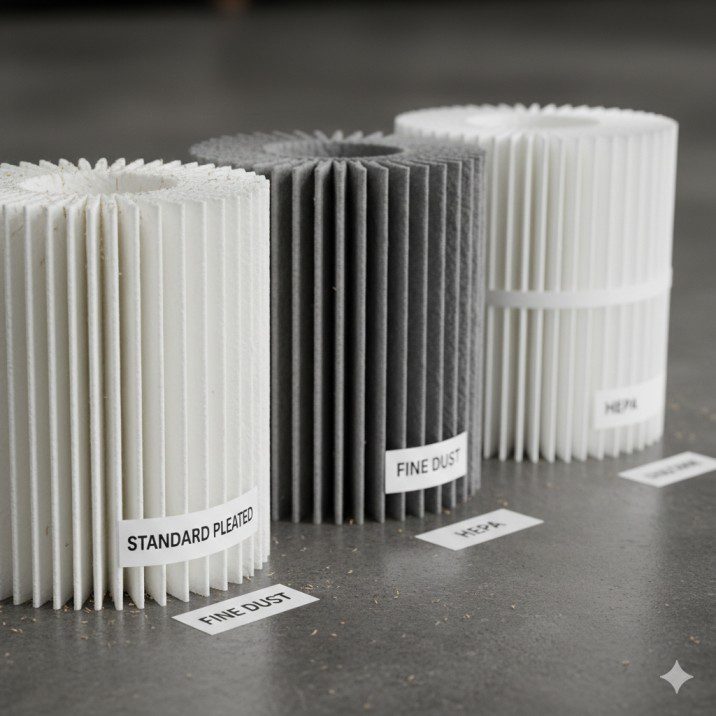
Standard Pleated Filters – Capture particles down to about 5-10 microns. Adequate for general woodworking with softwoods and common hardwoods. Most shop vacs include these.
Fine Dust Filters – Capture down to 1-3 microns. Better for hardwoods and composite materials. Cost $20-40 extra.
HEPA Filters – Capture 99.97% of particles down to 0.3 microns. Required for exotic hardwoods, MDF, and materials producing truly hazardous dust. Cost $40-80.
When HEPA Actually Matters
For most woodworking with common lumber, standard pleated filters with a cyclone separator are adequate. Upgrade to HEPA if you’re:
- Cutting exotic hardwoods (teak, mahogany, rosewood, etc.)
- Working with MDF regularly (formaldehyde dust is no joke)
- Sanding composites or painted materials
- Dealing with silica-containing materials
- Someone with respiratory sensitivities
I run standard filters for pine, oak, maple, and cherry. I upgrade to HEPA when working with MDF or exotic woods.
| Material | Dust Hazard Level | Recommended Filtration |
|---|---|---|
| Softwoods (pine, cedar) | Low | Standard pleated |
| Common hardwoods (oak, maple) | Moderate | Standard or fine dust |
| Exotic hardwoods | High | HEPA required |
| MDF / Particle board | High | HEPA required |
| Painted / Treated wood | High | HEPA required |
Health Warning: Fine wood dust (under 10 microns) is classified as a carcinogen by OSHA. Long-term exposure increases risks of nasal cancer, respiratory disease, and allergic reactions. Dust collection isn’t optional—it’s health insurance for your lungs.
Hose Selection: The Overlooked Performance Factor
The hose connecting your tool to the vac matters enormously for dust collection efficiency.
Hose Diameter Impact
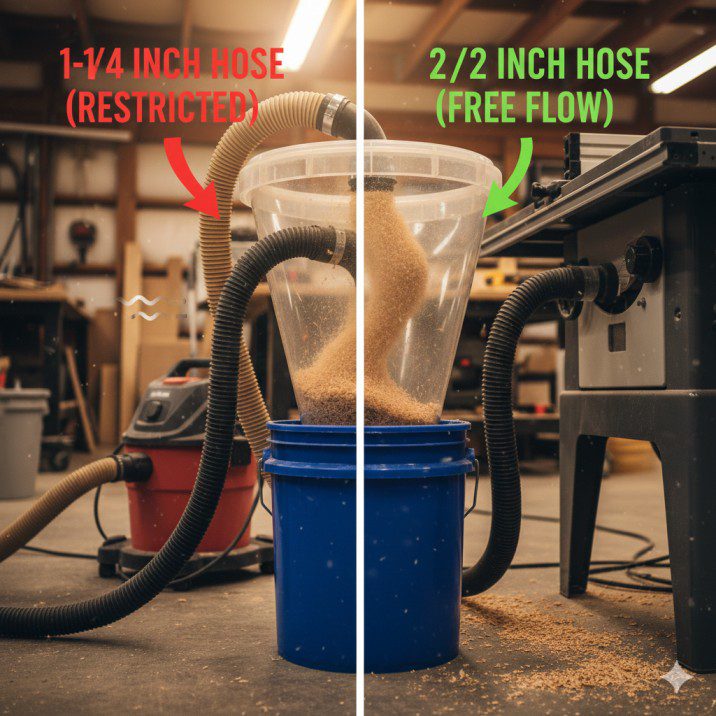
1-1/4 inch hoses – Standard on sanders and small routers. High velocity but low volume. Fine for small dust ports.
2-1/2 inch hoses – Standard on shop vacs. Better airflow volume. Required for table saws, planers, and large tools.
4 inch hoses – Professional dust collection systems. Overkill for shop vacs.
Using a 1-1/4 inch hose on a table saw creates a massive bottleneck—you lose 60%+ of your vac’s CFM. Always match hose diameter to your tool’s dust port size.
Anti-Static Hoses
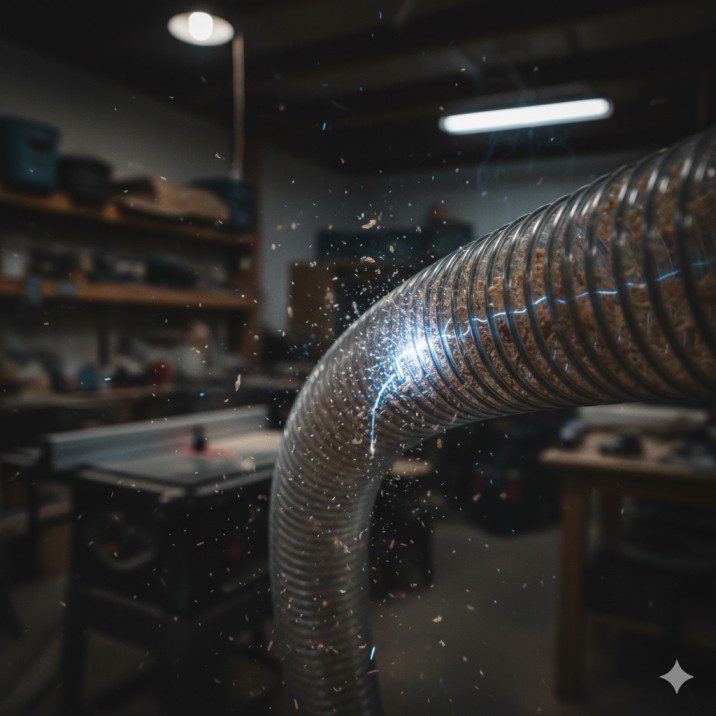
Regular plastic hoses build up static electricity from dust particles. This static:
- Makes dust stick to the hose interior, reducing airflow
- Creates annoying shocks when you touch the hose
- Can theoretically ignite fine dust (rare but possible)
Anti-static hoses cost $10-20 more but eliminate these issues. Worth it if you do serious dust collection.
Want to learn more about complete workshop dust collection? Check out our comprehensive table saw guide for dust port specifications, or visit our accessories section for hose adapters and collection upgrades.
The Honest Bottom Line: Which Shop Vac Should You Buy?
After ten years of woodworking with various dust collection setups, here’s my straight recommendation on the best shop vac for dust collection:
If you’re doing serious woodworking regularly: Buy the Craftsman CMXEVBE17595 16-gallon vac ($139-169) plus an Oneida Dust Deputy cyclone separator ($60-80). Total investment around $200-250 creates a dust collection system that rivals $600+ dedicated dust extractors. The 190 CFM moves serious air, and the cyclone keeps the filter clean.
If you value long-term durability over maximum CFM: The Ridgid 16-Gallon NXT ($149-189) plus cyclone separator delivers professional-grade reliability. These vacs last 10-15 years of hard use. Contractors swear by them for good reason.
If your budget is limited to $150 total: The Vacmaster Beast 16-gallon ($109-129) plus a budget cyclone separator ($30-40) gets you functional dust collection for under $150. Not as powerful as pricier options, but adequate for hobbyist woodworking.
If you primarily sand and need compact storage: The Vacmaster Beast 5-gallon ($59-79) is perfect. Add a small cyclone if you want, but even without one, it handles sanding dust well.
My personal setup
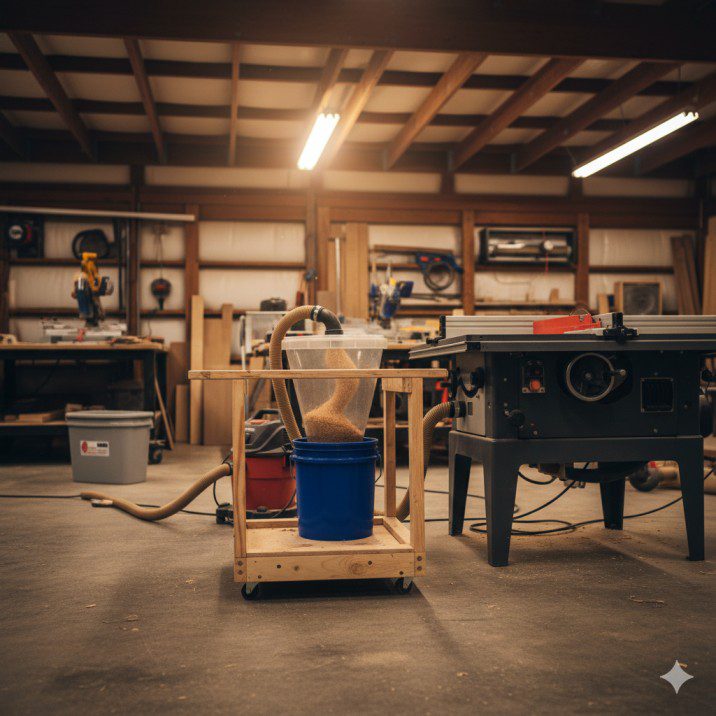
I run the Craftsman 16-gallon with an Oneida Dust Deputy on a rolling cart. The vac connects to my table saw, miter saw, router table, and sanders via quick-disconnect fittings. With the cyclone, I empty the collection bucket every 2-3 projects but clean the vac filter maybe once monthly. Total investment was about $225, and it’s handled everything I’ve thrown at it for three years.
Don’t make the mistake of thinking any cheap shop vac will work. The difference between a $60 basic vac and a proper $140 dust collection vac with a cyclone is literally the difference between breathing sawdust and actually keeping your lungs clean.
| Budget | Recommended Setup | Performance Level |
|---|---|---|
| Under $100 | Vacmaster 5-gal ($70) + basic cyclone ($30) | Good for sanders only |
| $150–200 | Vacmaster 16-gal ($120) + Dust Deputy ($70) | Adequate for all tools |
| $200–250 | Craftsman 16-gal ($160) + Dust Deputy ($70) | Excellent for serious work |
| $250–300 | Ridgid NXT ($180) + Dust Deputy ($70) + HEPA filter ($50) | Professional-grade |
Ready to upgrade your entire dust collection system? Visit our how-to tutorial section for complete dust collection setup guides, hose routing tips, and filter maintenance schedules.
Frequently Asked Questions
What is the best shop vac for woodworking dust collection?
The Craftsman CMXEVBE17595 16-gallon shop vac is the best for woodworking dust collection in 2026, delivering industry-leading 190 CFM airflow that effectively captures dust from table saws, miter saws, and sanders. When paired with a cyclone separator like the Oneida Dust Deputy, it creates a dust collection system rivaling dedicated $600+ dust extractors for under $250 total. The high CFM maintains strong suction even through 2-1/2 inch hoses and dust ports, while the 16-gallon capacity reduces emptying frequency during extended projects.
Do I need a cyclone separator for dust collection?
While not strictly required, a cyclone separator dramatically improves dust collection performance and is absolutely worth the $30-80 investment. Cyclones capture 95-99% of dust before it reaches your shop vac, keeping filters clean 10x longer, maintaining consistent suction as the collection bucket fills, and making debris disposal easier. Without a cyclone, filters clog every 2-3 hours requiring constant cleaning. With a cyclone, filters stay clean for weeks or months. For anyone doing regular woodworking, the cyclone separator is the single best dust collection upgrade—more impactful than buying a more expensive vac.
How much CFM do I need for table saw dust collection?
For effective table saw dust collection, you need minimum 130-150 CFM at the dust port, though 160-190 CFM is ideal for capturing most dust during ripping and crosscutting operations. Table saws with 4-inch dust ports produce high volumes of sawdust that lower-CFM vacs (under 120 CFM) struggle to capture, resulting in dust escaping into your shop. The Craftsman 16-gallon at 190 CFM or Ridgid NXT at 160 CFM both work well for table saws. Compact 5-gallon vacs with 100-120 CFM are inadequate for table saw dust collection but work fine for sanders.
Do I need HEPA filtration for woodworking?
HEPA filtration is required when cutting exotic hardwoods (teak, rosewood, cocobolo), working with MDF or particle board regularly, or sanding painted/treated lumber—materials producing particularly hazardous fine dust. For common softwoods and domestic hardwoods (pine, oak, maple, cherry), standard pleated filters with a cyclone separator provide adequate protection for most woodworkers. However, anyone with respiratory sensitivities or doing professional daily woodwork should consider HEPA filtration as additional health insurance. HEPA filters cost $40-80 but capture 99.97% of particles down to 0.3 microns versus 5-10 microns for standard filters.
Can a shop vac replace a dedicated dust collector?
A quality shop vac (160+ CFM) with a cyclone separator can effectively replace a dedicated dust collector for small to medium workshops with 1-2 tools running at once. Shop vacs excel at single-tool dust collection for table saws, miter saws, sanders, and routers. However, dedicated dust collectors (400-1200 CFM) are superior for: running multiple tools simultaneously, collecting from planers and jointers producing massive chip volumes, whole-shop ducted systems with multiple dust ports, and professional production environments. For hobbyist woodworkers doing one operation at a time, a $200 shop vac setup performs comparably to a $600 dust collector.
How often should I clean my shop vac filter?
Filter cleaning frequency depends on whether you use a cyclone separator. Without a cyclone, clean filters every 2-3 hours of heavy dust collection use—when you notice suction decreasing noticeably. With a cyclone separator, filters stay clean significantly longer—every 20-40 hours of use or monthly for regular woodworkers. Clean filters by removing them and tapping firmly against a trash can to dislodge dust, or using compressed air to blow from inside out. Replace filters when cleaning no longer restores suction, typically after 100-200 hours of use or annually for regular woodworkers. HEPA filters are more delicate and should be replaced rather than cleaned aggressively.
Affiliate Disclosure: This article contains affiliate links to products available on Amazon and other retailers. If you purchase through these links, we may earn a small commission at no additional cost to you. This helps support our website and allows us to continue providing honest, detailed dust collection guides based on real workshop experience and health-conscious testing.

Finlay Connolly is a woodworking enthusiast and power tool specialist with over a decade of hands-on experience in the workshop. As the founder and lead writer at ProTableSawReviews.com, Finlay combines expert knowledge with real-world testing to help woodworkers, DIYers, and professionals choose the best tools for the job. With a sharp eye for detail and a passion for precision, Finlay is committed to providing trustworthy, practical advice backed by years of experience and research in the field. Whether you’re cutting dados or comparing fence systems, you can count on Finlay for honest, reliable reviews that make your next cut your best one.