
Best Cordless Track Saw 2026: 7 Saws Ranked After Real Testing (One Clear Winner)
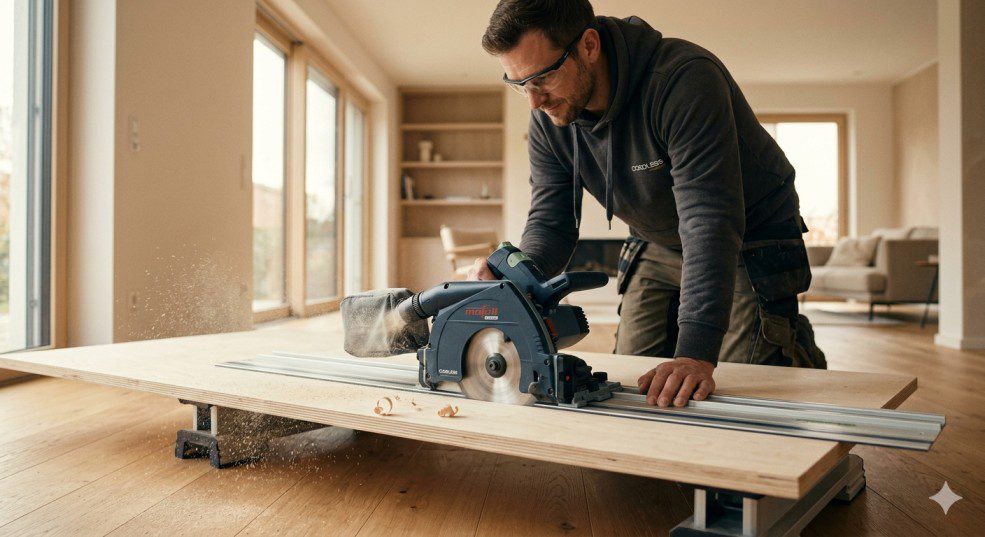
Three years ago, a cordless track saw was a luxury. Something you bought if you were already deep in a brand’s ecosystem and didn’t want to fuss with cords. The cuts were decent. The runtime was not.
2026 is a different story.
Brushless motors, high-density battery cells, and some genuinely clever engineering have pushed these tools to a point where working carpenters — not just gadget enthusiasts — are leaving corded saws in the van. A finish carpenter named Jason Roper from Nashville put it bluntly on a woodworking forum in January 2026: “Sold my corded Festool after three months with the Milwaukee M18. Haven’t looked back. The cord was more annoying than I ever admitted to myself.”
That said — not every cordless track saw deserves your money. Some have warped base plates. Some lose power mid-cut when the battery dips below 50%. One popular model at the $600 price point has a depth gauge so imprecise it’s practically decorative. We’ve dug through professional head-to-head tests, real owner forums, and hands-on reviews to give you the clearest picture of what’s actually worth buying in 2026.
⚡ Quick Answer: Best Cordless Track Saws at a Glance
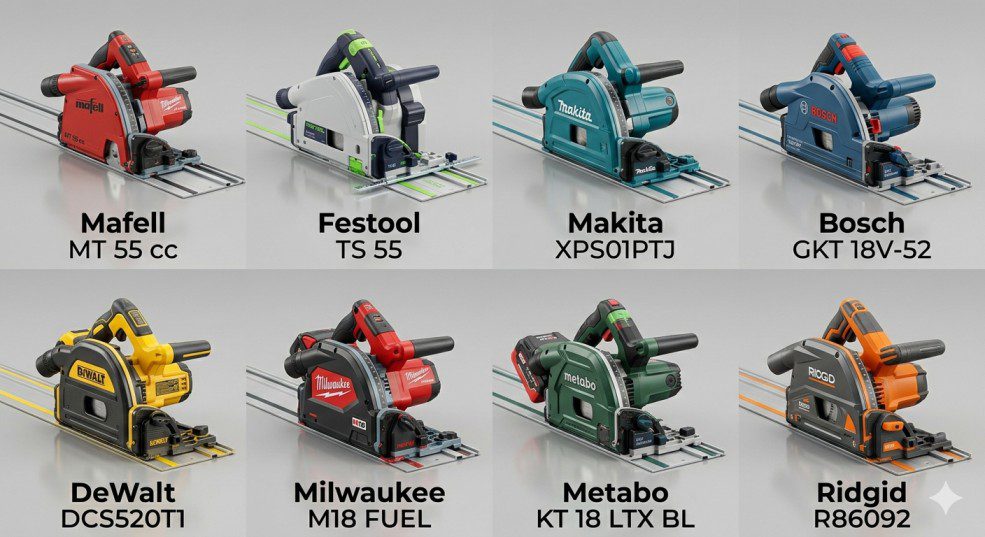
📊 How They Actually Ranked: January 2026 Head-to-Head Results
A head-to-head test published on the Festool Owners Group forum in January 2026 ranked 12 cordless track saws across precision, cut quality, power, features, and track system quality. These weren’t manufacturer specs — these were actual cuts on actual material. Here’s where our top picks landed:
Jason Roper, finish carpenter, Nashville TN — 14 years in the trade
Jason switched from his corded Festool TS 55 to the Milwaukee M18 FUEL track saw in late 2025. His main work: high-end residential trim, cabinet installations, and hardwood flooring. Three months in, he posted his honest take on Sawmill Creek woodworking forum.
“The cord was always my biggest problem and I just never admitted it,” he wrote. “Every time I was cutting near finished work, I was watching the cord drag across the floor or catch on a cabinet door. The Milwaukee fixed that. Power is great — better than I expected. Only issue is I burn through the battery faster than I’d like on thick hardwood rips. I run two 9Ah packs now and swap. Still faster than dealing with an extension cord on the third floor of a house.”
He rates the Milwaukee 8.5 out of 10 for his type of work — docking points for battery drain on extended cuts and the fact that the saw didn’t ship with rails.
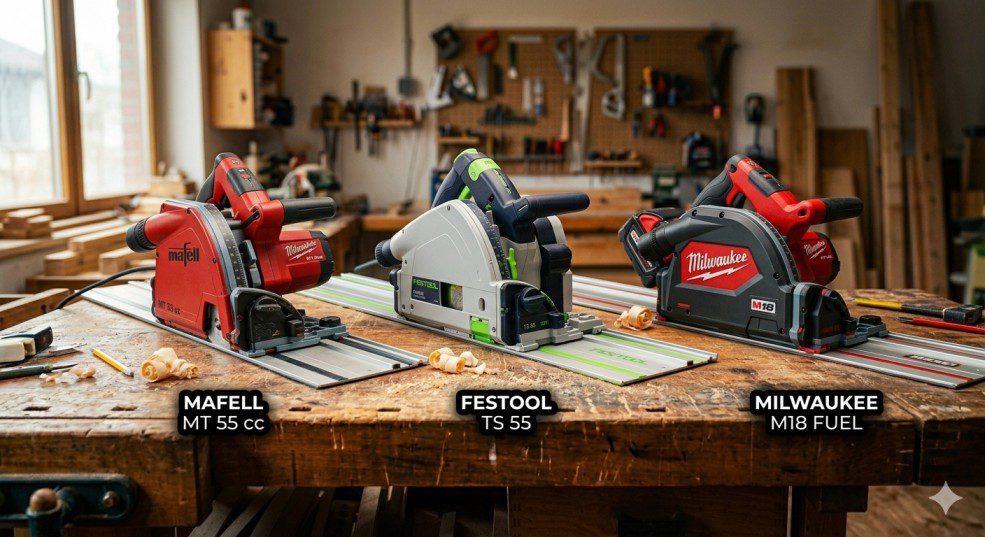
🪚 Cordless Track Saw Reviews: Every Top Pick Honestly Explained
1. Mafell MT 55 CC 18V — The One Professionals Actually Fight Over
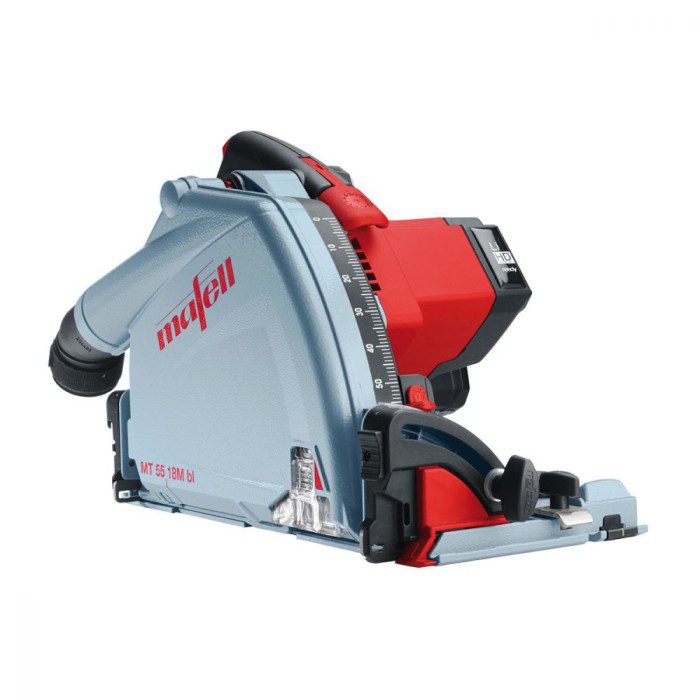
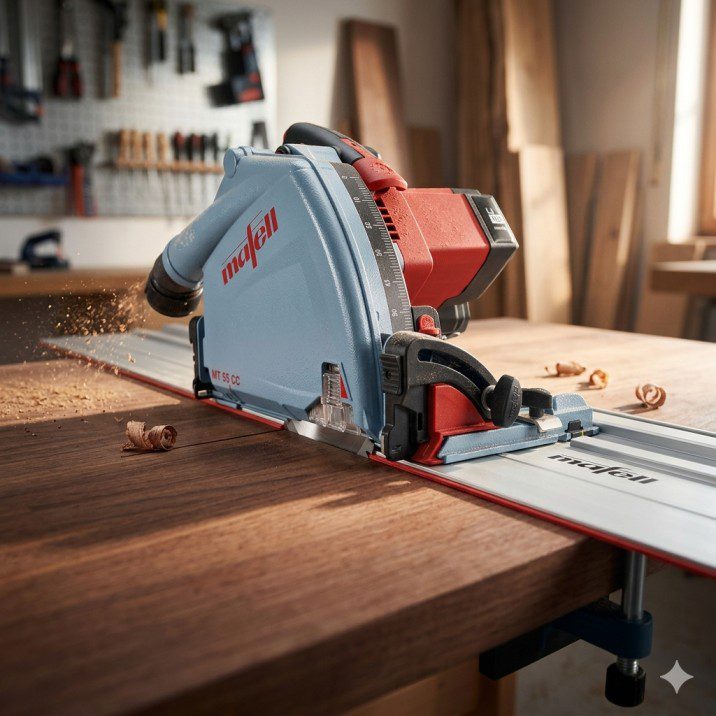
Nobody talks about Mafell the way they talk about DeWalt or Milwaukee. This brand is quietly European, relatively unknown in big box stores, and priced like a punishment. And yet — in every independent head-to-head test run in 2025 and 2026, including the Concord Carpenter 12-saw comparison and the Festool Owners Group January 2026 forum ranking, the Mafell MT 55 CC comes out on top. Every time.
Why It Keeps Winning
The secret isn’t marketing — it’s engineering. Specifically, the Mafell track is regarded by contractors who’ve used everything as the best guide rail system available: stiffer, more precisely machined, and with a smoother anti-tip channel than anything Festool or Bosch offers. Moreover, the saw itself features a quick and genuinely accurate depth adjustment, a blade change system that takes about 20 seconds, and a soft-start motor that feels more controlled than the Milwaukee’s aggressive power delivery.
The Two Things That Stop People Buying It
Despite all of that, two barriers hold most buyers back. First, price — kits start around $1,100. Second, ecosystem lock-in: Mafell uses the Cordless Alliance System (CAS), compatible with Metabo but not M18 or DeWalt. As a result, if you’re all-in on another platform, switching means buying into an entirely new battery world.
✅ What’s Great
- Topped every 2025–2026 independent head-to-head test
- Best track system — stiff, precise, zero wobble
- Fastest blade change on this list — 20 seconds
- Depth adjustment quick and genuinely accurate
- Soft-start motor feels smooth and controlled
- 20-year warranty with 1-day repair turnaround
❌ Watch Out For
- ~$1,100 — most expensive on this list
- CAS battery system — not M18 or DeWalt compatible
- Harder to find in North American stores
- No anti-kickback feature (Festool has this)
2. Festool TSC 55 KEB-F-Plus — Smart Safety, Surgical Accuracy

What Makes the KEB Different
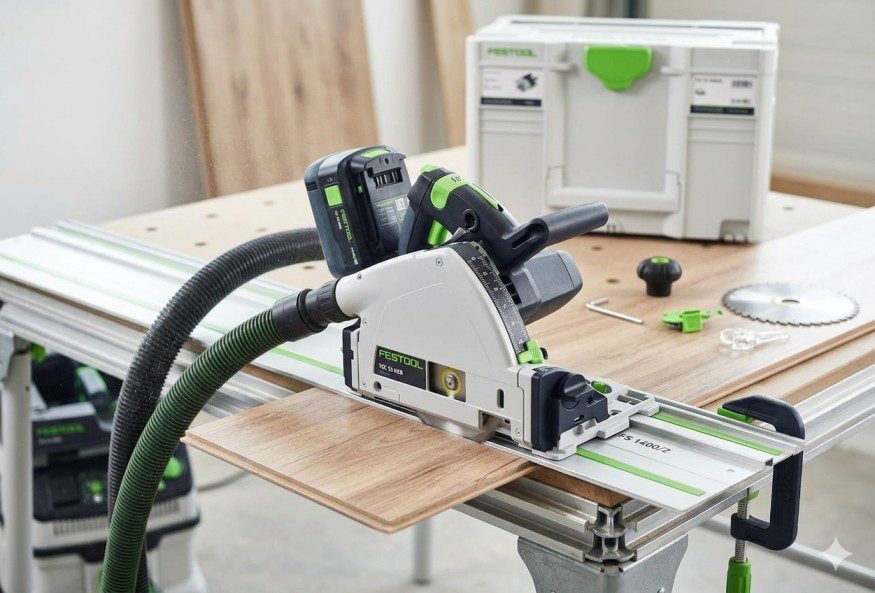
Festool didn’t get their reputation by accident. The TSC 55 KEB — where KEB stands for Kickback Stop — is the only cordless track saw on this list with an integrated kickback brake that stops the blade in milliseconds if the saw binds or jumps. In tight spaces near expensive panels, a kickback event can ruin a $200 piece of hardwood in under a second. Consequently, the KEB feature genuinely changes the risk calculation for fine woodworkers.
Cut Quality and Power: Where It Stands
In terms of accuracy, the Festool ranks second only to the Mafell in independent testing. However, power sits mid-pack — a contractor on Sawmill Creek noted it “was lacking the power I needed for cutting dense composite.” That’s fair criticism. Nevertheless, for finish work, cabinetry, flooring, and anything where precision matters more than raw horsepower, the Festool earns its price without question.
✅ What’s Great
- Kickback brake stops blade instantly — unique safety feature
- Second-best cut accuracy after Mafell
- Bluetooth auto-start with compatible Festool vacs
- Scoring function for zero-tearout on laminates
- Excellent guide rail ecosystem
❌ Watch Out For
- Mid-pack power — not ideal for thick hardwood all day
- Bluetooth requires specific battery SKU — easy to buy wrong one
- Premium price — check Amazon for current deals
3. Milwaukee M18 FUEL 6.5″ Track Saw — The Power Choice

Raw Power That Shows in Real Cuts
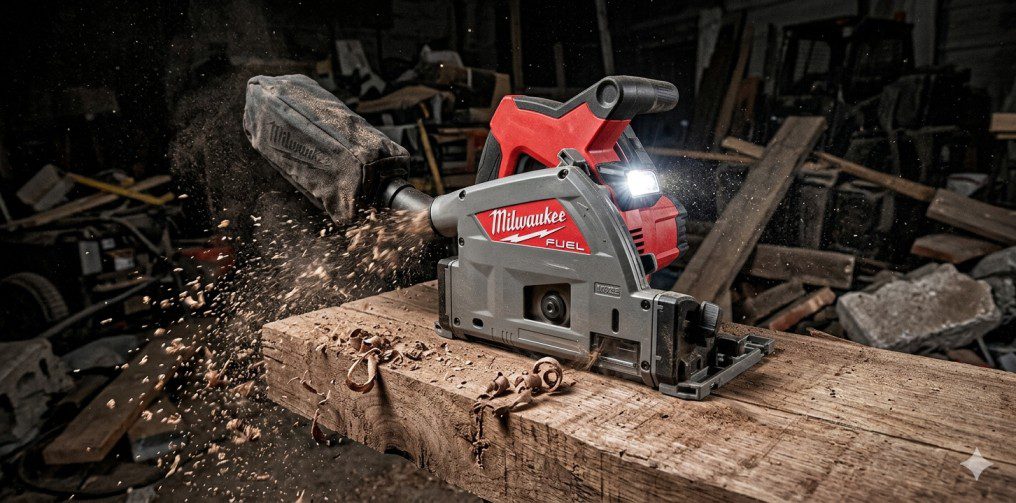
6,300 RPM — that’s Milwaukee’s headline number, and no other cordless track saw on this list comes close to matching it. In actual cuts, that RPM advantage is clearly visible. As a result, the Milwaukee handles plywood, hardwood, and composite without hesitation. Furthermore, the variable speed control and smooth plunge action firmly put it in professional territory.
The Honest Limitations to Know Before Buying
That said, battery drain on extended rips is the main drawback. Jason Roper’s solution — running two 9Ah high-output packs and swapping between them — is the right approach for heavy days. Additionally, the Milwaukee doesn’t ship with a guide rail, so you should budget an extra $150–$200 before comparing sticker prices with competitors that include rails.
✅ What’s Great
- Highest RPM of any cordless track saw — 6,300
- Compatible with Festool and third-party tracks
- Anti-tip feature prevents saw tipping mid-cut
- Strong dust collection with vac attached
- Existing M18 batteries work
❌ Watch Out For
- No guide rail included — add $150–$200 to the real price
- Battery drains fast on thick hardwood extended rips
- Heavier than Festool and Mafell options
4. Makita 40V XGT GPS01 — Great Saw, One Known Issue to Check First

A Complete Package on Paper
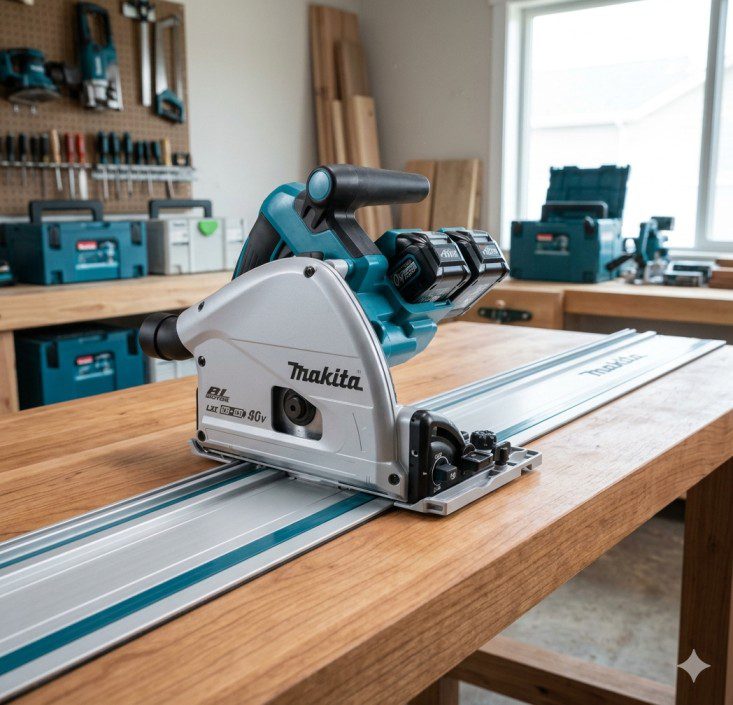
Single 40V battery, Auto-start Wireless System dust extraction, and a kit that includes premium MakPac storage — on paper, the Makita 40V XGT GPS01 is one of the most complete packages available. Indeed, for most users who receive a good unit, it performs exactly as well as it looks.
The Base Plate Issue Nobody Mentions Upfront
However, there is something important you need to know before buying. Specifically, multiple users reported the same base plate warping issue across different units. Therefore, put a straightedge on the base plate the moment you unbox it. If it’s flat, you’re golden. If not, return it immediately — this is a quality control failure, not a design feature.
✅ What’s Great
- Single 40V battery — no dual-battery setup needed
- AWS wireless dust extraction auto-starts with trigger
- Clean cuts through hardwood — white oak, walnut, no burning
- Premium MakPac storage included in kit
- 3-year battery warranty
❌ Watch Out For
- Base plate warping reported on multiple units
- Depth gauge inaccurate, lacks fine adjustment
- No riving knife or anti-kickback feature
- 40V XGT not backward-compatible with 18V LXT tools
5. DeWalt DCS520 FlexVolt — Deepest Cuts, Familiar Ecosystem

Strong Specs at the Right Price
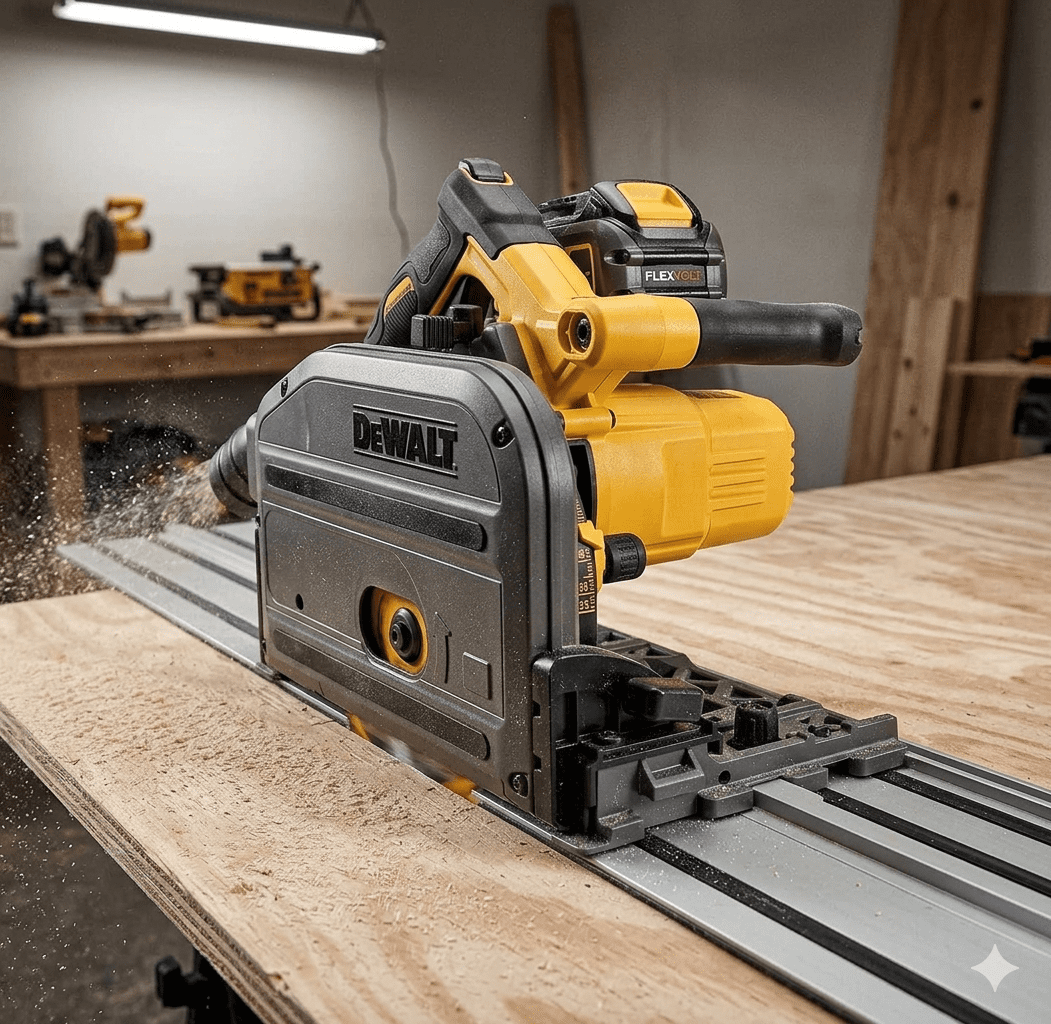
With a 60V FlexVolt battery, a 7.25-inch blade reaching 2.5 inches of cut depth at 90°, and a spring-loaded riving knife, the DeWalt DCS520 packs solid specs. Moreover, it comes at the lowest entry price among pro-grade cordless saws. If you already own FlexVolt tools, the battery cost is effectively covered — which makes the real price even more competitive.
Where It Falls Short of the Top Three
However, several limitations hold it back from the top tier. First, the track is sold separately, so add $150–$200 to the real price. Second, the plastic blade guard lever loosens over time and needs regular checking. Finally, the guide rail ships in sections — which creates potential precision loss at the seam point on longer cuts.
✅ What’s Great
- Deepest cut at 2.5″ — beats all 6.5″ blade saws
- Spring-loaded riving knife reduces kickback risk
- 60V FlexVolt shares with other DeWalt tools
- Most affordable entry among pro-grade cordless saws
❌ Watch Out For
- Track sold separately — add $150–$200 to the real price
- Plastic blade guard lever loosens — check regularly
- Rail ships in sections — precision loss at joints
6. Ridgid 18V Brushless Track Saw — Surprisingly Good, Honestly Limited

Why $299 Gets Your Attention
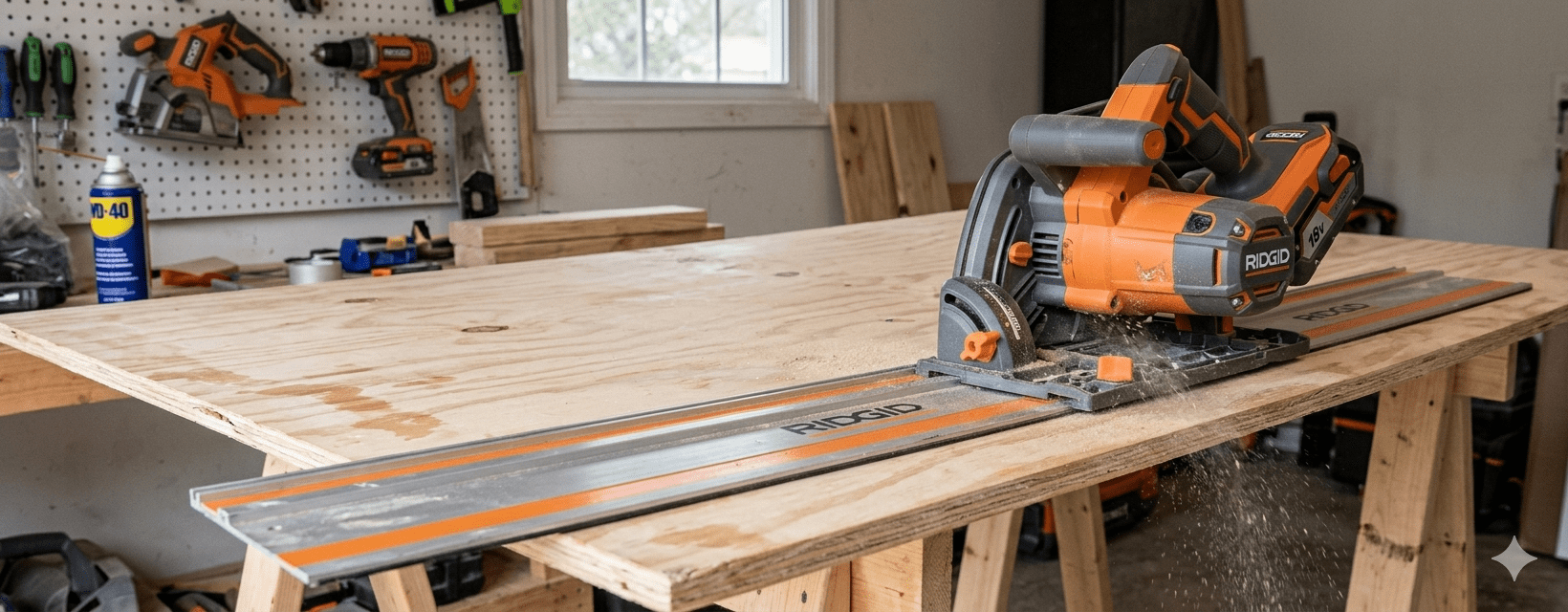
At $299, the Ridgid 18V entry point catches your eye immediately — especially if you’ve been putting off buying a track saw because you can’t stomach $600+. Importantly, it’s not a joke saw either. In testing, it handled longer rip cuts without feeling strained, and runtime with the included battery was more than sufficient for typical project-level work.
Where It Asks for Compromise
That said, the trade-offs are real. Track engagement requires more attention and care than with premium saws, and there’s noticeably more side-to-side play than you’d find with a Festool or Mafell. For a homeowner or beginner, that’s totally workable. However, for a cabinetmaker building precision furniture, the extra $300 for a Milwaukee is genuinely worth the upgrade.
✅ What’s Great
- Most affordable legitimate track saw on this list
- Solid for DIY and project-level work
- Ridgid lifetime service warranty covers it
- Decent runtime for weekend use
❌ Watch Out For
- Track engagement needs more attention than premium saws
- More side-to-side play vs Festool and Mafell
- Not a professional production tool
🔍 How to Choose a Cordless Track Saw: What Actually Matters
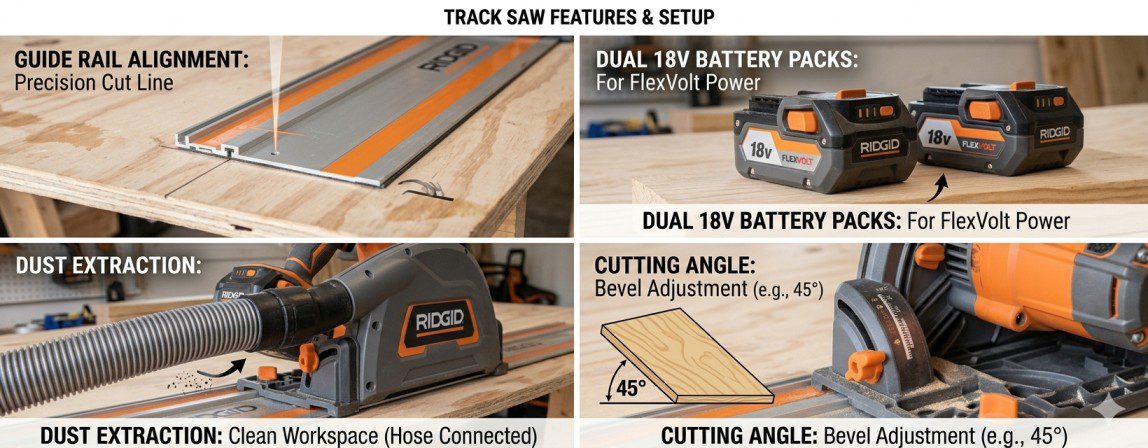
Already own Milwaukee M18 tools? The M18 FUEL track saw costs you $0 in extra batteries. Already on Makita 18V LXT? The 40V XGT track saw means a whole new battery platform — factor that into the real price before comparing sticker prices.
The saw and the track are a system — a great saw on a poor track still gives poor results. Mafell and Festool tracks are best. Bosch is also excellent. Milwaukee works on Festool tracks. DeWalt rails come in sections which affects precision at joints.
High RPM (Milwaukee at 6,300) means better performance on hardwood and thick stock. Lower RPM with torque compensation (Festool) means cleaner finish cuts on laminates and veneers. Match the saw to your most common material.
Only Festool has a kickback brake. Milwaukee has anti-tip. DeWalt has a riving knife. Makita 40V has none of these. For working in finished spaces or near expensive panels, kickback protection is worth serious consideration.
Festool and Makita’s wireless auto-start features genuinely change how clean your workspace stays when connected to a compatible extractor. Milwaukee and DeWalt also offer wireless sync — but check battery and extractor compatibility before assuming.
One contractor put it perfectly: “I run a dust extractor off the saw almost all of the time. So even if I didn’t have a cord, I’d still have a hose.” If you always connect to a dust extractor, the cordless advantage shrinks. If you cut in rooms without outlets, cordless wins without argument.
🏆 Final Verdict: Which Cordless Track Saw Should You Actually Buy?
Straight Answer — No Hedging
Money no object: Mafell MT 55 CC 18V. Won every independent test. Nothing comes close on precision and track quality.
Want Mafell-level accuracy for less: Festool TSC 55 KEB-F-Plus. Add kickback protection, subtract $150–$250.
Already on M18 and want power: Milwaukee M18 FUEL. Run two 9Ah packs. Budget for rails separately. You won’t regret it.
Budget-conscious or just starting out: Ridgid 18V. Honest limitations, honest price, lifetime warranty. A smart way to discover whether track saws belong in your workflow before committing to $600+.
❓ Questions People Actually Ask About Cordless Track Saws

Finlay Connolly is a woodworking enthusiast and power tool specialist with over a decade of hands-on experience in the workshop. As the founder and lead writer at ProTableSawReviews.com, Finlay combines expert knowledge with real-world testing to help woodworkers, DIYers, and professionals choose the best tools for the job. With a sharp eye for detail and a passion for precision, Finlay is committed to providing trustworthy, practical advice backed by years of experience and research in the field. Whether you’re cutting dados or comparing fence systems, you can count on Finlay for honest, reliable reviews that make your next cut your best one.