
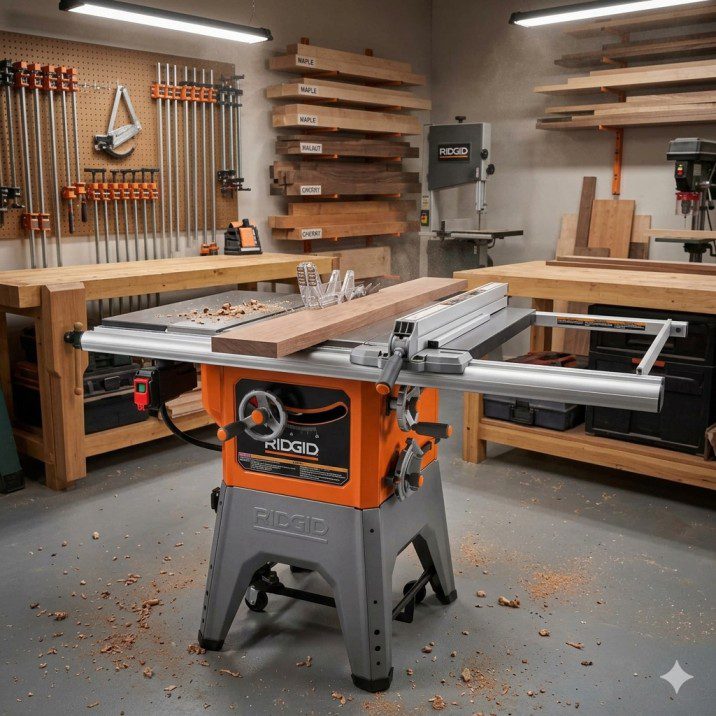
Four years ago, I bought the Ridgid R4520 10-inch table saw for $699 at Home Depot, lured by the cast iron top, lifetime warranty, and foot-pedal mobile base. For the first six months, I was thrilled. The fence started drifting after a while. Blade alignment issues showed up soon after. That’s when I discovered the so-called “lifetime warranty” is nearly impossible to actually claim. That frustrating reality check taught me something crucial about this Ridgid table saw: it’s a decent hybrid saw that delivers solid value IF you understand its limitations and are willing to tune it regularly—but it’s absolutely NOT the set-it-and-forget-it workhorse the marketing suggests.
If you’re considering the Ridgid R4520 (or its predecessor R4512), you’ve probably seen reviews praising the cast iron top and reasonable price while glossing over the alignment headaches and fence drift that plague many units.
I’ve owned my Ridgid R4520 for four years across furniture building, cabinet making, and general woodworking. I’ve dealt with every common issue these saws have, learned the workarounds, and understand exactly who this saw works for (and who should avoid it). This review tells the whole truth—the good, the bad, and the alignment nightmares.
Ridgid R4520 vs R4512: What Changed (And What Didn’t)
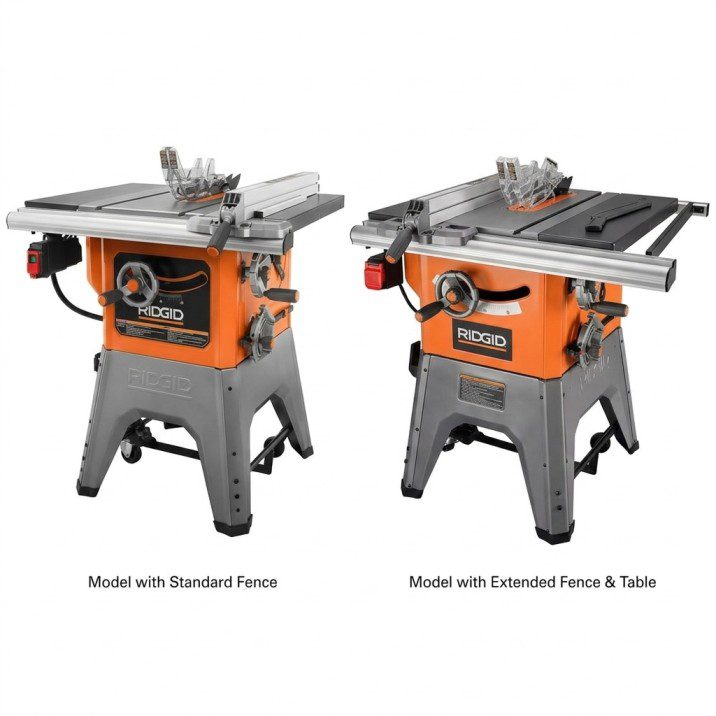
Before diving into performance, let’s clear up the model confusion. The R4520 replaced the R4512 around 2018-2019.
Key Differences Between Models
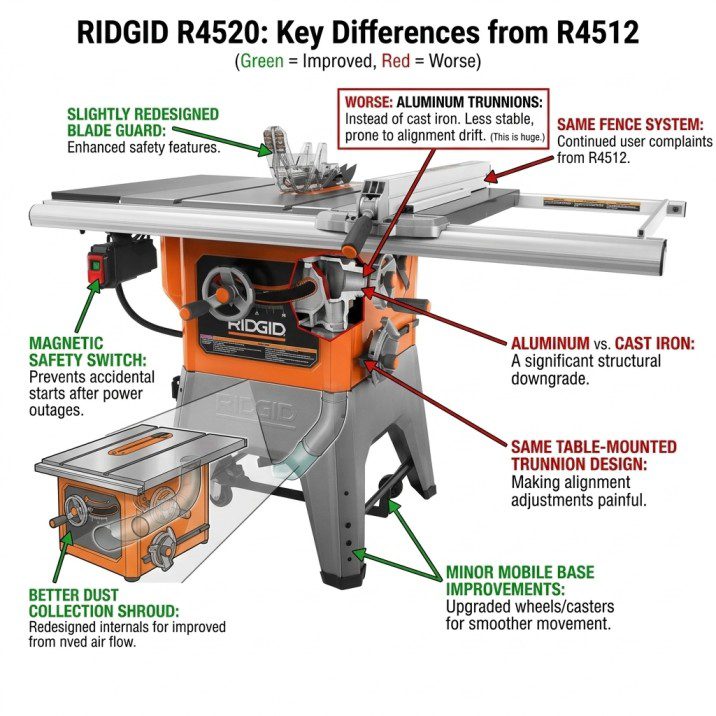
What improved in the R4520:
- Magnetic safety switch (prevents accidental starts after power outages)
- Slightly redesigned blade guard
- Better dust collection shroud design
- Minor mobile base improvements
What got WORSE in the R4520:
- Aluminum trunnions instead of cast iron – This is huge. The R4512’s cast iron trunnions were more stable. The R4520’s aluminum trunnions contribute to alignment drift.
- Same fence system that users complained about on the R4512
- Same table-mounted trunnion design that makes alignment adjustments painful
Contrary to Home Depot’s product description claiming “cast iron trunnions,” multiple owners (including me) confirm the R4520 uses aluminum. This cost-cutting measure affects long-term stability.
| Feature | R4512 | R4520 | Winner |
|---|---|---|---|
| Trunnions | Cast Iron | Aluminum | R4512 |
| Safety Switch | Standard | Magnetic | R4520 |
| Dust Collection | Adequate | Slightly Better | R4520 |
| Alignment Stability | Moderate Issues | Similar / Slightly Worse | Tie (Both Problematic) |
The Alignment Problem: Let’s Talk About the Elephant in the Shop
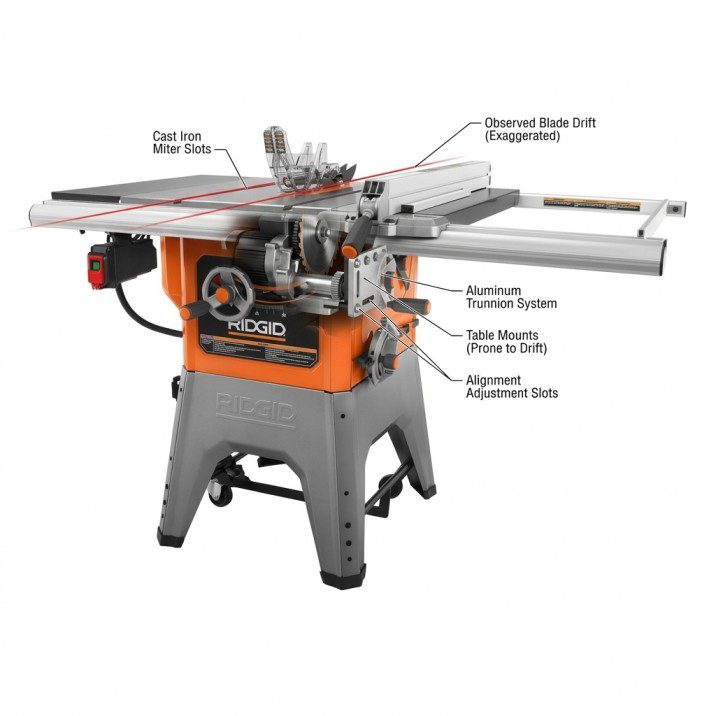
This is the issue that dominates Ridgid table saw forums, and it’s real. The blade-to-miter-slot alignment drifts out of spec over time on many units.
Why Alignment Issues Happen
The Ridgid uses table-mounted trunnions (the mechanism that holds and adjusts the blade assembly). This design means:
- Vibration during cutting gradually shifts trunnion position
- Temperature changes cause expansion/contraction affecting alignment
- The aluminum trunnions in the R4520 flex slightly under load
- No easy way to micro-adjust alignment without loosening multiple bolts
My experience: I check blade alignment every 2-3 months. It drifts from perfect parallel to 1/32-1/16 inch out over that period. For rough carpentry, this doesn’t matter. For precision furniture work, it absolutely does.
The Alignment Fix (DIY-able but Tedious)
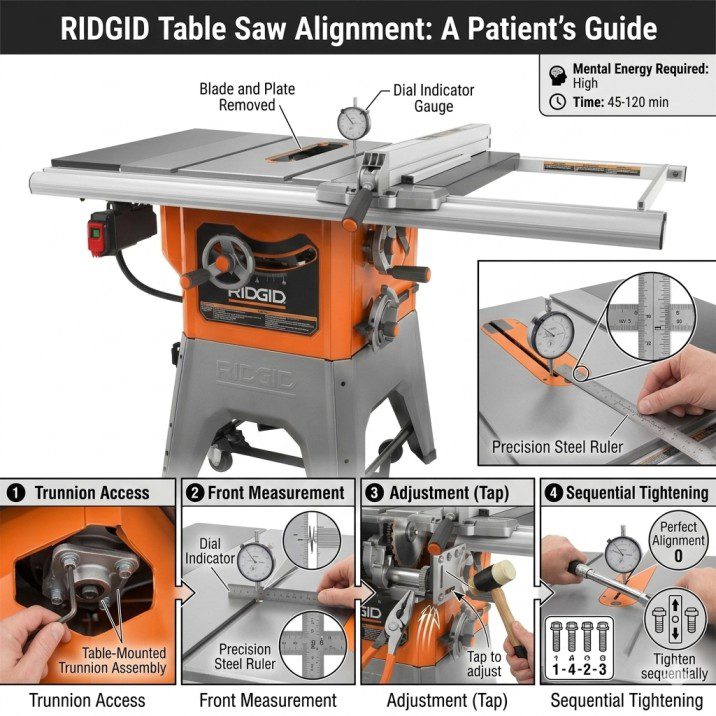
Realigning the Ridgid takes 1-2 hours the first time, about 30-45 minutes once you’ve done it a few times:
- Remove the throat plate and blade
- Loosen the four bolts holding the trunnion assembly to the underside of the table
- Use a dial indicator or careful measurement to check blade-to-miter-slot distance at front and rear of blade
- Tap the trunnion assembly gently to adjust alignment
- Tighten bolts in sequence while constantly rechecking alignment
- Repeat steps 4-5 multiple times until alignment holds after full tightening
YouTube has dozens of videos on this process. It’s doable for patient DIYers but annoying for those who expected a turn-key saw.
Reality Check: If you’re buying the Ridgid expecting it to stay aligned for years without adjustment, you will be disappointed. Budget mental energy for periodic tuning or accept slightly imperfect cuts.
The Fence: Good Concept, Inconsistent Execution
Fence System Overview
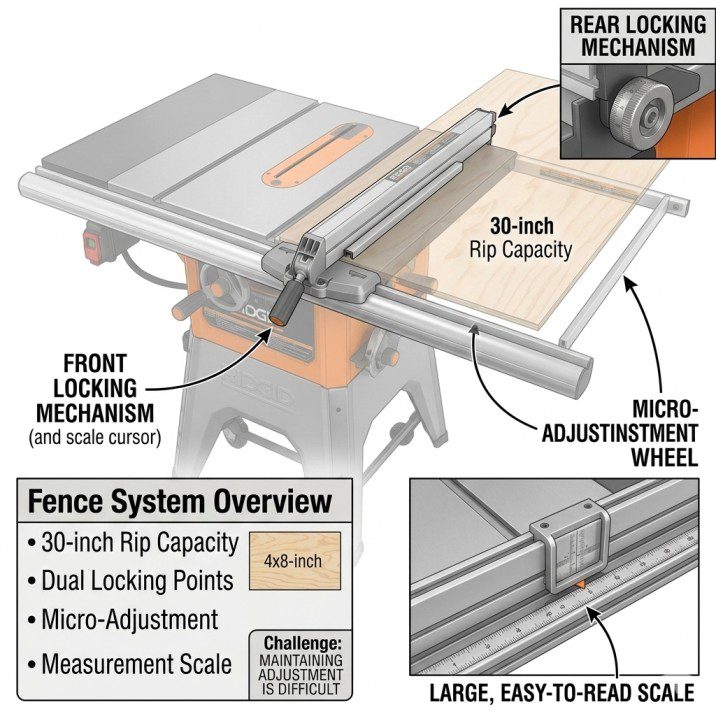
The Ridgid uses a T-square style fence with front and rear locking mechanisms. When properly adjusted, it works well. The problem is “properly adjusted” is a moving target.
What works about the fence:
- 30-inch rip capacity handles full-width plywood sheets
- Dual locking points (front and rear) should maintain parallel alignment
- Micro-adjustment wheel at the rear for fine-tuning
- Large, easy-to-read measurement scale
What doesn’t work consistently:
- Fence drift—it goes out of square over time requiring re-adjustment
- Even when “locked,” the fence can shift slightly if you bump it while loading material
- The rear micro-adjuster becomes the primary adjustment instead of a fine-tune (shouldn’t be necessary this often)
- Measurement scale accuracy varies—verify with tape measure for precision work
My workflow: I check fence squareness before every session using a combination square. For critical cuts, I measure from blade to fence at front and rear, adjusting the rear lock until parallel within 1/64 inch.
This isn’t terrible—plenty of woodworkers do this on budget saws—but it’s not the hands-off experience Ridgid’s marketing implies.
Cutting Performance: Where the Saw Actually Shines
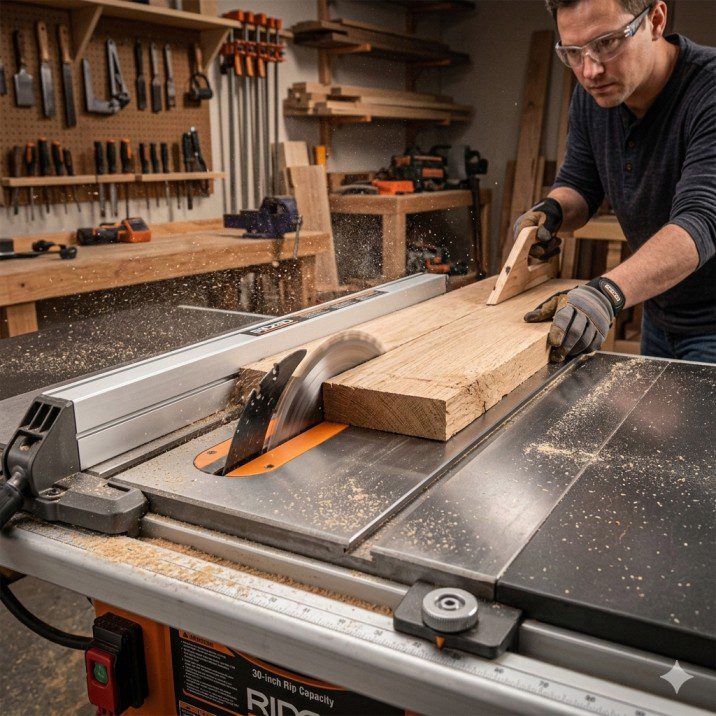
Despite alignment and fence frustrations, the Ridgid cuts well when properly set up.
Motor and Power
The 13-amp TEFC (totally enclosed fan-cooled) induction motor delivers adequate power for:
- Ripping 8/4 hardwood (2-inch thick oak, maple, walnut) without bogging down
- Cross-cutting dense materials
- Dado stacks up to 3/4 inch wide (requires separate throat plate)
- Extended cutting sessions without overheating
I’ve ripped hundreds of board-feet of hardwood on this saw. The motor has never stalled or shown signs of weakness.
Cut Quality
With a quality blade (replaced the stock blade immediately with a Freud 40-tooth combo), the Ridgid produces:
- Clean rip cuts in hardwood requiring minimal sanding
- Smooth crosscuts in plywood with acceptable tearout
- Accurate dados when alignment is dialed in
The cast iron table surface is genuinely nice. It stays flat (verified with straightedge), accepts paste wax well for smooth material glide, and provides excellent support for sheet goods.
| Cutting Task | Performance Rating | Notes |
|---|---|---|
| Ripping Hardwood | Excellent | Motor never struggles |
| Crosscutting | Good | Adequate with quality blade |
| Dado Cuts | Good | Requires alignment verification first |
| Plywood Breakdown | Very Good | 30″ capacity handles full sheets |
| Precision Joinery | Moderate | Alignment drift is limiting factor |
The Mobile Base: Actually One of the Best Features
The integrated foot-pedal mobile base is brilliant and often underappreciated in reviews.
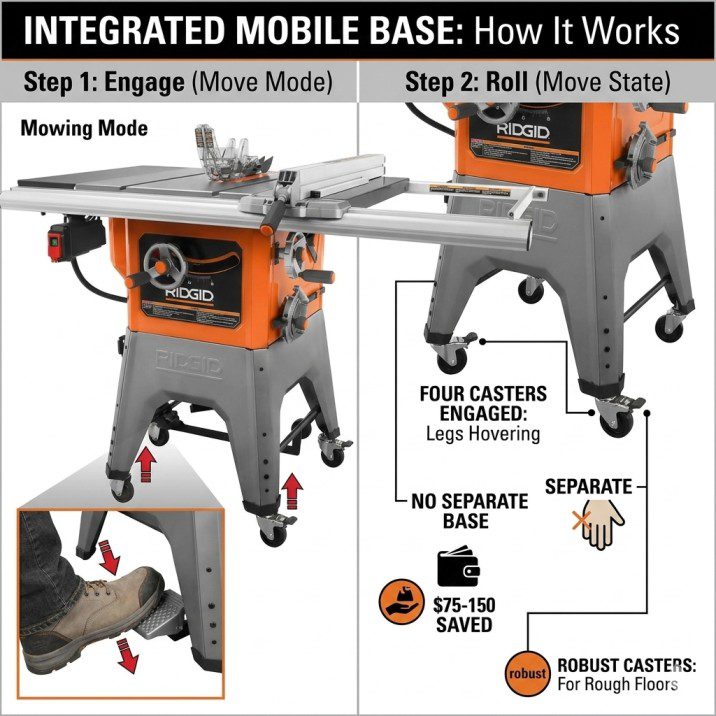
How It Works
Step on a pedal, and four casters drop down, lifting the saw’s weight off four stationary feet. Roll the saw wherever needed. Release the pedal, and it settles back onto the feet for stable cutting.
Why this matters:
- No separate mobile base to buy ($75-150 saved)
- Switching between mobile and stationary takes 2 seconds
- I rearrange my shop layout monthly—this feature alone justifies some of the saw’s quirks
- Casters are robust enough for rough shop floors
After four years, the mobile base still functions perfectly. No worn components, smooth operation, reliable locking.
This is genuinely a $100+ value-add that comes standard. For small-shop woodworkers who need flexibility, it’s a game-changer.
Comparing the Ridgid to other hybrid saws? Check out our detailed comparison section for side-by-side testing, or browse our buying guide for selection criteria.
The “Lifetime Warranty”: Reality vs Marketing
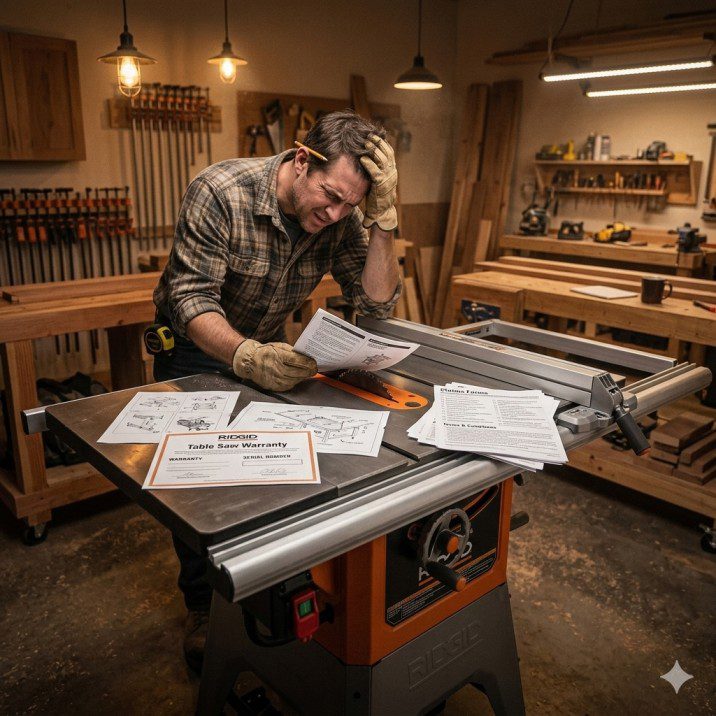
Ridgid’s Lifetime Service Agreement (LSA) sounds amazing. In practice, it’s frustrating to actually use.
What the Warranty Covers
Theoretically: free parts and service for life on manufacturing defects.
The Reality of Claiming Warranty Service
Getting warranty coverage requires:
- Registering the saw within 90 days of purchase (many people miss this window)
- Calling Ridgid customer service (often long hold times)
- Convincing them the issue is a defect, not normal wear or user error
- Either shipping the saw to an authorized service center (expensive and time-consuming) OR finding a local center willing to work on it (increasingly rare)
My warranty experience: When my fence started drifting after 18 months, I called about warranty service. After 45 minutes on hold and explaining the issue, they determined fence drift was “normal adjustment” not covered by warranty. Useless.
Forum users report similar experiences. The lifetime warranty looks great on paper but rarely delivers value for common issues.
Pro Tip: Don’t buy the Ridgid because of the lifetime warranty. Buy it if the saw’s features and price fit your needs, treating the warranty as a potential bonus rather than a deciding factor.
Who This Saw Actually Works For (And Who Should Avoid It)
Buy the Ridgid R4520 If:
RIDGID R4520 10-Inch Table Saw
Powerful 13-Amp motor, heavy-duty cast iron table, and a smooth rack-and-pinion fence system. The RIDGID R4520 is designed for precise woodworking, smooth ripping, and long-term durability in serious workshops.
- ✔ 13 Amp powerful motor
- ✔ Heavy-duty cast iron work surface
- ✔ 30 inch rip capacity
- ✔ Professional precision fence system
- ✔ Ideal for woodworking and furniture projects
- ✓ You’re a hobbyist doing weekend furniture projects (50-150 hours annually)
- ✓ You’re comfortable doing periodic maintenance and alignment adjustments
- ✓ You need the integrated mobile base for shop flexibility
- ✓ Your budget is $650-750 and you want a hybrid saw with cast iron top
- ✓ You value 30-inch rip capacity for plywood work
- ✓ You’re patient and don’t mind tuning tools to get optimal performance
Avoid the Ridgid R4520 If:
- ✗ You’re a professional using the saw daily (alignment drift becomes maddening)
- ✗ You expect set-it-and-forget-it reliability
- ✗ You do precision joinery where 1/32 inch matters and can’t tolerate drift
- ✗ You don’t want to learn alignment procedures
- ✗ You’re buying primarily because of the “lifetime warranty”
- ✗ You can stretch budget to $900-1200 for a better hybrid (Grizzly, Harvey, etc.)
Long-Term Cost Analysis: Value Over 5+ Years
At $699-749 (current pricing), how does the Ridgid stack up over time?
Initial Investment
- Saw: $699-749
- Quality blade upgrade (essential): $40-60
- Zero-clearance throat plates (if you can find them): $20-40
- Total: $760-850
Ongoing Costs
- Blade replacements every 1-2 years: $40-60 annually
- Alignment time (DIY): 2-4 hours annually at $0 cash cost
- Fence adjustments: Minimal cost, ongoing time investment
Value Compared to Alternatives
Grizzly G0833P ($900-950): Better build quality, cabinet-mounted trunnions (easier alignment), superior fence. The $150-200 premium buys significantly less maintenance headaches.
Used cabinet saws ($600-1000): Older Unisaws, Powermatics, or Deltas often appear used in similar price range with vastly superior long-term stability.
DeWalt DWE7491RS jobsite saw ($500-550): Costs less, more portable, but lacks cast iron top and hybrid saw features.
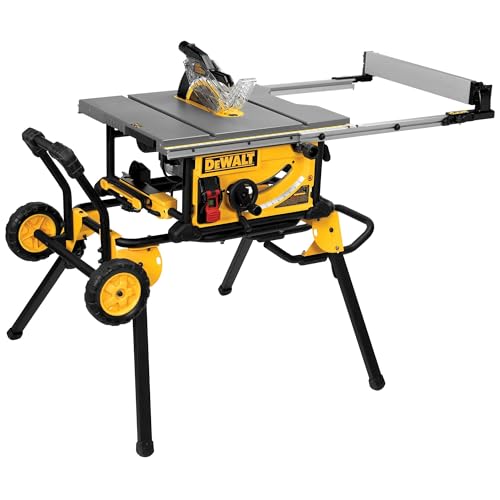
DEWALT 10-Inch Table Saw with Rolling Stand, 32-1/2-Inch Rip Capacity (DWE7491RS)
- Rack & Pinion Telescoping Fence System Make fence adjustments fast, smooth and accurate
- Patented material support, can be used for narrow rip cuts.
- 32-1/2″ rip capacity easily cuts a variety of larger shelving and trim materials
List Price :
Offer: 599.00 $
Go to AmazonCost per year (projected 8-year lifespan):
- Ridgid: $760 ÷ 8 = $95/year + maintenance time
- Grizzly: $950 ÷ 10 = $95/year + minimal maintenance
The Grizzly provides similar annual cost with way less frustration.
The Honest Verdict After 4 Years
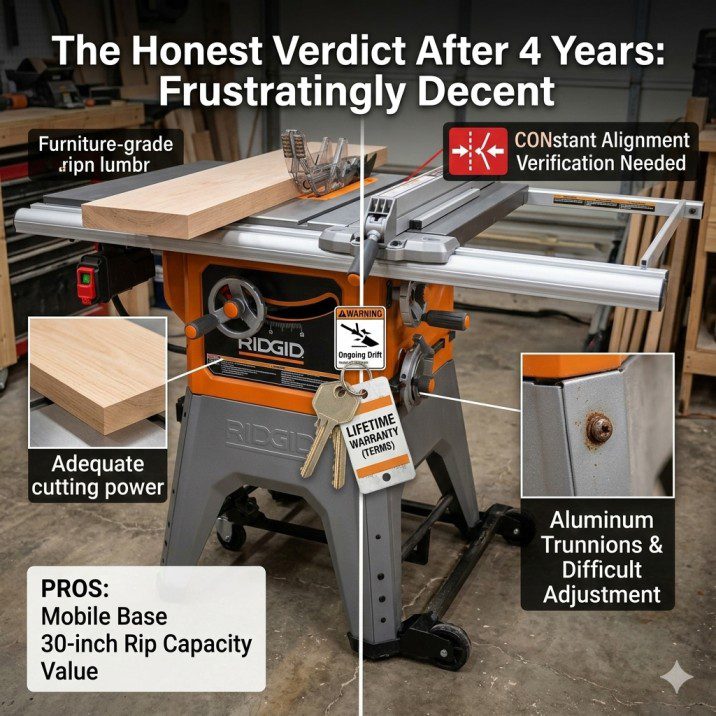
The Ridgid R4520 is a frustrating saw to review because it’s simultaneously decent and disappointing.
What it does well:
- Adequate cutting power for all woodworking tasks
- Excellent integrated mobile base
- Cast iron table surface (though not flawless on all units)
- 30-inch rip capacity
- Reasonable price for a hybrid saw
What drives me crazy:
- Ongoing alignment drift requiring periodic adjustment
- Fence that needs constant verification
- Aluminum trunnions that downgraded from R4512’s cast iron
- Useless “lifetime warranty”
- Table-mounted trunnions making alignment adjustments tedious
My recommendation: For hobbyists comfortable with tool maintenance who value the mobile base and 30-inch capacity, the Ridgid delivers decent value at $700-750. You’ll spend time tuning it, but you’ll get usable results.
For anyone who can budget $900-1000, buy a Grizzly G0833P or similar instead. The $150-200 premium eliminates most of the Ridgid’s frustrations.
I’ve made peace with my R4520. I check alignment monthly, verify fence squareness before sessions, and accept these limitations. The saw has built furniture I’m proud of. But if I were buying again today with no budget constraints, I’d spend the extra $200 on something more stable.
| Your Priority | Ridgid R4520 Fit |
|---|---|
| Budget under $800 | Good option |
| Minimal maintenance | Poor fit |
| Mobile base needed | Excellent fit |
| Daily professional use | Poor fit |
| Weekend hobbyist | Adequate fit |
| Precision joinery | Moderate fit (with frequent tuning) |
Looking for alternatives? Visit our comparison section to see how the Ridgid stacks up against Grizzly, Harvey, and other hybrid saws, or check our review archive for detailed testing.
Frequently Asked Questions
Does the Ridgid R4520 have alignment problems?
Yes, blade-to-miter-slot alignment drift is a well-documented issue affecting many R4520 units. The table-mounted aluminum trunnions gradually shift due to vibration and temperature changes, causing alignment to drift from parallel to 1/32-1/16 inch out every 2-3 months of regular use. This requires periodic realignment involving loosening trunnion bolts, tapping the assembly into position, and retightening—a 30-60 minute process once learned. While frustrating, the issue is manageable for hobbyists willing to perform maintenance. Professional daily users find this drift maddening and should consider cabinet saws with superior trunnion stability.
Is the Ridgid lifetime warranty actually worth anything?
The Ridgid Lifetime Service Agreement sounds valuable but proves difficult to use in practice. Coverage requires registration within 90 days of purchase, convincing customer service the issue is a manufacturing defect (not normal wear or adjustment), and either shipping the heavy saw to authorized service centers or finding local centers willing to perform warranty work (increasingly rare). Common issues like fence drift and alignment problems are often classified as “normal adjustment” and denied coverage. Multiple users report frustration claiming warranty service. Don’t buy the Ridgid primarily for the warranty—treat it as a potential bonus rather than a deciding factor.
What’s the difference between Ridgid R4512 and R4520?
The R4520 replaced the R4512 with improvements including a magnetic safety switch preventing accidental starts and slightly better dust collection. However, the R4520 downgraded from cast iron trunnions to aluminum trunnions—a significant change affecting alignment stability. The R4520 retained the same fence system users complained about on the R4512 and the problematic table-mounted trunnion design making alignment adjustments tedious. Despite Home Depot’s product description claiming “cast iron trunnions,” multiple owners confirm the R4520 uses aluminum. For used purchases, the R4512’s cast iron trunnions may actually provide better long-term alignment stability.
How does the Ridgid R4520 compare to Grizzly hybrid saws?
The Grizzly G0833P ($900-950) offers superior build quality with cabinet-mounted trunnions providing significantly better alignment stability, a more robust fence system requiring less frequent adjustment, and generally better quality control compared to the Ridgid R4520 ($700-750). The $150-200 Grizzly premium buys dramatically reduced maintenance frustration and long-term reliability. However, the Ridgid includes an integrated foot-pedal mobile base (saving $75-150) that the Grizzly lacks. For hobbyists comfortable with periodic tuning, the Ridgid delivers adequate value. For anyone prioritizing reliability over mobility, the Grizzly justifies its higher cost through reduced alignment headaches.
Can the Ridgid R4520 handle professional daily use?
The Ridgid R4520 is adequate for hobbyist weekend use but problematic for professional daily applications. The 13-amp motor provides sufficient power for all cutting tasks, but the alignment drift requiring adjustment every 2-3 months becomes maddening when using the saw 5+ hours daily. The fence requiring frequent verification slows professional workflow. Table-mounted aluminum trunnions lack the stability professionals need for consistent precision. For occasional contractors doing side work (50-100 hours annually), it’s workable. For full-time professionals cutting daily, invest in cabinet saws with superior trunnion systems (Grizzly, Powermatic, SawStop) that maintain alignment under heavy use.
Affiliate Disclosure: This article contains affiliate links to products. If you purchase through these links, we may earn a small commission at no additional cost to you. This helps support our website and allows us to continue providing honest, long-term ownership reviews based on real workshop frustrations and successes.

Finlay Connolly is a woodworking enthusiast and power tool specialist with over a decade of hands-on experience in the workshop. As the founder and lead writer at ProTableSawReviews.com, Finlay combines expert knowledge with real-world testing to help woodworkers, DIYers, and professionals choose the best tools for the job. With a sharp eye for detail and a passion for precision, Finlay is committed to providing trustworthy, practical advice backed by years of experience and research in the field. Whether you’re cutting dados or comparing fence systems, you can count on Finlay for honest, reliable reviews that make your next cut your best one.