Best Aftermarket Table Saw Fences (2026): Biesemeyer vs INCRA vs Vega
 Finlay Connolly
9 min read
Finlay Connolly
9 min read
If you want a short answer: Biesemeyer is the best all-around aftermarket table saw fence for most woodworkers, INCRA wins if you want dead-on precision for joinery work, and Vega is the pick if you want Biesemeyer-style accuracy without the Biesemeyer price tag. All three bolt onto most contractor and cabinet saws with some drilling and patience, and any of them will fix the wobble and drift you’re probably dealing with right now.
That’s the quick version. Here’s the longer one, with the stuff that actually matters once you’re the one under the saw with a drill in your hand.
Why your stock fence is probably the problem, not you
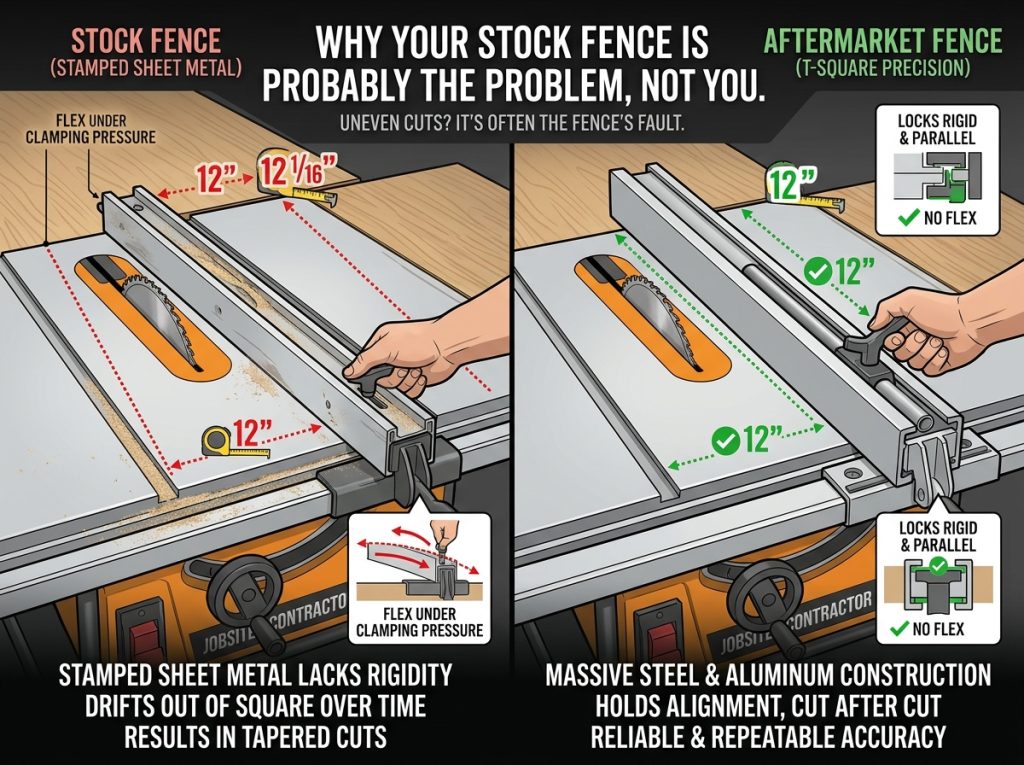
If your rip cuts come out slightly tapered, or your fence reads 12″ on the left side of the rail and 12 1/16″ on the right, that’s not bad technique. That’s a fence that isn’t parallel to the blade, or one that flexes when you clamp down on it.
Most stock fences on jobsite and contractor saws are stamped sheet metal. They work fine out of the box. Give them a year of use, a few bumps, and some sawdust buildup, and they start drifting out of square. You can true them up, but a lot of budget fence systems just don’t have the rigidity to hold that alignment for long.
This is where aftermarket fences earn their keep. A good one locks parallel to the blade and stays there, cut after cut, without you having to check it every time you turn the saw on.
What actually makes a fence worth upgrading to
Before getting into specific brands, here’s what separates a real upgrade from a marginal one.
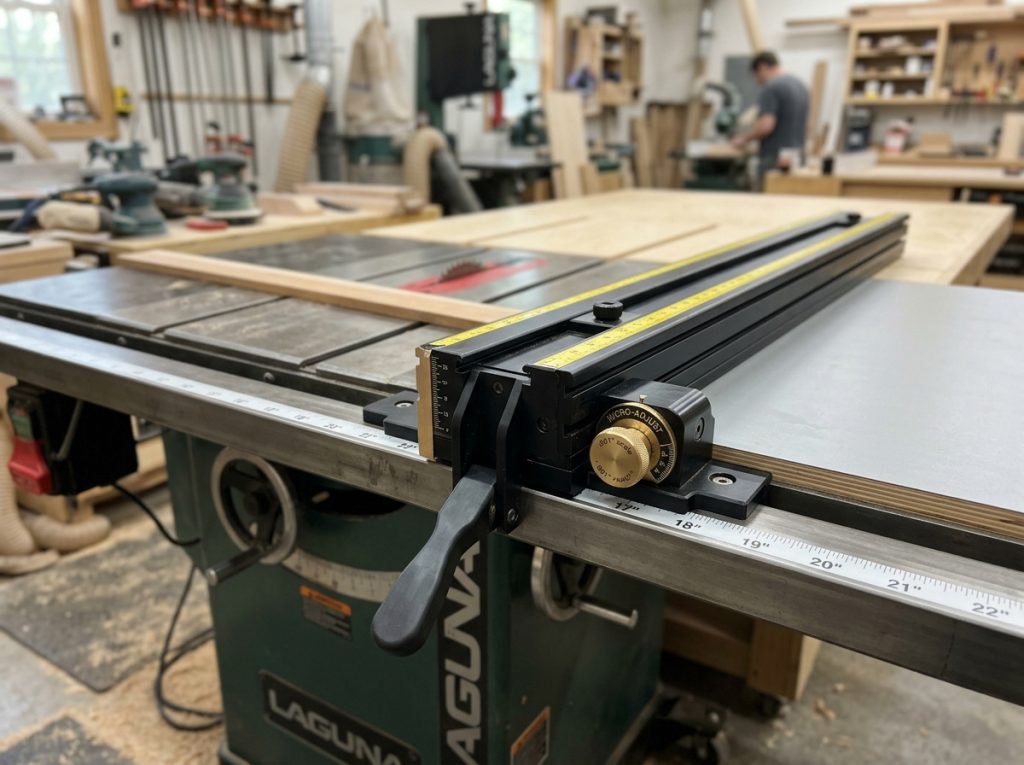
T-square design. Almost every serious aftermarket fence uses a T-square style — the fence rides on a front rail and locks with a single lever, staying parallel because of how the head is built, not because you eyeballed it. This is the single biggest jump from a stock fence.
Rail length and table extension. Some fences come with extension tables that add real rip capacity, which matters a lot if you’re breaking down full plywood sheets. Others are just a straight upgrade to the fence head with no added capacity.
Material and flex. Extruded aluminum or heavy steel tubing resists flex under clamping pressure. A fence that bows slightly in the middle when you lock it down will give you a slightly narrower cut at that point, and you won’t notice until the board doesn’t fit where it should.
Micro-adjustment. This matters more for joinery and fine work than for general ripping. If you’re cutting box joints or fine dados, a fence with a micro-adjust knob saves you a lot of tapping and re-measuring.
Biesemeyer — the one most cabinet shops actually use
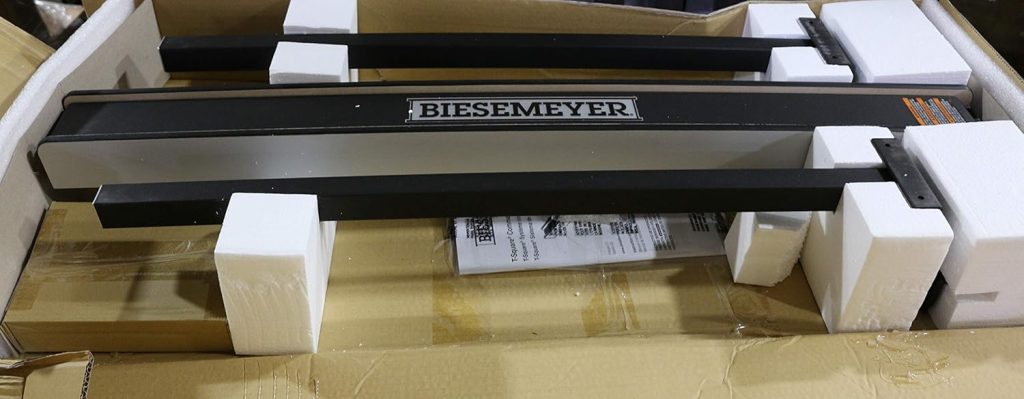
Biesemeyer basically invented the modern T-square fence, and it’s still the benchmark other brands get compared to. In real shop use, the thing that stands out isn’t a spec, it’s how little you think about it. You lock the lever, you cut, the cut is square. Move it to a new position, lock it again, same result.
It’s not cheap, and it’s not the easiest fence to install on saws it wasn’t designed for — expect some fabrication work if you’re mounting it on an off-brand saw. But if you’re running a saw daily and rip accuracy is non-negotiable for your projects, this is usually the fence people land on after trying something cheaper first.

INCRA — the precision pick for joinery-heavy work
INCRA fences are a different animal. They’re built around micro-positioning, with incremental adjustment down to a fraction of a millimeter on some models. If you’re doing box joints, dados, or repeatable joinery cuts where being off by even a hair throws the whole joint, this is where INCRA earns its reputation.

The trade-off is speed. For straightforward ripping, an INCRA fence is more setup than you need. It shines on furniture and joinery work, not on someone breaking down sheet goods all day. If your projects lean more toward fine woodworking than construction-grade cutting, pair this with something like a jointer jig and you’ve got a setup that handles tight-tolerance work really well.
Vega — the value alternative that still holds up
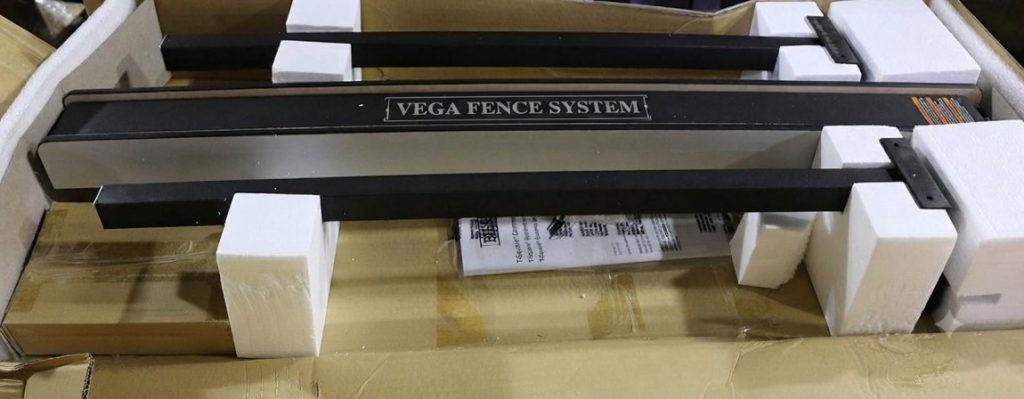
Vega fences use a similar T-square concept to Biesemeyer at a noticeably lower price. In practice, most home shop woodworkers who switch to Vega from a stock fence say the same thing: it fixed the drift problem and it was easy enough to bolt on without a fabrication project.
It’s not quite as bulletproof as Biesemeyer under heavy daily commercial use, but for a home shop or a part-time shop, that gap rarely matters. If your saw sees a few hours a week rather than eight hours a day, Vega gets you most of the accuracy for a lot less money.
Delta T2 / T3 and Shop Fox — budget-friendly, still worth it
Delta’s T2 and T3 fences and Shop Fox’s aftermarket options sit below Vega on price and still beat most factory fences by a wide margin. They use the same T-square principle, just with lighter materials and simpler locking mechanisms.

These make sense if your current fence is genuinely bad — visibly bowed, hard to lock square, or just worn out — but you’re not ready to spend Biesemeyer or INCRA money. They’re a real improvement, just not the last fence you’ll ever buy if you keep upgrading your shop over time.
Will it actually fit your saw?
This is the part nobody likes hearing: aftermarket fences are usually built around a specific rail spacing and table width, and not every saw takes every fence without modification.
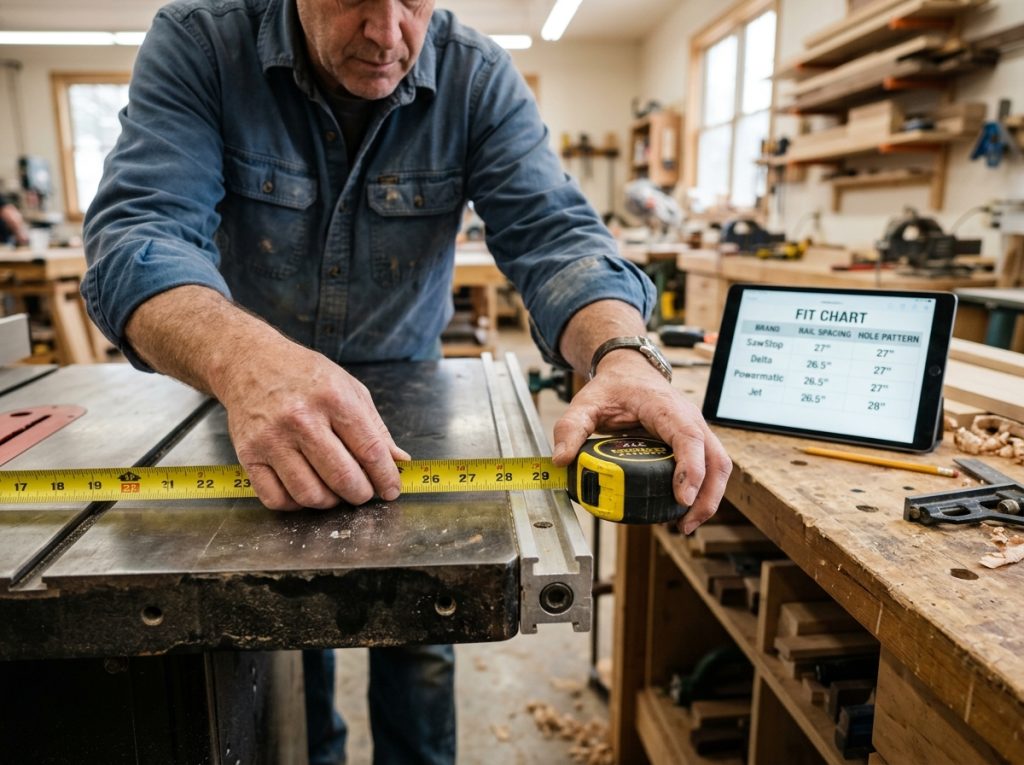
Biesemeyer and Vega both offer fit kits for popular saw brands like Ridgid, Delta, and Craftsman, which narrows the guesswork. Off-brand jobsite saws and older contractor saws sometimes need custom drilling or a shop-made mounting bracket. Before you order anything, measure your current rail spacing and check the manufacturer’s fit chart — don’t assume based on saw brand alone.
If you’re running a smaller portable saw, it’s also worth checking whether the saw’s table and trunnions can handle the added weight and clamping force of a heavier fence. Some of our reviews, like the Ridgid R4514 table saw review, cover how well a given saw’s table holds up to accessory upgrades like this.
Installing one without losing your Saturday
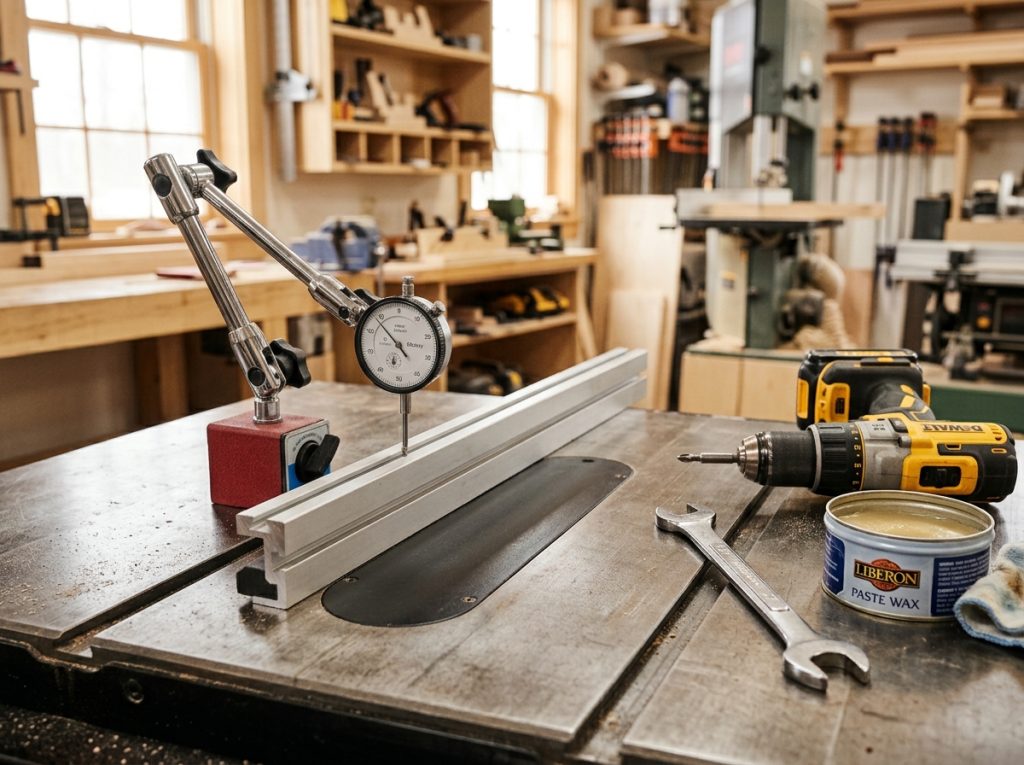
Plan on this taking longer than the instructions suggest. Even a straightforward fit kit install usually means removing the old fence rails, squaring the new rails to the blade with a dial indicator or a good square, and drilling new mounting holes if your saw wasn’t a direct-fit model.
A few things that make the job go smoother:
- Square the rails to the miter slot, not just “by eye” — a cheap dial indicator makes this a five-minute job instead of a guessing game.
- Don’t fully tighten any bolts until everything is aligned and you’ve test-locked the fence in a few positions along the rail.
- Wax the rails once it’s mounted. It makes the fence glide instead of stick, which matters more than people expect.
If you’ve never done this kind of install before, it pairs well with also checking your miter gauge alignment at the same time, since you’ll already have the table apart and it’s a good moment to true up the whole saw.
Which one should you actually buy?
If you want the simple version:
- Daily use, cabinet shop, or you’re tired of babysitting your fence → Biesemeyer
- Furniture and joinery work where precision beats speed → INCRA
- Home shop, part-time use, want real accuracy without the top price → Vega
- Your current fence is bad and you need a fix now on a tight budget → Delta T2/T3 or Shop Fox
None of these are wrong choices. They’re built for slightly different woodworkers, and the “best” one really depends on what you’re cutting and how often.
FAQ
Do I need an aftermarket fence if my saw already has one? Not always. If your stock fence stays parallel and locks solid, you don’t need to replace it. The upgrade makes sense once you notice drift, taper in your rip cuts, or a fence that won’t hold its position under clamping pressure.
Will an aftermarket fence fit any table saw? Most are designed around specific rail spacing, and manufacturers publish fit charts for popular saw brands. Off-brand or older saws sometimes need custom mounting work, so check compatibility before ordering.
Is Biesemeyer worth the extra cost over Vega? For daily, heavy use, yes — the extra rigidity holds up better over years of use. For a home shop used a few times a week, Vega gets you close to the same accuracy for less money.
Can I install an aftermarket fence myself? Yes, most fit kits are designed for a home install with basic tools. Budget more time than the instructions suggest, and square the rails carefully with a dial indicator before final tightening.
Does a better fence improve dust collection or safety? Indirectly, yes. A fence that holds square reduces binding and kickback risk during rip cuts, since the workpiece isn’t fighting a taper. It doesn’t affect dust collection directly, but a cleaner, more predictable cut means less material rubbing and less fine dust kicked up from a bound blade.

Finlay Connolly is a woodworking enthusiast and power tool specialist with over a decade of hands-on experience in the workshop. As the founder and lead writer at ProTableSawReviews.com, Finlay combines expert knowledge with real-world testing to help woodworkers, DIYers, and professionals choose the best tools for the job. With a sharp eye for detail and a passion for precision, Finlay is committed to providing trustworthy, practical advice backed by years of experience and research in the field. Whether you’re cutting dados or comparing fence systems, you can count on Finlay for honest, reliable reviews that make your next cut your best one.